
Conversations that shape industries are moving from big stages to newsletters and LinkedIn. Real 2026 data for African women founders.
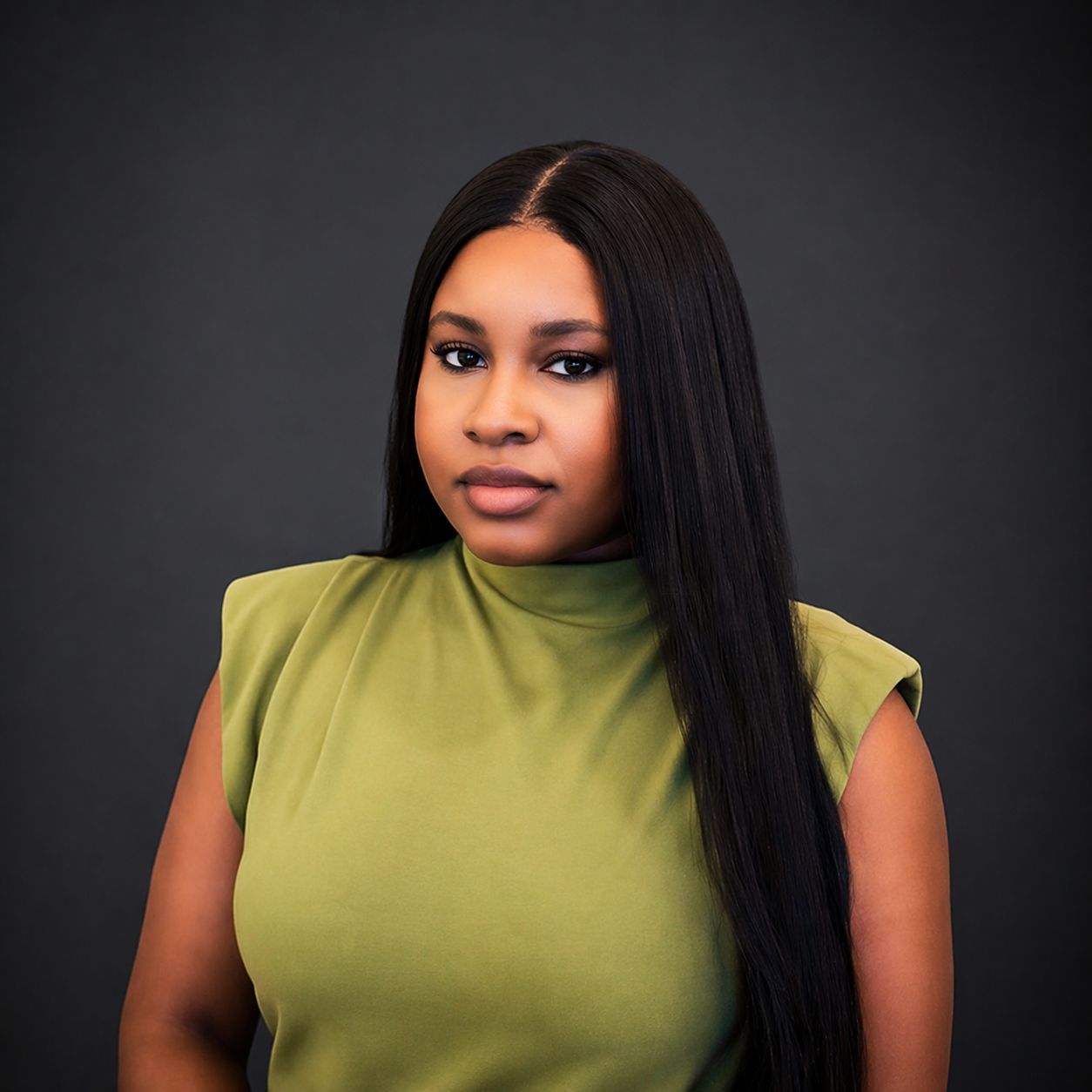
Nimi Akinkugbe didn't go viral. After sixteen years in wealth management, she started writing one newsletter a week about the money mistakes she'd seen up close. No reels, no trending audio. That newsletter is now one of West Africa's most cited financial literacy voices.
Her path quietly rebuts the loudest assumption in digital business: that visibility requires noise. The conversations that shape industries today aren't happening on the biggest stages. They're happening in newsletters, LinkedIn posts, and small, trusted communities, and the rules for who gets heard there have rewritten themselves.
A Funding Contradiction That Explains Everything
Across Africa, women-led startups generate twice the revenue per dollar invested and grow 10% faster in the long term than their male-led counterparts, yet receive less than 1% of venture capital in 2024. The drop-off is brutal at the growth stage: at pre-seed, female-led and co-founded startups are more visible, but the gap widens at every subsequent funding stage.
There is, though, a flicker of real movement: the total invested in startups with at least one woman founder nearly doubled year-on-year, rising from $152 million in 2024 to $275 million in 2025, an 81% increase, moving toward founders who had already proven demand publicly before a pitch deck opened.
That contradiction is why owned platforms, a newsletter, a LinkedIn following, and a niche community matter more than ever. When institutional capital moves slowly, the audience you build directly becomes your alternative balance sheet: an asset nobody can underfund or gatekeep.
Why the Continent Is Leading, Not Catching Up
Africa already has the highest rate of female entrepreneurship in the world; women make up 58% of the continent's self-employed population. 66%% of women across Nigeria, Kenya, South Africa, Ethiopia, Morocco, and Egypt aspire to run their own business, over 80% in Nigeria and Kenya. One in five already runs an online business; two-thirds are considering one. The constraint isn't ambition. It's infrastructure. Nearly half of the women surveyed lack regular, affordable internet access, which means the next phase of growth depends as much on connectivity policy as on hustle.
The Trend Most Coverage Misses: Audiences Are Turning Against Polish
This is the part that inverts everything written about AI and content over the past two years. Consumer preference for AI-generated creator content has collapsed, from 60% in 2023 to just 26% now, with more than half of consumers reducing engagement the moment they suspect content is AI-generated. That's a structural reversal favoring the founder-led, specific, occasionally unpolished content women entrepreneurs have built for years, often by necessity rather than strategy.
Smart creators aren't rejecting AI outright, though. An April 2026 survey of 550 working creators by Kit found 67% use AI regularly for newsletter tasks, but 89% always edit its output before publishing, and not one creator surveyed trusted it unedited.
AI has settled into research and structure; the writing that builds trust stays human. Meanwhile, Adobe's 2026 Creators' Toolkit Report confirms that in a world of AI-assisted content, the qualities helping creators break through- point of view, judgment, and taste- are becoming more valuable, not less.
Where the Leverage Sits Now
Three shifts reward patient, voice-led content over viral reach. LinkedIn has moved from optional to structural for B2B founders, with brands treating individual professionals as the trusted front door to their companies.
Newsletters have become the default owned asset for creators wary of platform risk, and that ownership matters even more where connectivity is patchy and low-bandwidth communication outperforms heavy video. Meanwhile, a counter-movement researchers call "slow content," fewer, denser, longer-lived pieces over high-frequency posts, is gaining traction, rewarding depth over volume for founders without a content team.
News: How Nigeria's New Identity Law Could Become the Backbone of Its Digital Economy
What to Do With This, This Quarter
Pick one owned channel and commit to a fixed cadence before adding a second. Six months of consistency on one platform outperforms a scattered presence across five, because consistency now functions as a trust signal itself.
Use AI for research, outlining and repurposing, but keep the actual argument and tone entirely your own. Given the documented engagement penalty on suspected AI writing, this is a measurable business decision, not a stylistic preference.
Treat your audience as alternative capital. Document outcomes and proof points publicly. As one panelist at a TechCabal Insights session on women founders put it directly: "Visibility brings trust." A visible public track record now does real work in investor conversations before a formal pitch ever happens. The same logic applies to client decisions and brand deals: visibility built deliberately becomes leverage.
Frequently Asked Questions
Which platform should women entrepreneurs start with? Owned channels, a newsletter or LinkedIn presence, outperform rented platforms with unpredictable reach. LinkedIn suits B2B audiences; a newsletter suits consumer-facing founders.
Should African women entrepreneurs worry about AI replacing their content? The bigger risk is over-relying on visibly AI-generated content, which measurably reduces engagement. Use AI for research and structure; keep the voice human.
Why does funding data matter if I'm not raising capital? The same trust signals, a documented track record and consistent presence, that sway investors also influence client and partnership decisions. Visibility functions as informal due diligence.
How long before consistent publishing shows results? Roughly six months is the realistic threshold before consistency compounds into trust and inbound opportunity.
Call: +234 806 496 8725 Website: https://www.thisisbusiness360.com