

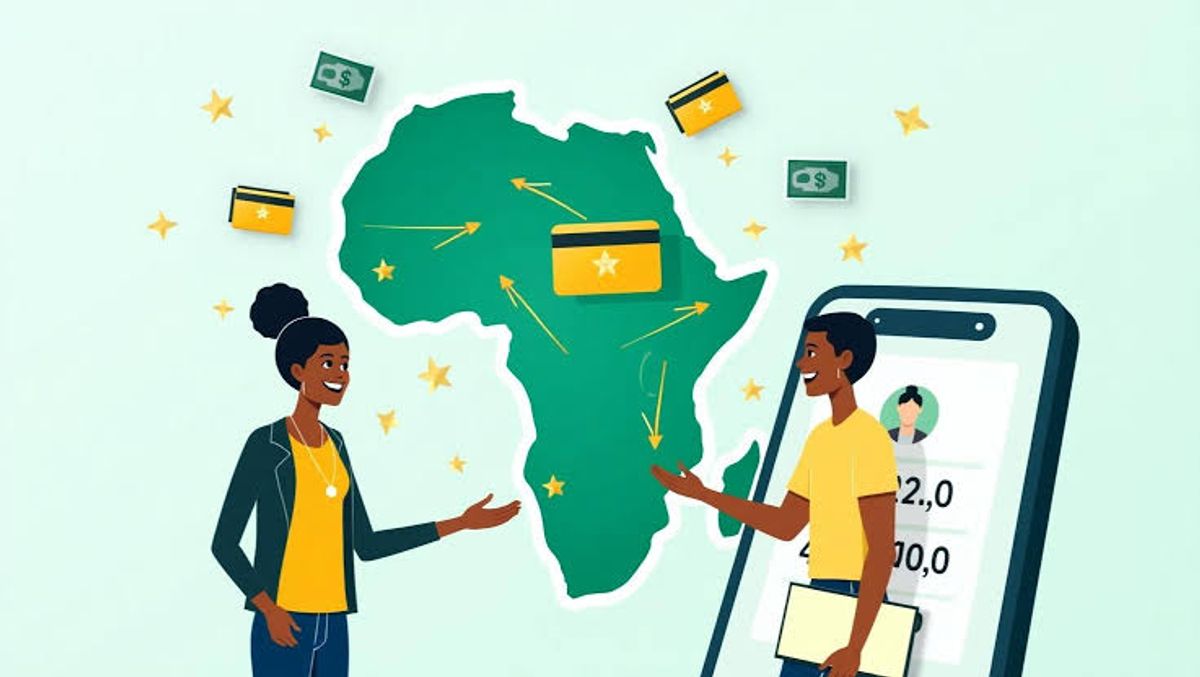
FinTech solutions and digital finance are transforming Financial Inclusion Africa. Discover how technology is reaching the underserved and changing lives.
Financial inclusion in Africa is the most persistent challenge of a shortage of willing participants in the formal economy. It is a structural failure of traditional financial infrastructure to reach the populations that most need access to credit, savings, insurance, and payment services to build economically stable, commercially active lives.
For decades, the gap between the people who had formal financial access and those who did not tracked closely with the gap between people who lived within range of branch networks, could produce documentation that banks required, and earned income in forms that financial institutions recognized as qualifying for their services.
FinTech solutions are dismantling each of these barriers simultaneously, and the pace at which they are doing so represents one of the most significant humanitarian and commercial developments in Africa's modern economic history.
This article examines how digital finance is transforming financial access across African communities, which mechanisms are producing the strongest inclusion outcomes, and what practical implications this transformation holds for businesses, investors, and policymakers engaged with Africa's growing digital economy.
The Scale of the Financial Inclusion Challenge in Africa
Understanding the magnitude of what FinTech solutions are attempting to solve requires honest engagement with the scale of financial exclusion that has historically characterized African economies. Across the continent, large proportions of economically active adults conducted their entire financial lives through cash, informal savings groups, and interpersonal credit relationships that provided genuine community-level financial resilience but no connection to the formal financial system's credit assessment, investment, and insurance capabilities.
The World Bank's Global Findex Database documents the state of financial inclusion across African markets, tracking account ownership, savings behavior, credit access, and digital payment adoption across the populations that formal financial infrastructure has historically served and those it has consistently excluded from meaningful participation in the formal economy.
The data reveals a continent-wide exclusion pattern that correlates closely with gender, geography, income formality, and documentation access, providing both the problem diagnosis and the targeting framework for FinTech solutions designed to address specific exclusion mechanisms rather than financial exclusion as an undifferentiated aggregate challenge.
How FinTech Solutions Are Addressing Each Exclusion Barrier
Mobile Money Breaking the Geography Barrier
The most immediate and most widely documented financial inclusion breakthrough in Africa has been mobile money's ability to deliver basic financial services to populations that branch networks could never reach cost-effectively.
The commercial logic is straightforward: a mobile phone penetration rate that dramatically exceeds banking penetration in most African markets provides a distribution infrastructure for financial services that does not require physical expansion of expensive institution networks to reach populations that live beyond the economic viability frontier of traditional branch deployment.
The GSMA Mobile Money State of the Industry Report documents that Sub-Saharan Africa hosts more than half of the world's active mobile money accounts, with transaction volumes that demonstrate sustained adoption rather than registration without usage, confirming that mobile money has produced genuine financial behavior change rather than simply creating the appearance of inclusion through account opening without meaningful financial activity.
Alternative Credit Scoring Removing the Documentation Barrier
Traditional credit assessment depends on formal employment income, tax records, utility payment history registered to an individual's name, and prior formal credit relationships, all of which are unavailable for the majority of African micro-entrepreneurs operating in the informal sector with seasonal, variable income streams that no formal documentation captures.
AI-powered alternative credit models that analyze mobile transaction patterns, airtime usage behavior, social network characteristics, and utility payment regularity are creating creditworthiness assessments for borrowers that formal systems cannot see at all.
The International Finance Corporation's research on digital finance and credit access documents how alternative credit scoring approaches are extending formal lending to populations that traditional credit models permanently excluded, with portfolio performance data showing that behavioral data-based credit assessment produces competitive default rates alongside dramatically broader access than documentation-based alternatives.
Digital Identity Infrastructure Reducing the Verification Barrier
Account opening has historically required in-person identity verification with physical documents that millions of Africans do not possess in the format traditional banking requires. Digital identity infrastructure, including biometric verification, national digital ID systems, and mobile-based know-your-customer processes that regulators are progressively accepting as sufficient for basic financial service account opening, is progressively removing this barrier without eliminating the anti-money-laundering protection that identity verification serves.
The African Union's digital identity framework provides the policy context for how African governments are approaching digital identity infrastructure development, creating the regulatory foundation that enables FinTech solutions to offer simplified onboarding without compromising the compliance standards that financial service provision requires across all regulatory environments regardless of how digital-first the service delivery model is.
The Communities Most Transformed by Digital Finance
Financial inclusion Africa-wide is not advancing uniformly across all excluded populations. The communities experiencing the most transformative change from FinTech solutions are those where mobile penetration was high, but bank branch density was low, where informal economic activity was substantial and well-organized, and where trust in community financial institutions created the behavioral foundation that digital equivalents could build upon rather than having to create from scratch.
Rural agricultural communities across East Africa have experienced some of the most documented digital finance transformations through the combination of mobile money for farm gate payments, digital savings products for agricultural income smoothing, and weather-indexed insurance products delivered through mobile channels at premium levels that smallholder farmers can access.
The economic impact of these combined services on household consumption stability, school enrollment rates, and agricultural investment decisions has been documented across multiple rigorous academic studies that confirm the transformative power of bundled digital finance access rather than any single product in isolation.
The Alliance for Financial Inclusion's impact documentation provides detailed evidence of how digital financial service adoption is changing economic behavior and outcomes across African communities, offering the impact evidence base that policymakers, investors, and development organizations use to justify continued investment in the infrastructure, regulation, and product innovation that financial inclusion progress requires.
Women-owned micro-businesses represent another population experiencing disproportionate transformation through FinTech solutions. Women entrepreneurs who previously relied entirely on informal savings groups and interpersonal credit are accessing mobile lending products, digital savings tools, and payment acceptance capabilities that connect their businesses to formal commerce in ways that cash-only operations never allowed, with economic research documenting meaningful improvements in business investment, household income stability, and entrepreneurial confidence.
The African Development Bank's women's economic empowerment research documents the economic development impact of expanding women's access to formal financial services across African markets, confirming that the gender dimension of financial inclusion is both a social equity priority and an economic development multiplier that benefits entire household and community systems rather than only the individual financial service recipient.
What Businesses Should Know About the Financial Inclusion Opportunity
Monitoring market trends in financial inclusion progress provides businesses with intelligence about expanding addressable markets, emerging customer segments, and investment opportunities that develop ahead of mainstream commercial recognition. Here is what the financial inclusion transformation means practically for African businesses across different sectors:
- Expanding addressable markets: Every formerly excluded population that gains formal financial access becomes a potential customer for digital products, services, and commerce platforms that were previously inaccessible to them without digital payment capability.
- Alternative credit building opportunity: Businesses that generate clean digital transaction records through FinTech platform usage are progressively building the credit profiles that will improve their access to formal working capital products as alternative credit assessment capabilities mature.
- Partnership opportunities with financial inclusion-focused platforms: FinTech platforms targeting underserved populations offer distribution partnership opportunities for businesses seeking to reach high-growth consumer markets with strong demand but limited current formal commerce access.
- Employee financial wellness as a retention tool: Businesses offering employees access to digital savings, credit, and insurance products as workplace benefits are building financial security for their teams, increasing productivity, reducing absenteeism, and improving retention rates across all income levels.
Frequently Asked Questions
What is the current state of financial inclusion across Africa? Financial inclusion has improved significantly across African markets over the past decade, driven primarily by mobile money adoption. Still, meaningful gaps remain, particularly in rural areas, among women, and in markets where mobile network coverage and digital literacy have not yet reached the levels that enable sustained digital financial service adoption.
Which FinTech solution has contributed most to financial inclusion in Africa? Mobile money is the single most impactful FinTech innovation for financial inclusion in Africa, having created formal financial access for hundreds of millions of Africans who were unreachable by traditional banking infrastructure at any commercially viable cost.
How does digital finance benefit women entrepreneurs in Africa specifically? Digital finance provides women entrepreneurs with lending access based on transaction behavior rather than documentation they often lack, savings tools that protect income from household spending pressure, and payment capabilities that connect their businesses to formal commerce networks previously inaccessible to cash-only operations.
What role do regulators play in advancing financial inclusion through FinTech? Regulators determine which digital onboarding processes satisfy know-your-customer requirements, which alternative credit assessment approaches comply with responsible lending standards, and which business models can operate within existing licensing categories, making the quality of the regulatory environment one of the most significant determinants of the speed of financial inclusion progress across individual African markets.
How does financial inclusion through digital finance benefit African businesses beyond direct lending access? Financial inclusion expands the addressable market for digital commerce, creates new distribution partnership opportunities, improves employee financial wellness as a retention tool, and builds consumer spending power and economic stability that support sustainable demand for the products and services African businesses across all sectors depend on for their own commercial growth.
Financial Inclusion Is Not Just a Development Goal. It Is Africa's Largest Untapped Market.
Every African adult who gains formal financial access for the first time becomes a potential customer, partner, employee, or entrepreneur whose economic participation strengthens the entire ecosystem around them. The financial inclusion transformation happening through FinTech solutions and digital finance is not simply a story of social progress. It is a story of market creation at a scale and pace that no other development in African economic history has matched, and the businesses that understand and engage with this transformation strategically are building commercial positions inside Africa's most significant long-term growth story.
ThisIsBusiness360 is here to help you understand, navigate, and benefit from Africa's financial inclusion revolution with the intelligence and expert guidance your business deserves.
- Call us today: +234 806 496 8725
- Visit our website: www.thisisbusiness360.com
Africa's financial inclusion story is being written by those who are engaged with it today. Position your business inside it with the knowledge, strategy, and commercial clarity that this moment demands.