

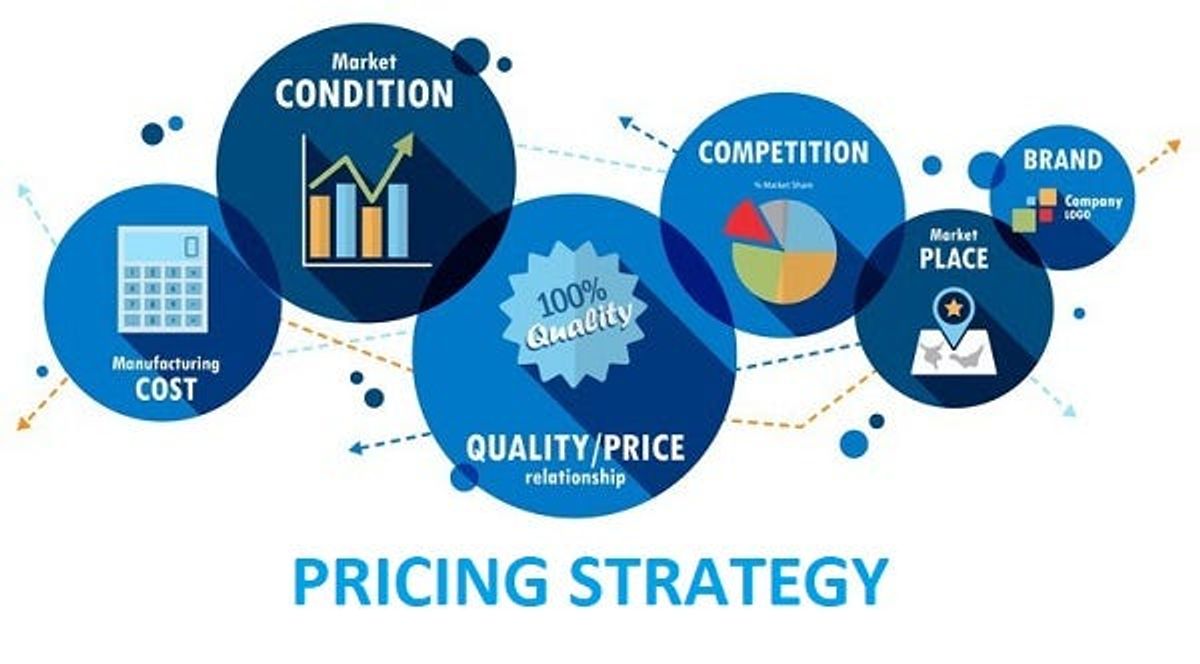
Master pricing strategy that Africa's most profitable businesses use. Learn how to price for real profit, protect margins, and grow revenue with confidence today.
Wrong pricing is one of the quietest killers of African businesses. You can have a brilliant product, a loyal customer base, and consistent sales volume, and still watch your business struggle financially because your prices are not built on solid ground. A deliberate, well-researched pricing strategy that Africa’s top-performing businesses invest in is not just a financial decision. It is a statement of the value you believe your business delivers, and it shapes every aspect of your commercial performance from the very first sale.
Most entrepreneurs across Africa set their prices in one of two ways: they copy competitors’ prices, or they guess based on what feels comfortable to ask. Both approaches leave significant money on the table and, in many cases, actively sabotage profitability by pricing below what the market is genuinely willing to pay. This guide walks you through the principles, models, and tactics that will help you price smarter, protect your margins, and build a business that earns what it is actually worth in the market.
Why Pricing Is a Strategic Decision, Not a Numbers Exercise
Pricing is one of the most powerful levers in your entire business. A small price change, applied consistently across your sales volume, produces a far greater impact on your bottom line than almost any other operational adjustment you could make. Yet it receives less strategic attention from most African entrepreneurs than decisions about branding, marketing, or product development, despite its outsized influence on profitability and long-term business sustainability.
McKinsey’s research on pricing power demonstrates that a 1% improvement in price realization generates a larger improvement in operating profit than equivalent improvements in either volume or cost reduction. This finding is counterintuitive for many entrepreneurs who focus obsessively on growing sales or cutting costs while leaving their pricing strategy on autopilot. The businesses that grow sustainably are the ones that treat pricing as an active, ongoing strategic discipline rather than a one-time decision made at launch and rarely revisited with any real analytical rigor.
Understanding Your True Costs Before Setting Any Price
You cannot build a profitable pricing strategy without a complete, honest picture of what it actually costs you to deliver your product or service. Many African entrepreneurs dramatically underestimate their true costs by focusing only on direct material or production costs while overlooking overhead, labor time, packaging, logistics, transaction fees, and the hidden administrative expenses that consume a surprisingly large share of revenue when measured accurately over a full operating period.
The World Bank’s SME competitiveness toolkit consistently highlights inaccurate cost accounting as one of the most common contributors to poor profitability among small and medium enterprises operating across developing economies, including those throughout Africa. Build a complete cost breakdown that captures every expense associated with producing and delivering your product or service.
Include your own time at a realistic hourly rate, because the hours you invest have real economic value even when they are not being paid by anyone else. This foundation transforms pricing from guesswork into a mathematically grounded decision that protects your margins on every transaction without exception.
The Core Pricing Models Every African Entrepreneur Should Know
- Cost-Plus Pricing
Cost-plus pricing is the most straightforward model and the right starting point for most African entrepreneurs building their pricing foundation. You calculate your total cost per unit, add a target profit margin to that cost, and arrive at your selling price. While it does not account for what the market is willing to pay or what competitors are charging, it guarantees that every sale you make contributes positively to your bottom line rather than quietly erodes it.
ACCA’s global SME financial management research emphasizes that cost awareness and margin management are foundational finance competencies for SME owners who want to sustain and scale their businesses profitably across any market environment.
Start with a minimum acceptable margin, then research whether the market will support a higher price before settling on your final number. In many African markets, entrepreneurs discover that customers are willing to pay significantly more than cost-plus alone would suggest, especially when a strong brand, reliable quality, or exceptional service differentiates their offer from cheaper alternatives.
- Value-Based Pricing
Value-based pricing shifts the focus from what something costs to what it is worth to the customer. This model asks a fundamentally different question: not “how much did I spend to make this?” but “how much is the transformation, result, or benefit this delivers worth to the person buying it?” When applied correctly in African markets, value-based pricing consistently produces higher margins and stronger customer satisfaction than any cost-driven model because it aligns the price with the outcome rather than the input.
The International Finance Corporation’s guide to competitive strategy for SMEs notes that businesses serving African consumers can command value-based pricing premiums when they clearly communicate the tangible outcomes their products or services deliver to specific target audiences. Research what problem your product solves, quantify the cost of that problem to your customer, and price at a meaningful fraction of the value you eliminate.
Competitive Pricing
Competitive pricing involves setting your price deliberately in relation to what comparable alternatives in your market charge. This does not mean racing to the bottom or always matching the lowest price available. It means understanding the pricing landscape with enough clarity to make an informed decision about where you want to position your offer relative to the competition and what that positioning communicates about the quality and value of what you sell.
The African Development Bank’s private sector development research highlights that market positioning, including price positioning, is a critical determinant of competitive advantage for African SMEs operating in sectors with multiple established players. If you price above competitors, your product, service, or experience must visibly justify that premium in ways customers can feel and articulate.
If you price below, ensure your lower price reflects genuine operational efficiency rather than margin destruction driven by fear of losing business to a cheaper alternative serving a fundamentally different customer segment.
Practical Pricing Tips That Protect Profit in African Markets
Theory without application produces knowledge without results. Here are the practical pricing actions you can take immediately to strengthen your margins and build a more profitable business starting this week:
- Calculate your full cost per unit or per service delivery, including your time, overhead, and all hidden expenses, before reviewing your current prices.
- Research what your top three competitors charge and identify where you sit relative to the market today with complete honesty.
- Test a price increase of ten to fifteen percent on your best-selling product or service and measure the impact on both volume and overall revenue carefully.
- Bundle lower-margin products with higher-margin ones to increase average transaction value without reducing the perceived affordability of your core offer.
- Remove your lowest-margin product or service from your active offering and redirect that energy toward selling your most profitable lines more aggressively.
- Review your pricing every quarter rather than treating it as a fixed decision that only changes when business feels uncomfortable or competitive pressure forces your hand.
- Communicate your value clearly in all marketing materials so customers understand why your price is justified before they compare it to cheaper alternatives in the market.
How Market Trends Influence Pricing Decisions in Africa
Your pricing does not exist in isolation from the broader economic and competitive environment surrounding your business. Inflation, currency fluctuations, changing consumer purchasing power, and evolving competitor behavior all create conditions that demand regular pricing reviews rather than a set-and-forget approach that leaves your margins increasingly exposed over time. Monitoring market trends in your sector is as important to your pricing health as understanding your own internal cost structure.
The International Monetary Fund’s Regional Economic Outlook for Sub-Saharan Africa provides updates on macroeconomic conditions across African markets, offering essential context for entrepreneurs making pricing decisions amid inflation pressures, exchange rate movements, and shifting consumer spending patterns. When input costs rise due to inflation or currency depreciation, delaying a price adjustment does not protect customer relationships.
For tailored guidance on building a pricing strategy that works specifically for your African business context, visit ThisIsBusiness360 and connect with experts who understand what profitable African businesses are doing differently to protect and grow their margins consistently.
Frequently Asked Questions
How do I know if my prices are too low for my African market? If customers rarely question your price, your margins feel tight despite decent sales, or competitors charge significantly more for similar offerings, your prices are likely too low.
Should I charge less than competitors to attract more customers in Africa? Not automatically. Competing on price alone attracts price-sensitive customers and erodes margins. Competing on value attracts loyal customers who pay more and consistently refer others.
How often should African business owners review and adjust their pricing? Review your pricing at a minimum every quarter and immediately whenever input costs rise, currency values shift significantly, or competitor pricing moves in a meaningful direction.
How does finance management connect to pricing strategy for African SMEs? Sound financial management reveals true cost structures, enabling prices that genuinely protect margins rather than those based on assumptions or competitive anxiety.
Can I raise prices without losing customers in a competitive African market? Yes. Customers rarely leave for a price increase when they trust the brand, perceive clear value, and receive excellent service that makes switching feel riskier than staying.
- Call us today: +234 806 496 8725
- Visit our website: www.thisisbusiness360.com
One pricing conversation could be the most profitable decision you make this year. Reach out today and let us help you make it count.