

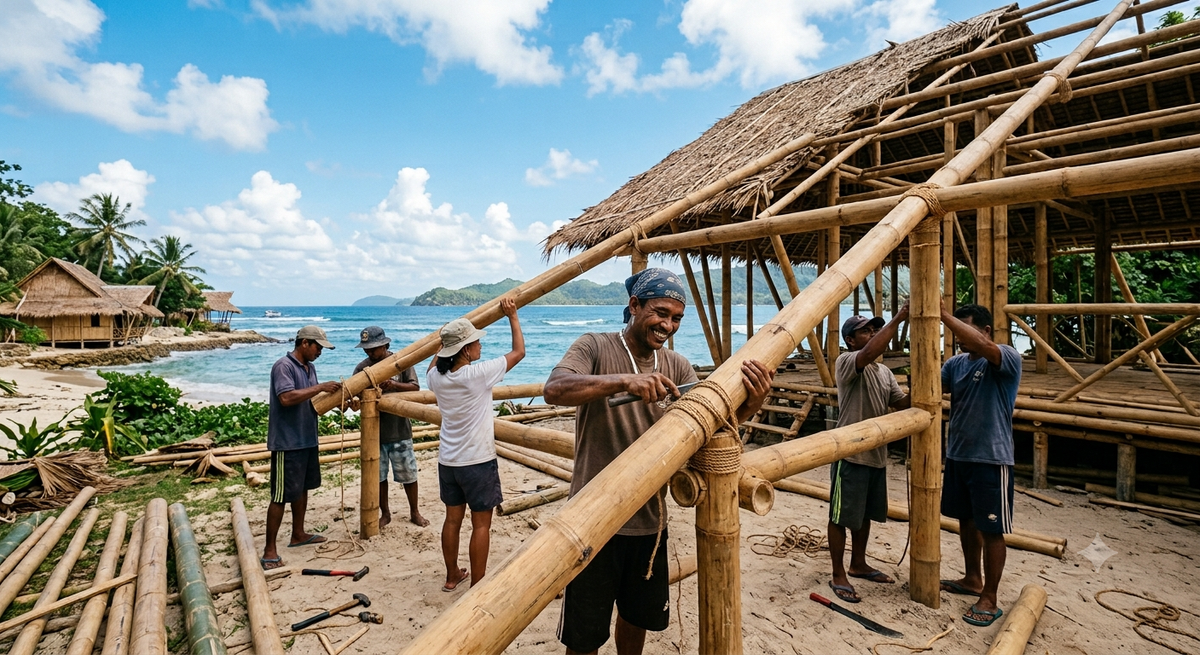
Discover how sustainable resort design using bamboo infrastructure cuts costs, boosts storm resilience, and creates eco-friendly luxury island retreats.
Building an island retreat requires balancing luxury with natural preservation. Transporting heavy concrete ruins fragile coastlines and drives up freight costs. Salt air corrodes steel structures within a few short years. Modern developers are switching to engineered bamboo as an alternative. It slashes construction costs, withstands extreme winds, and grows back rapidly.
Global market demand for eco-friendly building materials is surging as international environmental regulations tighten. Modern travelers increasingly favor carbon-neutral destinations that actively preserve local geography. Adopting sustainable bamboo positioning allows island resorts to capture high-value market share while securing green building certifications. Bamboo offers the ultimate solution for structural strength, environmental responsibility, and architectural beauty.
Island Building Challenges: Concrete vs. Nature
Island construction presents major logistical hurdles. Traditional building materials are costly to transport to remote coastal locations.
- Heavy steel and concrete cargo ships consume high amounts of fuel.
- Aggregate mining destroys nearby marine habitats and coral reefs.
- Moisture and sea salt air corrode metal framing.
In 2026, forward-thinking developers are abandoning carbon-heavy materials for eco-resort design concepts. Shift your strategy toward renewable materials that lower shipping weight and preserve sensitive island ecosystems. Using locally grown bamboo eliminates massive transport costs while protecting marine life from chemical degradation.
Official data from the UN Environment Program (UNEP) Global Status Report for Buildings and Construction confirms that traditional building materials like concrete and steel account for over 37% of global energy-related carbon emissions.
A logistical analysis in the Journal of Cleaner Production reveals that shipping heavy aggregate materials to remote island destinations increases site-delivery freight costs and carbon footprints by up to 45% compared to onshore developments.
Bamboo Power: Strong Structure and Storm Protection
Bamboo delivers exceptional structural performance across all building types. Its natural hollow design absorbs heavy impact energy far better than rigid concrete block. With a tensile strength reaching up to 280 N/mm², structural bamboo equals or exceeds the strength of mild steel at 250 N/mm², while far outperforming conventional timber, which ranges from 50 to 100 N/mm².
Structural engineering research published by the International Network for Bamboo and Rattan (INBAR) highlights that timber bamboo species exhibit a strength-to-weight ratio three times higher than structural steel. In seismic and wind resilience testing conducted by the Central Power Research Institute (CPRI), full-scale bamboo housing prototypes successfully passed shaking-table simulations designed for Zone V hurricane and earthquake conditions without structural failure.
While steel is a non-renewable resource prone to severe rust and timber requires 25 to 50 years to mature, bamboo reaches structural maturity in just 3 to 5 years and is completely immune to marine air corrosion. This high tensile strength gives bamboo its unique edge in coastal environments. Its natural flexibility allows round culms to sway during extreme storms without snapping. It provides crucial wind resistance and flexibility for island infrastructure in hurricane-prone zones.
Fast Growth and Eco Protection
Bamboo is the world's fastest-growing woody plant. Certain species grow over three feet in twenty-four hours. The lifecycle of sustainable bamboo ensures continuous renewal and ecological protection. When a bamboo culm is harvested, the underlying root system remains completely intact.
This enables the plant to rapidly regrow full structural poles within three years while continuously sequestering atmospheric carbon and anchoring topsoil to prevent coastal erosion. According to environmental assessments by the Food and Agriculture Organization (FAO), managed bamboo plantations sequester up to 12 tons of carbon dioxide per hectare annually.
Additionally, life-cycle studies from the Indian Plywood Industries Research and Training Institute (IPIRTI) demonstrate that bamboo composite construction requires 7.1 times less embodied energy than conventional masonry structures of equivalent volume. Using bamboo locks carbon into your structures for decades while protecting delicate island shores.
Making Bamboo Last in Ocean Air
Raw bamboo contains natural starches that attract wood-boring insects. Marine environments also bring significant moisture risks. Proper preservation treatments extend the lifespan of bamboo to match traditional hardwood timber.
- Boron Salt Impregnation: Submerge green bamboo in natural borax solutions. Preservative testing from IPIRTI Wood Preservation Division shows that boron salt diffusion neutralizes internal sugars, granting full immunity against powder-post beetles and termites.
- Thermal Modification: Heat-treat culms to lower moisture absorption. Heat modification reduces equilibrium moisture content, stabilizing the fibers and preventing cracking in sunlit areas.
- Elevated Stilt Foundations: Keep structural columns off wet ground using stone or concrete footings to avoid rising dampness.
Adopting these practical methods protects your financial investment against structural decay and biological pests for generations.
Natural Luxury and Airflow Design
Eco-conscious travelers actively seek authentic connections with nature. Open-air bamboo architecture creates stunning hospitality spaces with high sweeping arches and warm aesthetics. Bamboo has low thermal mass. It does not absorb and retain daytime heat like dense concrete walls do. Combined with wide overhanging thatched roofs, bamboo pavilions dramatically improve natural cross-ventilation.
Climate control indicates that passive biophilic architecture in tropical environments lowers interior temperatures by 3°C to 5°C. This passive cooling strategy cuts resort energy usage and HVAC operational costs by up to 40%, keeping guests comfortable naturally while reducing overhead.
Market Trends and Business Perks
The global bamboo market is projected to grow from $74.26 billion in 2025 to $77.90 billion in 2026 and reach $1114.31 billion by 2034, registering a CAGR of 4.91% from 2026 to 2034. Recent bamboo construction market trends show major global growth in sustainable hospitality. Developers choose engineered bamboo to improve project return on investment and build brand loyalty.
- Lower Freight Costs: Lightweight bamboo culms reduce shipping expenses significantly compared to heavy aggregate.
- Faster Build Times: Modular pre-fabricated bamboo components speed up assembly on-site, lowering labor costs.
- Premium Nightly Rates: Sustainable eco-resorts command higher room prices and attract steady eco-conscious bookings.
Hospitality market data demonstrates that eco-certified hospitality properties achieve an average occupancy premium of 23-28% over conventional resort developments. Integrating renewable bamboo lowers ongoing operational costs while supporting local craft economies and sustainable tourism jobs.
Frequently Asked Questions
Is bamboo strong enough to replace steel in island construction? Yes. Bamboo has a tensile strength comparable to structural steel. Its natural elasticity allows hospitality structures to flex safely during high winds and earthquakes.
How do you protect bamboo structures from marine decay? Treat harvested culms with eco-friendly boron salts and thermal modification. Elevate structural columns on stone footings to shield them from ground moisture and sea air.
How quickly does structural bamboo renew itself? Bamboo reaches full structural maturity within three to five years. Harvesters cut individual mature poles without killing the main subterranean root system.
How does bamboo lower long-term resort operational costs? Its low thermal mass and open design reduce reliance on air conditioning. Additionally, low freight weight and modular assembly slash initial build budgets.
Transform Your Hospitality Project Today
Upgrade your island hospitality project with sustainable building materials. Build durable infrastructure that delights eco-conscious guests and protects marine ecosystems.
Call Us: +234 806 496 8725
Visit Our Website:www.thisisbusiness360.com