

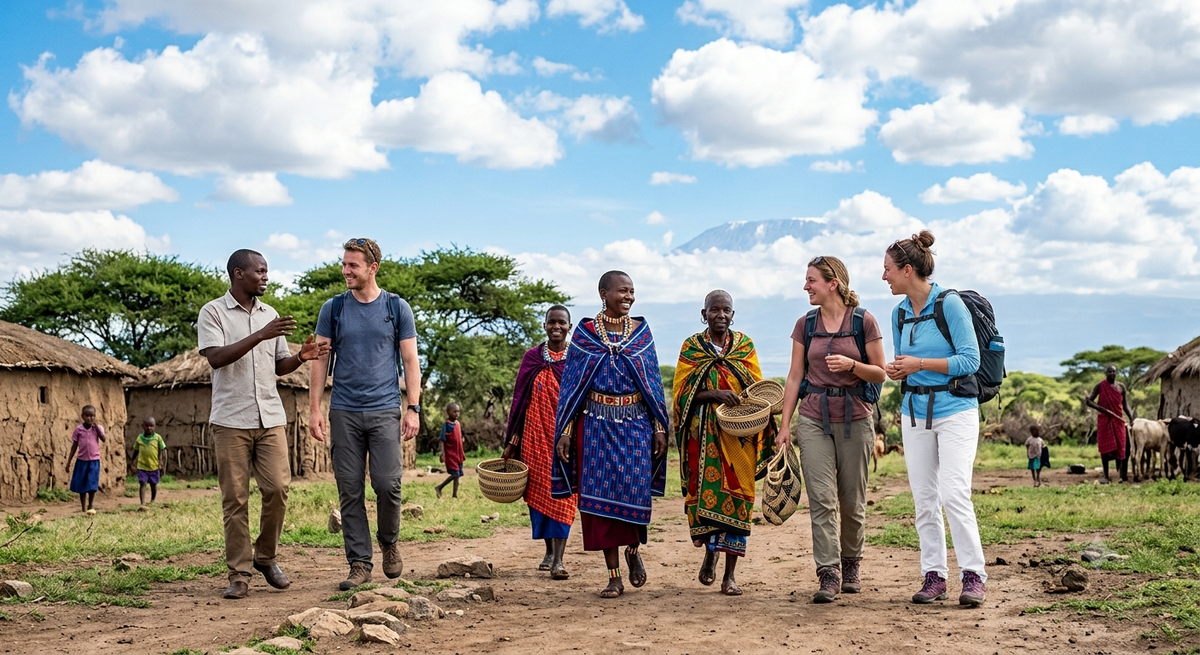
Discover how community-based tourism in Africa transforms economies. Learn how local ownership drives equity, fair wages, and growth.
Traditional wildlife travel often leaves local host populations behind. High-end safari packages frequently export revenue abroad to foreign operators. In this legacy approach, international companies retain most of the profits, leaving host communities confined to low-wage support roles.
According to the African Development Bank (AfDB) Tourism Economic Study, traditional safari tourism models experience an economic leakage rate of up to 80%, meaning that less than a third of guest spending reaches host villages. This pattern creates a sharp economic divide between luxury lodges and surrounding communities.
Community-based tourism in Africa changes this situation completely. It shifts ownership and policy-making directly back into indigenous hands. Residents secure genuine economic power through direct land leases, equity stakes, and executive management roles.
This shift guarantees long-term capital retention, living wages, and sustainable community growth. Ultimately, this modern approach converts hospitality and tourism into an effective tool for real economic inclusion across rural regions.
Keeping Tourism Money in Local Hands
Historically, rural host populations saw few concrete benefits from surrounding national parks and protected areas. Most tourist spending bypassed residents entirely, heading straight to offshore booking agencies and corporate headquarters. Today, community-owned conservancies actively rewrite this script by creating direct ownership models.
Under this system, local families lease their ancestral land directly to eco-lodges and tour operators. They earn predictable monthly lease fees and collect direct entrance royalties from every visiting guest. Rather than vanishing into distant accounts, the community recirculates these funds locally.
They use this revenue to build village schools, dig clean water wells, and fund micro-grants for local entrepreneurs. According to the Kenya Wildlife Conservancies Association (KWCA) Status Report, over 200 community conservancies now protect 18% of Kenya's land while generating millions in direct lease fees and local revenue-sharing for rural households. You can explore How Community-Led Conservancies Are Saving Kenya’s Wilderness for applied case studies detailing how land-leasing transforms pastoral livelihoods.
Furthermore, residents transition into high-value positions within the sector. Native trackers and guides lead wildlife drives instead of performing basic maintenance labor. Community members sit on administrative boards to negotiate operational terms directly with private investors. Direct leadership builds long-term financial strength and secures fair wage distribution over the entire village ecosystem.
Why Travelers Want Community-Led Tours
Current travel choices reflect developing consumer priorities around the globe. Industry forecasts, according to Coherent Market Insights, project the global ethical and sustainable tourism market to reach $290 billion, driven by surging traveler demand for community-immersive lodgings and ethical experiences. Africa welcomed 81 million international visitors, with travelers actively pursuing genuine cultural bonds and local community engagement rather than passive sightseeing behind tinted vehicle windows. This market trend strongly favors local operators who run transparent, equity-focused enterprises:
- Women-led cooperatives: Artisans profit directly from artisan products, cultural workshops, and guided village tours without relying on brokers. Recent estimates by UNESCO Creative Industry Studies show that local cultural and creative arts contribute $4.2 billion annually across Africa when directly linked to tourism value chains.
- Agricultural integration: Safari lodges buy organic produce directly from village farms, creating an instant market for local farmers.
- Direct health reinvestment: Communities fund local medical clinics and emergency ambulance services using surplus eco-lodge profits.
- Educational scholarships: Revenue reserves provide secondary and university scholarships for local youth, expanding future career options.
Solving Problems for Local Businesses
Community-based models confront real structural hurdles despite their proven success. Rural enterprises commonly lack modern digital infrastructure and struggle to reach global markets. Tourism supports over 26 million jobs across Africa. Yet, many community-led projects remain under-capitalized due to marketing and digital capacity gaps. Without direct access to international reservation platforms, community projects frequently depend on third-party intermediaries who take substantial commission cuts.
Unclear land governance and legacy administrative boundaries can also delay economic progress. Systematic reviews on African CBT initiatives on ResearchGate emphasize that clear policy systems, skills development, and transparent governance are crucial to unlock full economic potential. Forward-thinking communities are adopting transparent governance frameworks designed to ensure fair revenue division among households.
Local capacity development initiatives ensure that community members acquire essential accounting, management, and language skills. These joint efforts strengthen sustainable hospitality and tourism practices across the continent, proving that ethical management and commercial viability can prosper together.
How You Can Support Local Communities
Travelers can support genuine economic equity and responsible development through simple, intentional choices:
- Book direct: Select community-owned conservancies and local operators over foreign booking agencies.
- Verify impact: Choose tour providers that publish clear revenue-sharing models and social impact metrics.
- Buy local: Purchase crafts, artwork, and souvenirs directly from neighborhood creators and local markets.
- Hire local guides: Engage native trackers and cultural historians who offer deep local expertise and context.
- Respect cultural norms: Participate in community-led cultural tours that honor local privacy, customs, and heritage.
Frequently Asked Questions
What is community-based tourism in Africa? It is a travel model owned, managed, and operated by residents. It makes sure that profits directly fund community development, infrastructure, and environmental efforts.
How does community tourism drive fair wages? It cuts out foreign middle partners and commercial brokers. Local workers earn direct management salaries, profit shares, and land lease royalties.
Why is local ownership vital for African tourism? Local ownership stops profit leakage to outside investors. It protects natural assets, maintains cultural heritage, and gives communities total control over their land.
Grow Your Business with Business 360
We provide updates, expert strategic perspectives, and practical solutions that boost sustainable enterprises. Build equity-driven business models that yield measurable, long-term success.
Call: +234 806 496 8725
Visit our website:www.thisisbusiness360.com