

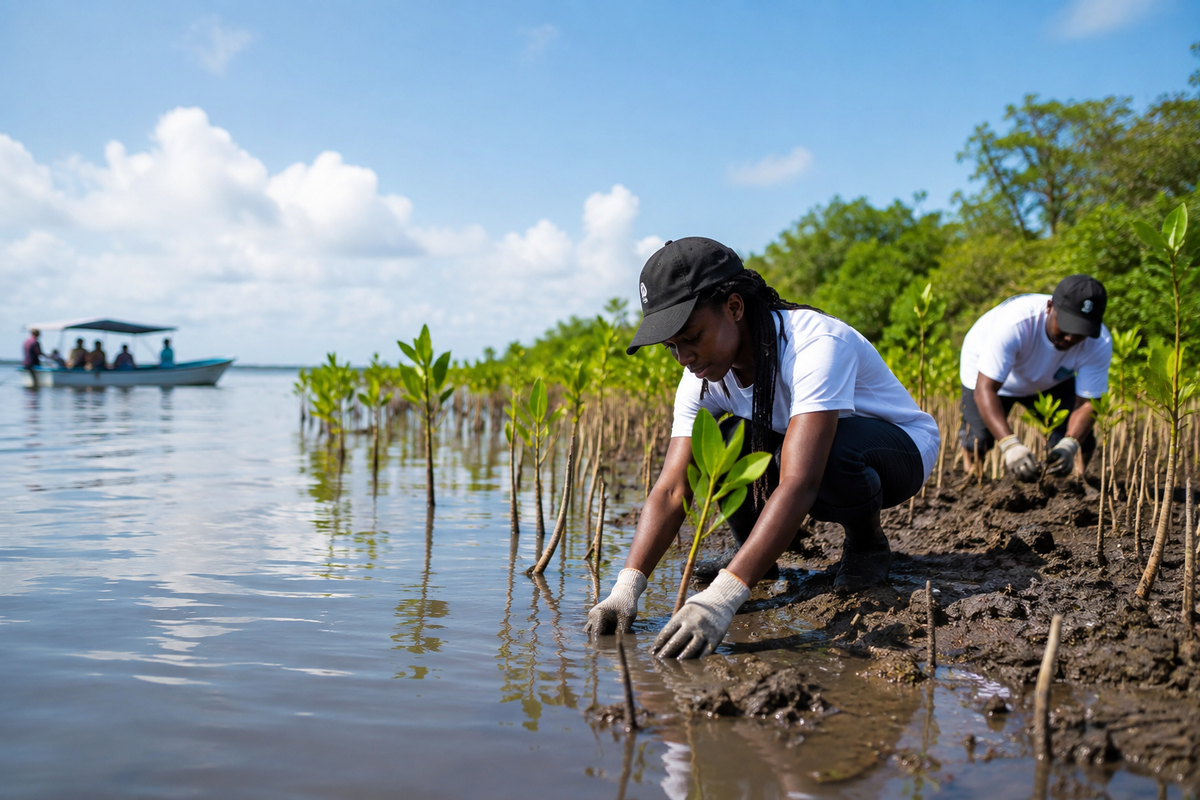
Discover how low-impact travel in Africa supports eco-tourism that funds mangrove restoration and defends vulnerable coastlines from severe coastal erosion.
Rising sea levels and aggressive wave action constantly threaten global shorelines today. Coastal degradation has led to the loss of over 35% of the world’s mangrove forests over the last four decades, leaving vulnerable coastal communities exposed to severe coastal erosion. Traditional concrete sea walls cost millions of dollars to construct and frequently disrupt local marine biodiversity.
Nature offers a resilient, self-repairing defense mechanism through healthy mangrove forests. Marine studies show that a 100-meter belt of dense mangrove trees can reduce incoming wave energy by up to 66%. Their complex root systems trap floating sediment, building shoreline elevation and stabilizing fragile beaches against destructive storm surges.
Tourist conservation levies directly bankroll progressive environmental remediation programs across vulnerable coastlines. Visitors actively fund native tree nurseries through dedicated entry permits and guided tour fees. Sustainable eco-tourism successfully fills a critical financial gap, creating continuous capital for long-term shoreline protection.
The Economic Engine of Restoration
Tourist tax revenues and entry fees create a sustainable funding engine for natural coastal defense. Every single visitor fee directly supports active marine conservation efforts in vulnerable coastal zones. Trained local guides lead daily kayak tours through pristine mangrove creeks and estuaries. A fixed percentage of each tour ticket directly funds native mangrove tree nurseries.
Former local fishermen gain direct, dignified employment as full-time coastal restoration specialists. Community members carefully harvest seeds and plant mangrove saplings along severely depleted coastlines.
Field research in coastal regions shows that community-led mangrove projects achieve survival rates of up to 88%, compared with a meager 32% in top-down government interventions. Direct local ownership turns traditional environmental conservation into a lasting economic asset for the community.
The financial journey begins when travelers purchase tour tickets or pay park entry permits. These funds flow into dedicated local conservation accounts managed by community leaders. Community groups allocate the capital to establish tree nurseries and purchase supplies. Finally, local workers plant native saplings along high-risk beaches to rebuild nature's barrier.
This direct financial chain ensures transparency and fosters real local accountability. When tourists participate in these activities, they become active partners in shoreline defense. The local economy prospers while coastal ecosystems recover and thrive.
Hospitality & Tourism Market Trends in 2026
The global travel sector actively rewards authentic environmental stewardship. Industry reports indicate that 76% of global travelers now prioritize sustainable travel experiences that deliver clear, measurable ecological impacts.
First, direct conservation levies are becoming standard industry practice. Eco-lodges add small mandatory fees directly to nightly room rates. These small contributions fund monthly mangrove-planting projects without burdening business operations.
Second, guests prefer immersive, hands-on conservation experiences. Visitors participate in guided tree-planting sessions as part of their stay packages. These interactive activities leave lasting positive memories and create passionate brand advocates.
Third, business leaders adopt regenerative operational models. Global research estimates that mangroves provide $65 billion annually in coastal protection value by preventing flooding and structural damage. Forward-thinking resort operators actively restore surrounding wetlands to guard their physical assets against rising sea levels.
Integrating environmental stewardship into core business strategies helps secure coastal land. It protects valuable resort infrastructure while attracting highly conscious, high-spending international travelers. Learning how integrating environmental sustainability drives long-term business revenue growth provides a clear competitive advantage.
3 Actionable Tips for Eco-Tourism Operators
Executing a successful restoration funding program requires clear planning and strong execution. Tourism operators can implement three effective steps to build a sustainable model.
Establish Transparent Levies
Dedicate a small two- to five-percent guest fee directly toward coastal defense funds. Give guests clear visual updates showing exactly where their money goes. Transparent financial reports build trust and encourage repeat customer visits.
Empower Local Communities
Hire local coastal residents to run tree nurseries and lead guided conservation tours. Secure fair land tenure and ensure reliable payroll support for all project staff. When local workers benefit financially, they actively protect the forests from illegal logging.
Partner with Marine Experts
Collaborate closely with qualified marine scientists and ecological researchers to guide every planting phase. Proper species selection and strategic site placement ensure maximum wave attenuation. Expert guidance prevents costly mistakes and guarantees strong long-term coastal protection.
Adopting sustainable practical models expands market reach and improves enterprise brand authority over time. Learn how modern African startup growth models drive commercial success across the continent.
The Broader Impact on Regional Economies
Coastal defense extends far beyond simple wave reduction and shoreline stabilization. Research confirms that over 80% of commercially caught fish species rely on mangrove habitats at some stage in their life cycles.
When mangroves recover, local fish populations bounce back rapidly. Marine reserves linked to eco-tourism report up to a 200% increase in local fish biomass within protected zones. Coastal fishing communities enjoy larger catches, improved food security, and stronger regional culinary supply chains.
Furthermore, mature mangrove forests act as carbon sequestration powerhouses. Studies show that mangroves store 3 to 4 times more carbon per hectare than tropical rainforests. Landmark initiatives like Kenya’s Mikoko Pamoja demonstrate that community carbon credit sales can generate over $15,000 annually for local civic infrastructure. Combining tour income with carbon offset funds guarantees long-term financial security for remote coastal regions.
Frequently Asked Questions
How do mangroves prevent coastal erosion? Mangrove root systems effectively trap sediment, slow water movement, and significantly reduce destructive wave energy along vulnerable shorelines.
How does Low Impact Travel Africa fund mangrove projects? Eco-tours allocate a direct portion of ticket fees, park entrance permits, and guest conservation levies toward seedling nurseries and planting programs.
Why do community-led mangrove projects succeed? Local residents earn stable livelihoods from tourism and conservation. Direct financial incentives ensure strong seedling protection and long-term ecosystem monitoring.
Drive Your Business Growth Today
Sustainable business operations protect physical assets while opening profitable new revenue channels. Aligning your enterprise with modern Hospitality & Tourism market trends drives measurable capital growth and long-term brand equity. Contact our strategic business consultants today to expand your digital footprint and increase market authority.
Call Us: +234 806 496 8725
Visit Our Website: www.thisisbusiness360.com