

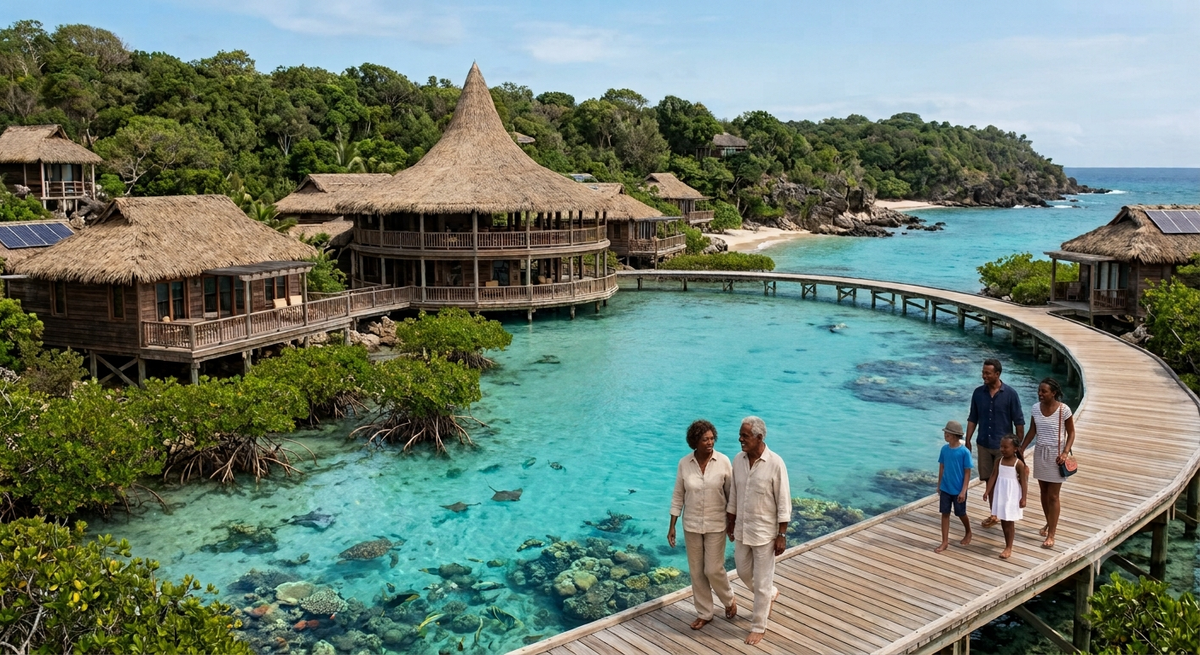
Discover how sustainable resort design enables multi-generational eco-vacations while protecting local wildlife, habitats, and regional ecosystems in 2026.
This practical analysis shows how wildlife-sensitive architecture permits multi-generational guest experiences while maintaining natural habitats and limiting ecological disruption across delicate landscapes.
Eco-conscious travelers in 2026 want immersive nature stays. Families seek places where children and grandparents can relax together safely. Sustainable resort design makes this fine balance possible through bridging human well-being with raw wilderness protection.
Developers build stunning retreats that welcome all ages without displacing native animals. Modern hospitality & tourism projects combine luxury with true environmental management, establishing a congruous framework where guest accessibility and habitat conservation work side by side.
The Growth of Family Nature Travel
Family travel patterns have changed dramatically across the hospitality & tourism sector. Modern extended families travel together, bringing different physical needs, interests, and activity levels. Based on recent market intelligence, the Global Multi-Generational Travel Market has surpassed $65.4 billion in value, with resort accommodations accounting for over 50% of overall segment demand.
Grandparents need step-free pathways, clear sightlines, and smooth transit options. Children require secure areas to explore without facing dangerous natural hazards or sudden drops. Architects meet these multiple needs by placing human well-being inside wild environments.
They design shared spaces that keep people safe while leaving animals completely undisturbed. When resorts serve three generations simultaneously, family bonding deepens. Guests spend quality time surrounded by untouched landscapes while enjoying premium hospitality amenities.
Protecting Wildlife Paths and Native Land
Traditional construction depends on land leveling, heavy excavation, and perimeter fences. This invasive approach destroys native plant habitats and cuts off vital animal migration corridors. Modern sustainable resort design limits built structures to under 30% of total land area. The remaining space stays wild, allowing local flora and fauna to thrive naturally.
Developers use elevated point foundations rather than heavy concrete slabs. Raised timber walkways allow small mammals, reptiles, and amphibians to migrate freely underneath without human friction. According to Kepri Estates Master Planning Insights, leaving natural terrain intact preserves long-term asset value. Fenceless boundaries invite local wildlife to share the territory without causing territorial conflicts. Furthermore, ecological research confirms that low-impact site footprints preserve over 80% of native biodiversity versus traditional developments.
Eco-Friendly Building and Smart Night Lighting
Construction methods determine a resort’s long-term environmental footprint. Prefabricated wooden modules can be assembled off-site and installed quickly with minimal site scarring. Industry data indicates that off-site prefabrication reduces on-site construction time by 20% to 40% and lowers material waste by up to 50%.
Nighttime light pollution disrupts nocturnal wildlife, migratory birds, and coastal sea turtles. Studies compiled by the U.S. National Park Service show that artificial light disrupts circadian rhythms across 23% of the Earth's surface. Modern properties solve this by using low-intensity, warm-spectrum LED lights directed strictly downward onto footpaths.
Acoustic baffles and natural timber walls absorb indoor noise effectively. Research on avian behavior reported in The Guardian Wildlife Studies reveals that unmitigated resort noise and lighting extend bird activity by nearly 50 minutes daily, severely stressing local populations.
Safe Nature Activities for All Ages
Grandparents and toddlers can observe wild nature together without disturbing local habitats. Covered viewing decks and screened hides give guests close-up views without startling nervous animals. Native gardens feature indigenous trees, fruit plants, and sweet-smelling herbs. These sensory spaces engage young children while providing quiet, healing rest areas for seniors.
In a recent architectural breakdown featured in Outlook Luxe Architecture Reviews, architects showed how native planting restores land biodiversity. What starts as empty ground can quickly turn into a blossoming sanctuary supporting over 70 bird species and hundreds of native plants. These thoughtful choices create rich learning experiences for every generation. Families enjoy meaningful, mutual moments while actively preserving nature for the future.
Latest Trends in Green Travel
Recent hospitality & tourism market patterns show growing global demand for low-density nature lodges. Hospitality analytics reveal that 75% of global travelers actively look for sustainable stays, with over 60% willing to pay higher daily rates for verified eco-friendly operations.
Properties that highlight authentic conservation and low-impact architecture build strong brand loyalty. Eco-sensitive development creates an enduring real estate asset that easily outperforms standard suburban hotels. Investors also benefit from lower ongoing utility costs due to renewable energy incorporation. Protecting natural surroundings directly yields higher long-term financial returns and guest satisfaction.
Frequently Asked Questions
How does sustainable resort design protect local wildlife? It preserves natural corridors, uses raised walkways, restricts night lighting, and limits construction footprint to under 30% of land.
Can eco-resorts accommodate elderly guests safely? Yes. Gentle elevated boardwalks and zero-threshold suites ensure full access for seniors without harming native vegetation.
Why is dark-sky lighting important in eco-resorts? Warm, downward lighting prevents disorientation in birds, nocturnal mammals, and marine life while protecting the natural night sky.
How do off-site prefabricated structures benefit eco-resorts? Prefabricated modules arrive pre-built, reducing heavy machinery traffic, construction noise, site excavation, and overall on-site construction schedules.
Start Your Sustainable Project Today
Are you ready to develop a profitable, eco-friendly retreat that protects local wildlife? Our skilled team offers tailored design and development solutions for modern hospitality leaders.
Call Us Direct: +234 806 496 8725
Explore Solutions: Visit our website at www.thisisbusiness360.com