

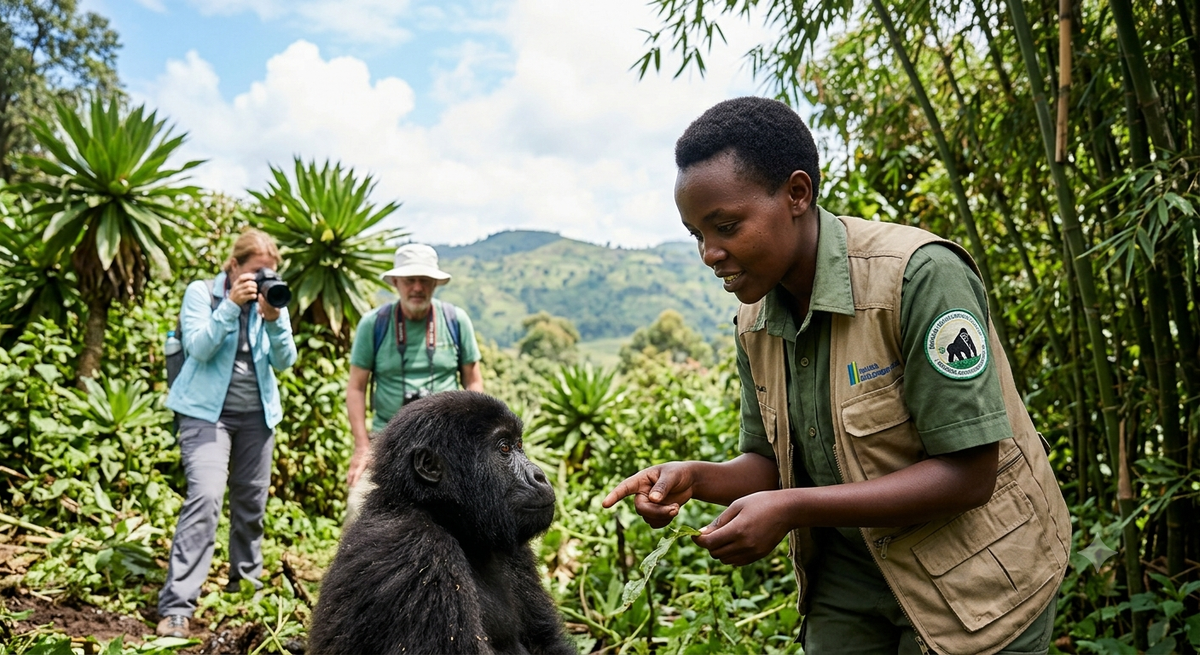
Discover how Rwanda's high-value, low-volume model protects mountain gorillas, drives economic growth, and shapes sustainable travel trends for 2026.
Traditional tourism models often rely on mass volume. That approach frequently degrades fragile ecosystems and strains local resources. Rwanda chose a completely different path. By restricting visitor numbers, the country ensures that every single guest leaves a positive, regenerative footprint on the environment.
Decades ago, regional conflict and habitat loss pushed mountain gorillas dangerously close to extinction. Fewer than three hundred individuals remained in the wild. Through visionary leadership, strict environmental policies, and targeted conservation financing, Rwanda completely reversed this trajectory. Recent economic assessments show that the nation's travel and tourism sector contributed a record-breaking Fr1.9TN to the economy, accounting for nearly 10 percent of total national GDP.
Today, the nation stands as a shining global beacon of hope, proving that endangered species can recover when a country designs its tourism sector around ecological preservation rather than sheer visitor volume.
The Power of Pricing Mechanics
Why do trekking permits cost over one thousand dollars? High pricing creates vital scarcity and strict control. Fewer daily visitors mean less human disruption to fragile montane rainforest habitats. Pricing acts as an effective biological firewall. It stops mass tourism from destroying natural assets. Global data highlights these breakthroughs across distinct institutional metrics:
- Economic Milestone: Rwanda’s travel sector contributed a record-breaking Fr1.9TN to the economy, representing nearly 10% of total national GDP.
- Employment Growth: The industry successfully supported nearly 386,000 jobs nationwide, expanding local livelihoods and reducing reliance on traditional agriculture.
- Population Rebound: Comprehensive ecological studies indicate mountain gorilla numbers in the Virunga Massif have surged past 1,000 individuals, prompting a vital reclassification from critically endangered to endangered.
- Ecosystem Valuation: Conservation assessments by the Wildlife Conservation Society estimate the economic value of regional ecosystem services at US$4.8 billion.
Market Trends and Practical Advice
Current research hubs show surging global demand for sustainable journeys. Modern travelers want meaningful, low-impact adventures that give back to the host country. Rwanda leads this shift within the hospitality and tourism sectors worldwide. Additional operational data emphasizes these changing metrics:
- Community Reinvestment: Through dedicated revenue-sharing frameworks, the government has funded over 881 local community projects totaling millions of dollars in infrastructure.
- Airport Expansion: Strategic investments, including the development of Bugesera International Airport, are engineered to handle 14 million passengers annually to boost long-term connectivity.
- Forest Protection Goals: National environmental targets aim to safeguard 50% of natural ecosystems to ensure uninterrupted wildlife corridors and climate resilience.
Essential Tips for Your Visit
- Book Early: Secure your limited permits many months in advance.
- Pack Light: Bring neutral-colored layers for cool mountain mornings.
- Stay Healthy: Sick visitors cannot track gorillas to prevent disease transmission.
Careful planning ensures that your journey respects wildlife safety guidelines while maximizing your personal travel experience.
Economic Resilience and Community Impact
Economic analysis proves that high-value tourism delivers superior long-term results. Instead of chasing millions of low-spending tourists, Rwanda targets discerning travelers who invest heavily in local luxury lodges and conservation funds.
This financial influx directly benefits surrounding populations. When local communities see tangible financial rewards from wildlife protection, poaching rates drop significantly. Schools, clean water infrastructure, and healthcare centers emerge near the park boundaries. This creates a harmonious cycle where people and endangered mountain gorillas thrive together side by side.
Frequently Asked Questions
What makes Rwanda’s tourism model unique? It prioritizes high financial yields from fewer travelers over mass visitor numbers. This safeguards wildlife populations.
How does this strategy impact local communities? A direct percentage of park revenues builds local schools, clean water projects, and essential health centers.
Where can I book a gorilla trek? Tours are managed through accredited operators and the Rwanda Development Board.
Sustainable Hospitality & Tourism proves that nature and profit can coexist beautifully. Rwanda offers a masterclass blueprint for Eco Tourism Africa. Protect our planet while experiencing breathtaking wildlife encounters this year.
Ready to plan your sustainable African journey? Connect with our expert team for custom itineraries and up-to-date travel guidance.
Call: +234 806 496 8725
Visit our website:This is Business 360