

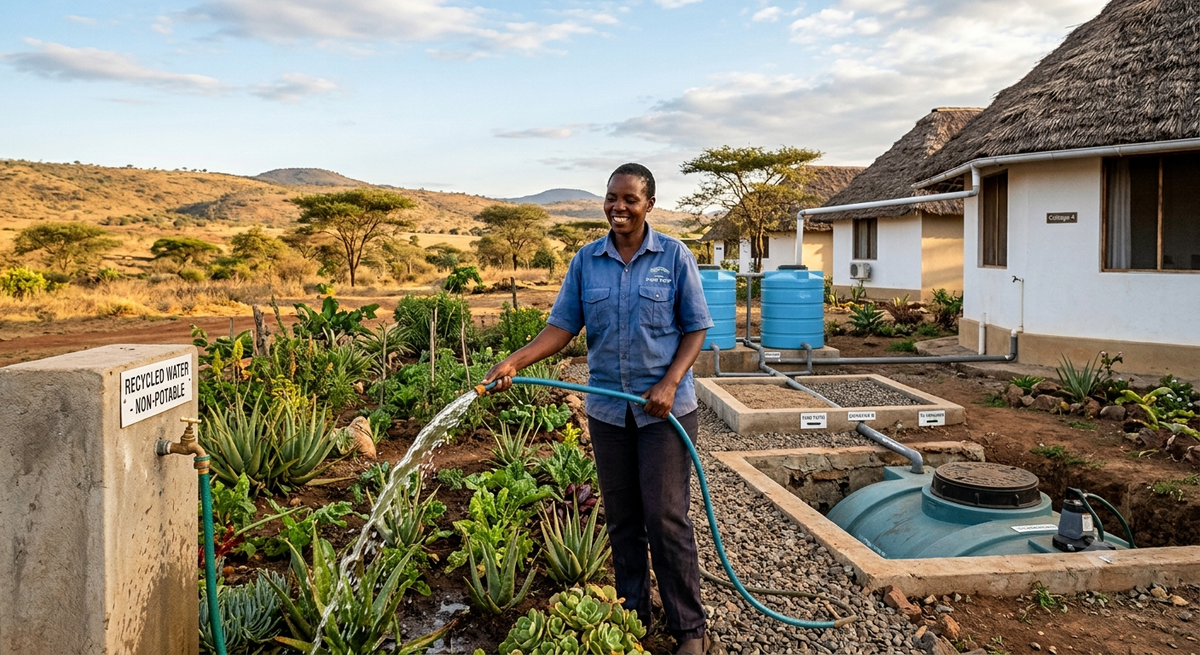
Master sustainable hospitality strategies in Africa with greywater recycling. Save up to 40% on utility costs and upgrade your hotel operations today!
Water scarcity threatens hotel operations across sub-Saharan Africa. High utility tariffs and municipal outages hurt profits. Mid-tier lodge and hotel managers must adapt quickly. Adopting sustainable hospitality Africa methods is no longer optional. It protects your cash flow and elevates guest satisfaction.
Greywater recycling transforms wastewater into a reliable operational resource. You can lower water utility bills by up to 40% in 2026. This article breaks down practical implementation strategies for growing hospitality brands.
According to global research from UN-Water, over 800 million people worldwide face severe water stress daily. Sub-Saharan Africa experiences some of the highest municipal supply gaps today. Hotel properties operating in water-stressed regions experience frequent supply shutdowns and elevated utility bills. Recycling wastewater offers a proven path to decoupling property growth from municipal water shortages.
The Power of Source Separation in Hospitality & Tourism
Commercial stays generate vast amounts of light greywater daily. Guest showers, bathroom sinks, and laundry facilities produce clean wastewater. This stream remains free from kitchen grease and sewage. In a standard hotel setup, water usage splits into two distinct channels. Showers, bathroom basins, and laundry machines produce light greywater. Toilets and kitchen grease traps produce heavy blackwater.
A study published in PMC Water Air Soil Pollution reveals that greywater constitutes up to 75% of total domestic wastewater volume. This makes greywater the largest single target for operational recovery and reuse. Light greywater flows directly into an on-site modular recycling system. Once filtered, this water returns to the property for non-potable uses. Staff safely redirect this treated water to flush toilets, water gardens, and pre-wash outdoor surfaces.
Meanwhile, heavy blackwater routes separately into standard municipal sewage or septic tanks. Separating blackwater from light greywater significantly reduces municipal freshwater reliance. Research demonstrates that toilet flushing alone consumes 20% to 40% of commercial water demand.
You can redirect treated shower water straight to toilet flushing and garden beds. This simple separation preserves high-grade potable water strictly for drinking and cooking. Integrating smart water management boosts overall efficiency across the regional hospitality and tourism sector.
Market Trends & Sustainable Filtration Technologies
Current market trends show international travelers favor eco-certified accommodations. Overseas guests expect responsible environmental practices without sacrificing personal comfort. Modern travelers choose hotels that demonstrate verifiable carbon and water reduction measures. A comprehensive review published in the Journal of Genetic and Environment Conservation confirms that on-site greywater systems reduce commercial freshwater consumption by 30% to 50%.
Furthermore, environmental metrics from the International Finance Corporation EDGE Program show that a 20% reduction in water usage unlocks valuable international green building certifications. Hoteliers can choose from three main filtration approaches depending on property type, available space, and budget:
- Constructed Wetlands (Low CAPEX): Best suited for rural lodges and safari camps. These setups require no electricity and rely on natural bio-filtering through reed beds and gravel layers.
- Multi-Stage Sand & Charcoal Systems (Moderate CAPEX): Ideal for boutique urban stays. They offer a compact footprint and require simple, low-cost maintenance routines for staff.
- Automated UV & Chlorination Systems (Higher CAPEX): Built for larger mid-tier chain hotels. These active units deliver odorless, crystal-clear water directly to high-frequency toilet flush tanks.
Case studies published by the One Planet Network show hospitality greywater systems deliver an average monthly water consumption saving of 24% to 26%. Constructed wetlands and gravel-bed biofilters give eco-lodges reliable, low-maintenance treatment. Compact urban hotels benefit from automated sand-disk filters paired with UV disinfection. These setups neutralize pathogens and eliminate foul odors. They keep recycled water clear, safe, and visually appealing for hotel guests.
Overcoming Guest Perceptions with Smart Systems
Guest satisfaction remains paramount for hotel operators. Recycled water must never spoil the luxury experience.
- Install sub-surface drip lines for garden irrigation to prevent spray drift and chemical odors.
- Use color-free, odorless disinfection tabs in storage tanks feeding flush toilets.
- Feature discrete bathroom signage highlighting your hotel's eco-friendly practices.
The World Health Organization Guidelines for Safe Reuse state that multi-barrier filtration and chlorination eliminate health risks for non-potable uses. Communicating environmental commitment builds strong brand trust.
Step-by-Step Operator Checklist for 2026
Ready to upgrade your property? Follow this execution roadmap:
- Audit Water Usage: Track daily intake across guest rooms, laundry, and gardens.
- Inspect Plumbing Systems: Determine if dual-plumbing retrofits are feasible.
- Select Scalable Equipment: Source modular treatment systems with local replacement parts.
- Train On-Site Teams: Teach maintenance staff basic weekly filter backwashing routines.
- Monitor Quality Standards: Test output monthly to ensure compliance with local health regulations.
Frequently Asked Questions
Does greywater recycling create foul odors in guest rooms? No. Properly treated greywater uses multi-stage filtration and UV or chlorine dosing. This process removes organic matter and eliminates bad smells.
How much water can a mid-tier hotel save annually? Most mid-tier hotels reduce municipal water consumption by 30% to 50%. This saving depends directly on guest occupancy rates and landscape size.
Is greywater safe for hotel garden irrigation? Yes. Sub-surface irrigation delivers nutrient-rich water directly to plant roots. It prevents human contact and avoids surface runoff.
Take Action: Transform Your Property Today
Upgrade your operational resilience and cut utility bills this year. Let our expert media team showcase your green innovations to global impact investors.
Call Us Today: +234 806 496 8725
Visit Our Website:www.thisisbusiness360.com