

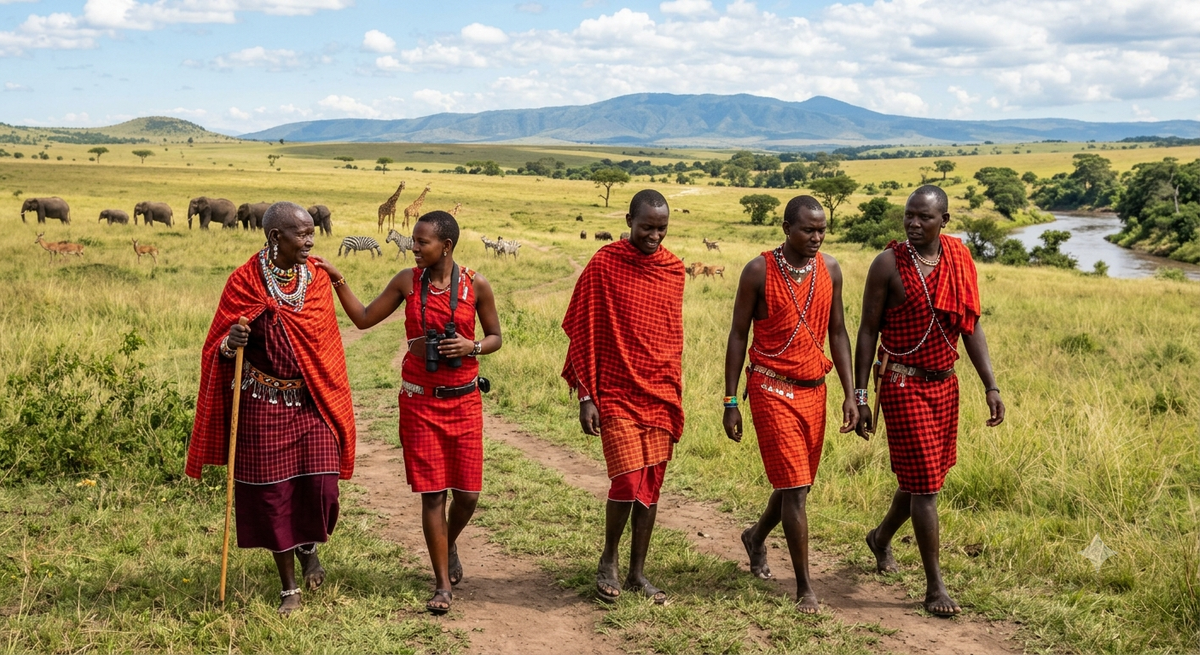
Discover how community-led conservancies protect Kenya's wildlife through sustainable hospitality and tourism. Explore our 2026 impact guide.
Global travelers seek experiences that honor nature and heritage. This demand creates authentic encounters across the continent. By choosing these destinations, tourists directly fund the preservation of endangered ecosystems. This network turns luxury safaris into engines for community development and environmental preservation.
Over 65% of Kenya’s iconic wildlife lives outside state-protected national parks. This places a major responsibility on local people. Indigenous land stewardship is transforming Hospitality & Tourism across East Africa. This approach shifts power back to traditional guardians of the wilderness. Every $100 spent at a community-led lodge directly protects 7 acres of wildlife corridor. These funds also secure fair wages for indigenous rangers, ensuring measurable outcomes for local conservation.
The Power of Indigenous Land Stewardship
Traditional conservation models previously fenced off nature from local populations. That outdated method created deep resentment and fueled illegal poaching. Statistics from the Kenya Wildlife Conservancies Association (KWCA) baseline data reveal that Kenya lost nearly 70% of its wildlife over the past 30 years. Space fragmentation and climate pressures drove this staggering decline.
Today, community-led conservancies offer a stronger alternative. Communities register their traditional lands to benefit both people and wildlife. This framework empowers people to own, manage, and protect their natural resources. It blends indigenous wisdom with modern wildlife security.
According to the latest KWCA National Status Report, community conservancies now span 230 locations across the country. These lands cover 9.04 million hectares and account for 16% of Kenya's total landmass. This model marks a shift from historical isolation toward inclusive landscape protection.
Real Success Stories from the Ground
The Sera Conservancy is a strong example of this movement. It is East Africa's first community-owned black rhino sanctuary. Local people have grown the rhino population from 10 to 23 individuals.
The LUMO Community Wildlife Conservancy Sanctuary showcases a living landscape. Here, red-dusted elephants carve migratory paths alongside grazing livestock. These spaces show that humans and wildlife can share the Earth peacefully.
Progress is also happening along the coast. Focused research from the Ishaqbin Conservancy Species Recovery Data shows that local protection efforts doubled the population of the critically endangered Hirola antelope in just three years. These verified results show that local management delivers strong environmental dividends.
Balancing Livelihoods and Wildlife Protection
Living alongside large wildlife brings serious challenges. Elephants can easily destroy an entire crop of cassava or maize in three days. Lions also threaten local livestock herds. A multi-year study on the Kenya National Compensation Scheme Dataset analyzed 18,794 conflict claims nationwide.
The data confirmed that elephants caused over 75% of all crop and property damage. Local communities actively design practical solutions to handle these daily conflicts. They use innovative tools to protect their homesteads safely:
- Motion-sensor lights to scare away nocturnal predators.
- Early warning collars that send text alerts when wildlife wanders too close.
Hospitality & Tourism Driving Economic Growth
Community conservancies show how sustainable travel funds critical local infrastructure. Tourism operators pay direct lease fees to indigenous landowners. In the Maasai Mara, a KWCA Regional Impact Study analyzed 15 local community conservancies protecting 450,000 acres.
This targeted protection helped double the local lion population over the last decade. Economic metrics from the Maasai Mara Household Income Report show that 3,000 households across these conservancies now earn more than $4 million annually from sustainable tourism.
On a grander scale, the KWCA Socio-Economic Ledger records that these nationwide initiatives directly support 930,000 households. The movement also provides steady employment for more than 4,500 conservancy staff members.
Many young Maasai and Samburu individuals train at specialized institutions like the Koiyaki Guiding School, and over a third of graduating guides are now local women. This keeps financial gains deeply rooted in local communities.
Practical Tips for the Conscious Traveler
- Verify Ownership: Choose eco-lodges that are either fully owned by or directly leased to the indigenous community.
- Support Local Artisans: Buy beadwork directly from women's cooperatives to keep funds in the local economy.
- Respect Local Zoning: Follow your local rangers' guidance on rotational grazing boundaries.
Frequently Asked Questions
What is community-based tourism in Africa? It is a sustainable travel model where local communities own, manage, and directly benefit from tourism enterprises on their ancestral lands.
How do conservancies help save wildlife? They protect vital migratory corridors outside national parks, reduce poaching through community rangers, and resolve human-wildlife conflicts using practical innovations.
Where does the money from eco-safaris go? The revenue directly funds land leases, healthcare clinics, school bursaries, and fair wages for local conservation staff.
Drive Sustainable Growth with Business 360
Building an impactful hospitality brand requires deep strategic planning. We help operators align with modern sustainable travel trends across the continent. Optimize your business footprint for greater ecological and financial success with Business 360.
Take action today to transform your business model:
Call Us: +234 806 496 8725
Visit Our Website: This Is Business 360