

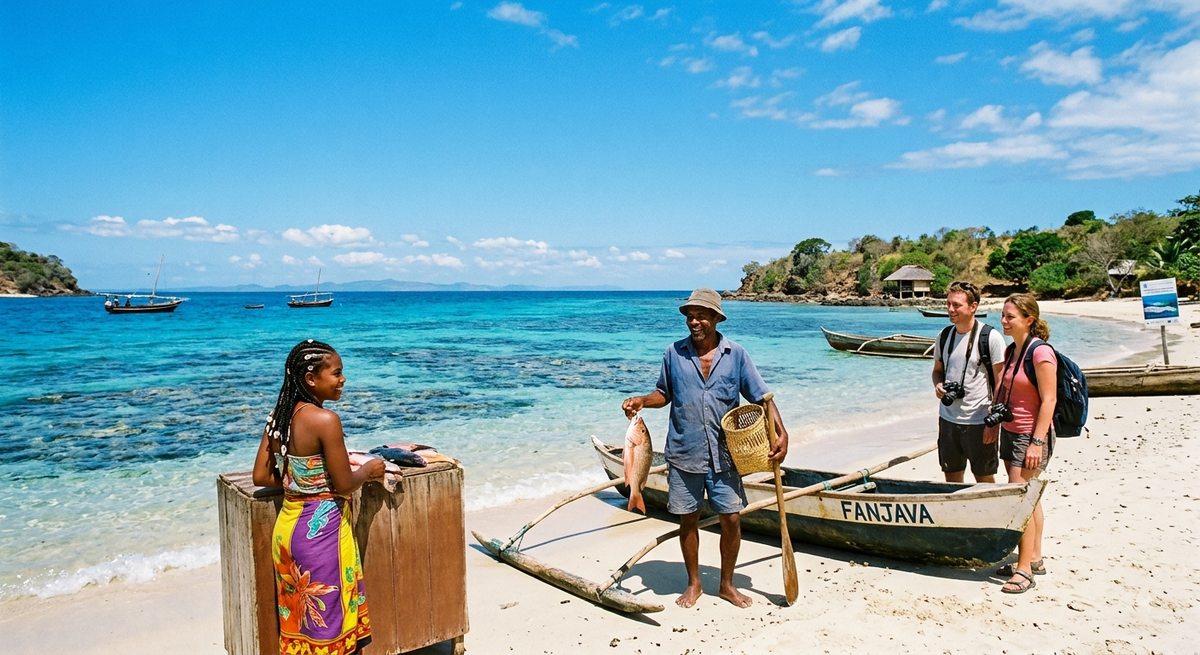
Discover how Madagascar’s marine reserves act as economic engines, boosting local growth through sustainable travel and community-led conservation.
Madagascar features approximately 4,828 kilometers of coastline filled with vibrant coral reefs and rich marine life. The island’s Exclusive Economic Zone covers 1.14 million square kilometers. These immense coastal waters are vital for local survival and regional enterprise.
Today, marine reserves are changing the regional economic landscape. They turn pristine waters into powerful economic engines that uplift coastal communities.
Key research metrics highlight the scale of Madagascar’s ocean potential:
- Coastline: 4,828 km of diverse shorelines and coastal habitats
- Economic Zone: 1.14 million square kilometers of protected ocean waters
- Fishery Contribution: A significant share of national GDP, supporting export earnings and local livelihoods, as stated by World Bank data
- Livelihoods: 1.5 million coastal residents relying on daily marine resources
- Unreported Catch: Up to 50% of historical harvest previously unmonitored
- Protected Areas: Approximately 280 active Locally Managed Marine Areas across the coastline
- Tourism Goal: One million international visitors targeted by 2028
- Funding Boost: $5.3 million allocated by the Global Biodiversity Framework Fund
Historically, overfishing and destructive netting severely threatened coastal communities. World Bank research documents fisheries as a key contributor to both local livelihoods and national growth in Madagascar. However, unregulated catches historically represented up to 50% of total production. Over 1.5 million people rely directly on these marine resources to survive each day. In response, coastal towns embraced eco-tourism as a sustainable path forward.
The transition to a sustainable blue model shifted the local economic dynamic. Where unregulated nearshore netting once depleted fish stocks, community-managed reserves now allow coral reefs to regenerate. Newly established eco-lodges provide steady, year-round financial security for local families.
Local Towns Lead the Green Change
Local ownership consistently drives successful marine conservation. Malagasy communities now actively manage approximately 280 Locally Managed Marine Areas across nearshore zones. These reserves protect fragile biodiversity while creating viable local job opportunities.
According to peer-reviewed research, Madagascar holds approximately 250,000 hectares of mangroves, representing roughly 2% of global coverage. The island also has extensive coral reefs that host over 300 coral species and nearly 400 reef fish species. Community governance relies on customary social codes called Dina, legally recognized rules that govern resource access and prevent destructive harvesting practices.
Conservation institutions like WWF Madagascar actively support these community-led initiatives. A recent $5.3 million GBFF allocation reinforces this local management network. As fish populations recover inside protected boundaries, surrounding coastal towns gain unprecedented economic stability.
Many former small-scale fishers now work as professional marine guides. Others manage protected dive sites, run boat transfers, or operate community transport services. This strategic shift significantly reduces harvesting pressure on fragile ocean ecosystems while boosting household earnings.
Travel Growth and New Visitor Trends
Recent market trends highlight exceptionally strong global demand for authentic, sustainable travel experiences. Today’s travelers actively seek verified eco-friendly destinations that give back to host communities. Madagascar’s government has set an ambitious target of one million annual international visitors by 2028, with tourism positioned as a growing pillar of the national economy.
Hospitality and tourism operators now invest directly in protected bays and marine sanctuaries. Eco-lodges routinely partner with local community associations to offer ethical, low-impact excursions.
Under this collaborative model, guest fees fund protected marine zones and local community patrols. The resulting reef renewal yields higher marine stocks while providing stable revenue for local infrastructure.
Whale Watching: Sainte-Marie operators directly fund seasonal ocean monitoring and marine mammal research.
Ecological Diving: Reef entry fees support essential community healthcare and clean water projects.
Paddled Kayaking: Silent guided tours protect fragile mangrove estuaries while generating income for guides.
By integrating local enterprise with ocean stewardship, coastal regions create self-sustaining revenue loops. To explore broader corporate strategies that blend sustainability with profitability, check out our insights on Business 360.
Easy Tips for Green Travelers
Travelers play a crucial role in supporting these delicate micro-economies. Choosing responsible operators ensures trip funds stay directly within local villages.
Book Certified Guides: Always select local operators that actively support community-managed reserves.
Respect Restricted Zones: Follow seasonal no-take closures and protected reef boundaries.
Support Local Markets: Purchase handmade crafts and fresh food directly from coastal vendors.
Choose Green Lodging: Stay at eco-lodges that utilize solar energy and support marine patrols.
Strategic investments in hospitality and tourism clearly demonstrate that conservation pays off handsomely. Protecting the ocean builds lasting economic resilience for future generations.
Frequently Asked Questions
What is a Locally Managed Marine Area (LMMA)? An LMMA is a coastal zone managed directly by local residents. Communities enforce sustainable rules using traditional customary laws to protect fish stocks, mangroves, and coral reefs.
How does eco-tourism directly help Malagasy fishers? Tourism provides stable alternative income streams. Former fishers work as skilled boat captains, dive guides, and park rangers. This shift significantly reduces reliance on dwindling nearshore fish catches.
What role does hospitality and tourism play in ocean conservation? Responsible lodges generate vital funding for enforcement, research, and conservation. They hire local residents and purchase sustainably sourced seafood. This approach strengthens the entire coastal economy.
Grow Your Travel Business Today
Ready to leverage sustainable travel models for long-term organizational growth? We provide updates and tailored business strategies designed to elevate your commercial impact. To discover how our strategic advisory services can propel your enterprise, visit our services portal today.
Call: +234 806 496 8725 Website: www.thisisbusiness360.com