

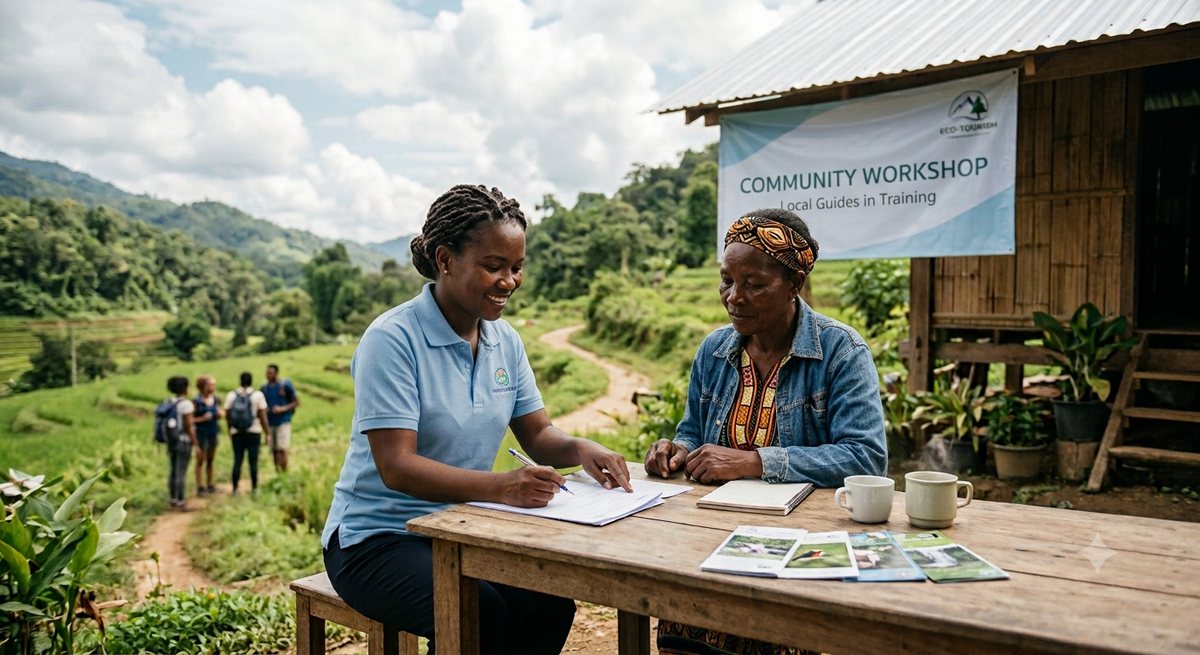
Discover how micro-loans transform Community-Based Tourism in Africa. Learn how tiny capital fuels micro-guides, builds enterprises, and drives local growth.
Grassroots Eco-Tourism Enterprises need quick capital access to grow. Strategic funding transforms local experts into thriving business owners. Independent guides form the foundation of authentic travel. They offer unique insights into regional culture and ecology. However, limited access to formal banking often holds them back. Small financial distributions change this reality completely. Global research underscores the sheer scale of this economic sector. The global ecotourism market is projected to reach $392.52 billion in 2026.
Furthermore, community-based ecotourism alone is expanding at an 8.1% annual growth rate. Micro-loans create a fast track to economic independence within this market. When guides secure proper funding, whole communities thrive together. Local supply chains expand naturally. Sustainable practices replace short-term resource exploitation. Empowering these grassroots leaders drives long-term economic stability across rural regions.
The Power of Small Capital in Eco-Tourism
Local guides know the terrain better than anyone else. Yet, many lack capital for basic gear, licenses, or marketing. High interest rates from traditional lenders make funding impossible. Standard financial institutions view rural entrepreneurs as high-risk clients. They demand heavy collateral that small-scale guides simply do not possess. Recent financial surveys indicate that the rural micro-entrepreneurs rely entirely on informal funding sources due to these formal credit barriers.
Micro-loans solve this systemic funding gap. Small financial distributions create immediate economic independence for independent operators. Studies on microfinance inclusion demonstrate that structured training increases microfinance understanding from 35% to 88% among rural participants. Micro-finance institutions assess local knowledge, community standing, and business intent over physical collateral. This progressive approach unlocks financial access for thousands of dedicated guides.
How Capital Reaches Grassroots Guides
Traditional banks often reject small rural requests. Micro-finance organizations provide targeted funding options instead. The funding journey moves efficiently from guide identification to issuing manageable loans between $300 and $1,500. Next, guides acquire vital operational gear and start generating direct revenue immediately.
Guides invest these micro-loans into essential tools:
- High-quality binoculars and professional spotting scopes.
- Advanced wilderness safety gear and medical kits.
- Official local guiding licenses and park permits.
- Solar-powered charging kits for remote multi-day treks.
These minor additions instantly improve guest safety and overall satisfaction. They also help local operators charge premium rates for their tours. Well-equipped guides project confidence and professionalism. This transformation attracts high-value eco-travelers seeking authentic, secure adventures. Learn more about sustainable funding strategies on our Business 360 Knowledge Hub.
Impact of Small Capital Distributions
Small funding distributions deliver extraordinarily high returns in rural destinations. Consider the measurable economic impact on independent wildlife tracking enterprises across African reserves.
Before receiving capital, a typical independent tracker earns around $120 monthly. Limited equipment restricts them to basic, low-paying walking tours. Booking volume remains low at roughly four tours per month. The lack of reliable communication tools prevents direct online bookings.
A targeted $500 micro-loan radically shifts this economic trajectory. With professional optics and certified safety gear, the same guide secures up to fourteen tour bookings per month. Their average monthly income rises to $480 within one season, marking a 300% income increase.
Equipped with a reliable smartphone, they connect directly with international travel planners. Research shows that implementing digital payments boosts rural banking adoption from 25% to 75%. Most importantly, micro-loan initiatives in these regions maintain an impressive 98.4% on-time repayment rate. Guides take immense pride in repaying promptly to help fund peers.
Small capital creates a resilient financial safety net. It allows local entrepreneurs to build thriving enterprises without falling into predatory debt cycles.
Market Trends Shaping Small Tourism Enterprise Funding
Understanding broader market trends helps guides secure capital faster and adapt to changing visitor expectations. Eco-conscious travelers increasingly prefer direct local interactions over large, distant agencies. Market data reveals that group and experience-based travelers account for 79.3% of total ecotourism revenue, favoring authentic, community-led excursions. Micro-financing for micro-guides offers a strong value proposition for 2026. Small capital distributions consistently boost local guide retention by 40% in key conservation zones.
To capture market share, guides must update their digital payment systems. Industry figures show that full confidence in applying for small enterprise credit jumps from 20% to 71% after basic financial literacy training. Accepting international mobile transfers attracts higher-spending travelers. Digital connectivity allows micro-guides to list services on global booking platforms without expensive intermediaries.
Integrating micro-loans into sustainable hospitality and tourism empowers host communities to protect wildlife ecosystems directly. When local guides earn steady income through tourism, poaching and deforestation rates drop significantly. Conservation becomes a direct source of livelihood rather than an economic burden.
Practical Action Plan for Local Guides
Follow these practical steps to secure, manage, and maximize small business loans:
- Form a Local Guild: Group accountability lowers interest rates and builds collective creditworthiness for all members.
- Track Daily Expenses: Keep detailed, transparent records of current tour income, equipment maintenance, and operating costs.
- Borrow for Revenue Gear: Direct capital exclusively toward income-generating assets that attract paying clients.
- Offer Eco-Packages: Combine local guiding services with village home-stays to increase total guest spending per visit.
- Build Digital Visibility: Set up simple social media profiles to showcase tour highlights and client reviews directly.
Implementing these steps elevates micro-guides into robust enterprise leaders across hospitality and tourism. Financial literacy training ensures long-term viability far beyond the initial loan term.
Frequently Asked Questions
What is the average micro-loan size for local tour guides? Most micro-loans range between $300 and $1,500. This targeted amount covers essential gear, official licensing, safety equipment, and basic digital marketing setup.
How do micro-loans support conservation efforts? When guides earn sustainable, predictable incomes, reliance on unsustainable resource harvesting drops sharply. Community members become active stewards of local ecosystems.
Why is local ownership important in sustainable tourism? Local ownership keeps tourism profits directly within host communities. It strengthens regional economic resilience and preserves authentic cultural traditions.
Scale Your Tourism Enterprise Today
Ready to transform your local enterprise with tailored financial strategies? We help micro-enterprises build sustainable, highly profitable business models through expert guidance and strategic planning.
Call Us Today: +234 806 496 8725
Visit Our Website:www.thisisbusiness360.com