

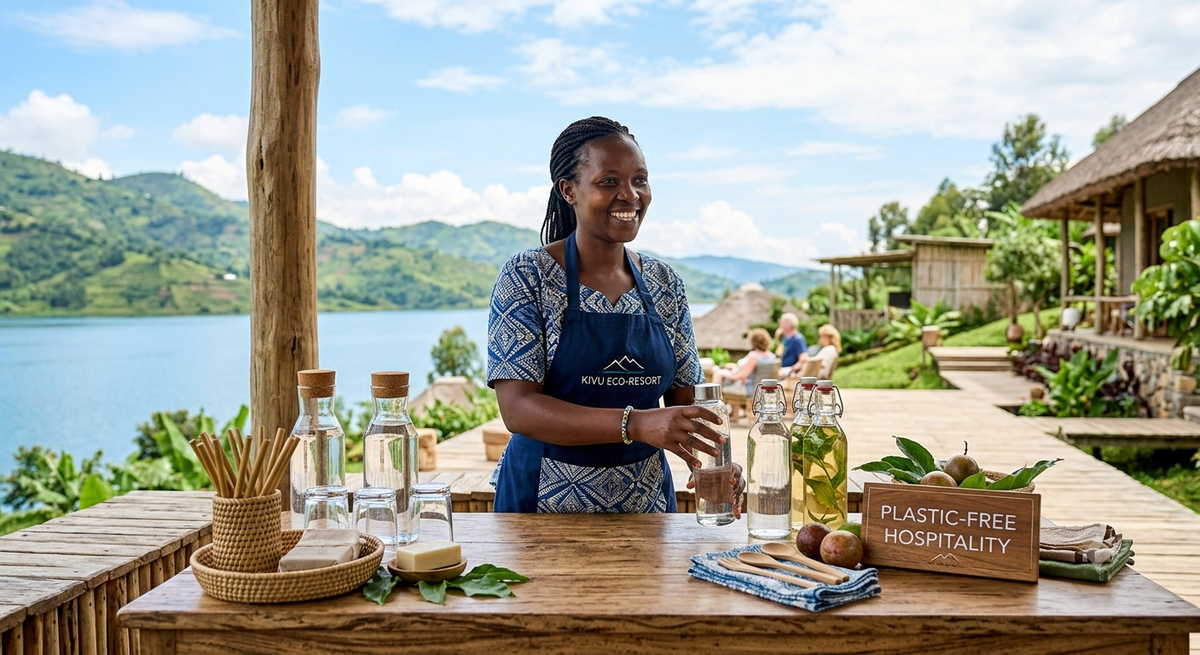
Master plastic-free operations in 2026. Explore how Rwandan resorts achieve the African Green Hotel Certification with actionable eco-friendly protocols.
Achieving the prestigious African Green Hotel Certification is the ultimate reward for eco-luxury properties in 2026. This recognition requires deep commitment. The hospitality and tourism industry faces immense pressure to eliminate waste. Globally, research shows that 60% of the 8.3 billion tons of plastic produced since 1950 end up in landfills.
Rwanda leads this green movement with absolute precision. Data confirm that 34 of 54 African nations have restricted single-use plastics since 2000. Strict national laws, such as Law N° 17/2019 via ELAW, prohibit single-use plastics nationwide. Violators face heavy regulatory fines ranging from 5,000 to 100,000 Rwandan Francs.
This strict environment forces a total shift in daily hotel management. Let us analyze real case studies from Rwandan luxury lodges. Discover how they maintain elite standards without using plastic.
Rethinking Food and Beverage
Luxury guests expect top-tier dining. However, conventional kitchens rely heavily on plastic storage. This is problematic because global plastic manufacturing is projected to double by 2035. Top Rwandan eco-lodges completely reinvented this supply chain. Properties such as Singita Kwitonda Lodge and Wilderness Magashi use innovative alternatives. They protect the delicate ecosystems of Volcanoes National Park and Akagera.
Concrete Operational Protocols:
- The Beeswax Solution: Chefs replace standard cling wrap with local, breathable beeswax wraps.
- Bulk Over Portions: Butter, jams, and condiments arrive in bulk glass jars, avoiding single-serve plastic cups.
- In-House Water Bottling: Resorts install reverse-osmosis filtration plants. They serve water exclusively in sanitized glass bottles.
These changes alter the physical workspace. Kitchens become aromatic, natural environments. Guests enjoy fresher food, free from synthetic chemical contact.
Luxury Without Synthetic Waste
The modern traveler notices every small touch. Guest rooms traditionally feature many hidden plastic items. Environmental studies show global tourism generates up to 14% of all solid waste. Shifting away from these items proves that sustainability improves the guest experience.
Properties seeking African Green Hotel certification must audit their entire housekeeping department. True eco-luxury looks clean because it avoids single-use items. Rwandan resorts achieve this by replacing traditional plastic water bottles with elegant, labeled refillable glass carafes. They swap out synthetic miniature toiletries for refillable, locally-made ceramic pumps.
This significantly reduces plastic waste while adding a premium aesthetic. Furthermore, guest amenities like plastic toothbrushes and razors are replaced with biodegradable bamboo and wooden alternatives. Housekeeping teams also eliminate plastic laundry bags entirely, using durable, washable woven canvas and cotton totes instead.
Navigating Current Market Trends and Friction Points
Adopting circular economic principles yields impressive long-term benefits. However, hotels face major structural challenges. Up-to-date data highlights these clear market realities. Current market trends show that 66% of luxury consumers prefer verified sustainable brands. Furthermore, data from 2026 confirms that certified environmental stewardship properties attract 20% more high-value travelers than non-certified competitors.
Traditional logistics inherently produces high amounts of plastic waste, which now results in severe legal penalties. To transition successfully, resorts must implement circular logistics that favor bulk supply chains. This shift guarantees compliance and secures elite industry status.
The primary hurdle is the regional supply chain. Many food suppliers still package wholesale items in heavy plastic wrap. Leading resorts now use their immense purchasing power to resolve this issue. They require local farmers to deliver produce in woven baskets or reusable wooden crates.
High-end properties also invest heavily in worker education. Teams learn to identify hidden plastics. This deep training ensures complete compliance with national green initiatives.
Actionable Steps to Audit Your Hospitality Business
Do you want to prepare your property for the highest eco-tourism standards? Use these three clear steps to transform your operations today:
- Conduct a Multi-Department Waste Audit: Track every piece of plastic entering your property over 30 days. Identify the worst areas.
- Rewrite Supplier Agreements: Mandate plastic-free delivery methods in your procurement contracts. Partner closely with local farmers.
- Invest in In-House Bottling Infrastructure: Eliminate imported bottled water. This custom filtration reduces emissions in the beverage supply chain by up to 60%. This investment usually pays for itself within 18 months.
Frequently Asked Questions
What is the African green hotel certification? It is a comprehensive sustainability standard for the African hospitality and tourism sector. It evaluates properties on energy efficiency, community engagement, and plastic-free operations.
How do resorts handle plastic-wrapped items from external suppliers? Resorts create strict procurement contracts. They require suppliers to use reusable crates, canvas bags, or natural fibers for deliveries.
Are plastic alternatives more expensive for hotels? The initial setup costs for items like glass bottling plants require capital. However, eliminating single-use purchases lowers long-term operational costs.
Join the Sustainable Hospitality Movement
Transforming your business operations protects our environment. It also attracts high-value, eco-conscious travelers. Let us help you navigate these vital sustainability changes. Our detailed advisory services help you earn your credentials quickly. Contact our regional specialists today to modernize your operational protocols.
Call Us: +234 806 496 8725
Visit Our Website:www.thisisbusiness360.com