

Learn how ethical African heritage tourism protects San culture in Botswana. Explore practical tips for community-led Hospitality & Tourism in 2026.
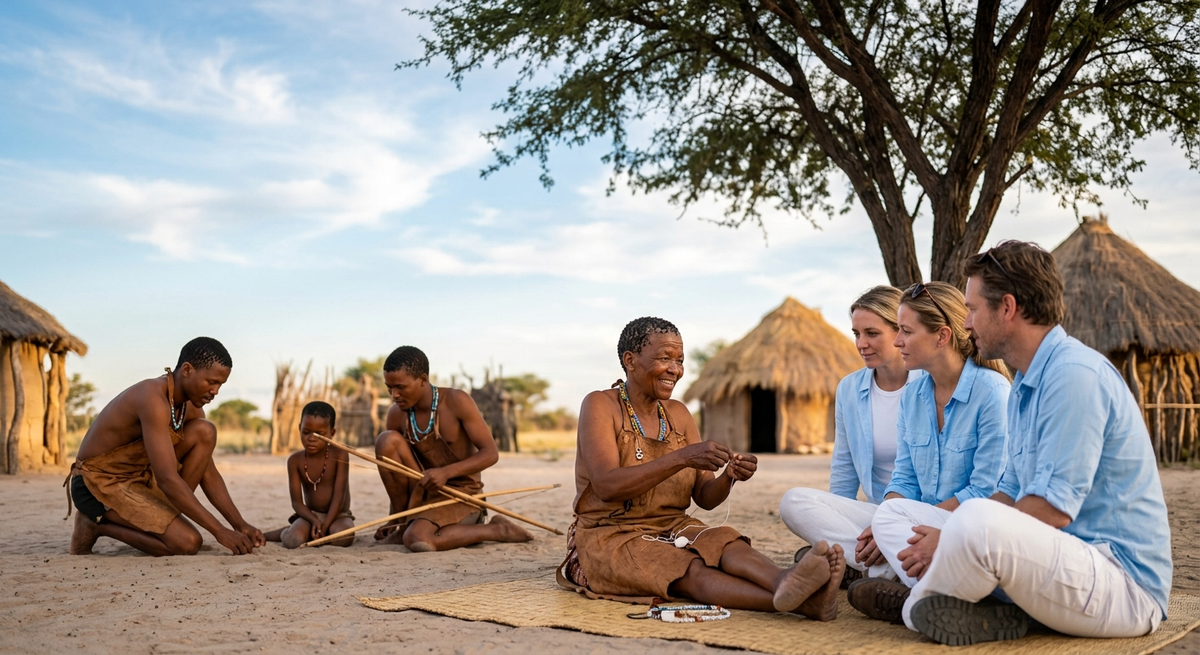
The sun sets over the vast Kalahari Desert. Golden light cuts across the ancient Botswana savanna. At this moment, a group of travelers joins the Nharo San elders for an evening bushwalk. This is the heartbeat of African heritage tourism, a powerful movement that honors indigenous history. Global tourism insights confirm that this sub-sector is rapidly expanding. In fact, consumer preference tracking shows that cultural tourism now accounts for nearly 40% of all global leisure trips.
For decades, the San people faced immense challenges. Modernization and historic land displacement threatened their survival. Yet, their ancient way of life endures. International research highlights that indigenous territories protect approximately 80% of the world’s remaining biodiversity. This article explores how conscious travel models actively protect this irreplaceable legacy while connecting ancestral history with modern preservation frameworks.
What Travel and Tourism Are Worth in 2026
The industry is shifting away from outside-owned models. Those outdated practices often relied on fantasy-driven staging. They kept most profits away from the community, treating the San as passive laborers. Global research reveals a massive economic shift.
The World Travel & Tourism Council notes that the broader sector has historically contributed 12%-15% to Botswana’s GDP, supporting over 26,000 local jobs. Furthermore, data tracking international Hospitality & Tourism projects that the global tourism market size will hit USD 10,303 billion in 2026. This growth makes ethical consumer choices more critical than ever.
Instead of routing funds to foreign corporations, travelers can intentionally redirect capital to native organizations. When money reaches the grassroots, communities gain real financial stability. This ensures that traditional ways of living can coexist peacefully with contemporary economic demands.
In contrast, ethical community-led tourism relies on accurate oral histories. It ensures direct community income and genuine indigenous ownership. Local guides run the operations themselves. They decide what parts of their culture to share.
Real Plans for Local Control
Botswana is pioneering sustainable tourism practices. These initiatives provide guidance on balancing commercial growth with cultural integrity.
- Community-Owned Success Stories
The Dqãe Qare San Lodge stands out as a prime example. This beautiful enterprise is completely owned and run by the Nharo San community. It sits on communally managed land near D'Kar. Socio-economic research by anthropologist Robert K. Hitchcock shows that guided ethnic tourism models can significantly improve the status of vulnerable populations.
In documented cases, participating Ju/'hoansi households secured average annual incomes ranging from $300 to $400 USD. While a separate southwestern !Xóõ community successfully generated up to 5,000 Pula annually from a single respectful safari partnership.
It serves as a proud venue for the annual Kuru San Dance Festival. Here, guests enjoy authentic interactions without artificial staging. Visitors sleep in traditional-style chalets and learn tracking skills directly from the source.
- State Frameworks for Protection
The government protects these sacred spaces through the Monuments and Relics Act. This legal structure safeguards ancient rock art at the Tsodilo Hills. It links historical preservation directly with community-based safari concessions.
National policies ensure that tourism operators respect indigenous intellectual property. Archaeological data indicates that ancestral hunter-gatherer presence in these zones dates back to 40,000 BC. This framework helps prevent the unauthorized commercial exploitation of San symbols and arts.
4 Tips for the Ethical Traveler
Our outcome-focused promise ensures you can explore Botswana ethically. Follow these four steps to maximize your positive impact:
- Prioritize Indigenous Ownership
Book your stay directly with community-managed lodges. Verify that the San people hold authentic decision-making power. Check their ownership status before booking.
- Say No to Coerced Staging
Never ask community members to change out of modern clothes for a photograph. Respect their contemporary daily lives. Avoid operators who force performers to act out primitive stereotypes.
- Buy Crafts Directly from Artisans
Purchase intricate beadwork and hand-woven baskets directly from local creators. This guarantees fair compensation. It removes exploitative middlemen from the retail supply chain.
- Seek Educational Exchanges
Approach every interaction as a student. Listen intently to their rich oral folklore and sustainable ecological insights. Learn how they harvest water and medicine from desert plants.
Frequently Asked Questions
What is African heritage tourism? It is a travel model focusing on the authentic history, traditions, and arts of African communities. It ensures local people control and benefit from their own cultural assets.
How does Hospitality & Tourism help the San people? When managed ethically, it creates vital income and employment. It funds cultural preservation projects and gives indigenous groups a global platform. It helps protect vulnerable ancestral lands.
Where can I experience ethical San tourism in Botswana? The Dqãe Qare San Lodge near D'Kar is an excellent choice. You can also explore the historic Tsodilo Hills National Monument with local indigenous guides.
Partner With Us for Sustainable Growth
Building an ethical, community-focused business model requires strategic guidance. At Business 360, we help organizations align operational growth with global sustainability standards. Let us help you optimize your business practices for lasting success.
Call us today: +234 806 496 8725
Visit our website:www.thisisbusiness360.com