

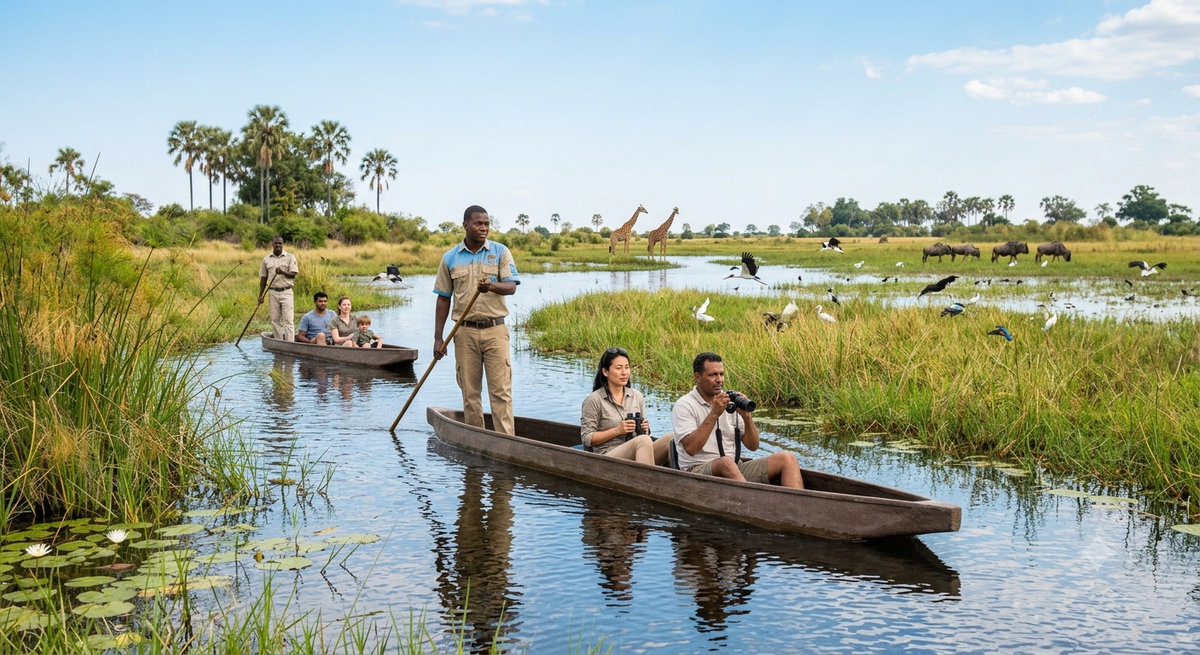
Discover how sustainable safari operators beat resource extraction in the Okavango Delta through strong eco-tourism returns.
The Okavango Delta is an emerald oasis rising from the Kalahari sands. Its crystal waters flow from Angolan highlands, creating a thriving natural sanctuary. Yet, industrial threats like oil drilling and logging jeopardize this pristine basin. The debate between industrial development and nature preservation remains intense. High-value ecotourism offers a superior model for wealth creation.
Commercial proof showcasing hospitality & tourism as a powerful mechanism for long-term economic returns shows clear advantages. Resource extraction relies on depleting assets with short lifespans. It causes severe environmental damage and allows capital to leak away to foreign corporate investors.
In contrast, high-value ecotourism creates an infinite, renewable revenue stream. It operates with a minimal environmental footprint while delivering direct financial returns to indigenous communities. Protecting natural landscapes produces dependable wealth that endures across generations.
The Hidden Costs of Extractive Industry
Mining, timber harvesting, and oil drilling offer fast cash injections. However, these extractive practices drain fragile ecosystems dry. Drill pads destroy animal corridors, while chemical runoffs contaminate freshwater supplies. Short-term profits cannot cover the massive cost of long-term environmental degradation.
Recent data shows petroleum exploration licenses cover over 34,000 square kilometers across the Kavango Basin. Oil rigs operate on finite reserves. Once wells run dry, investors pack up and leave toxic soil behind. In contrast, wildlife protection builds enduring economic systems that continue growing every year.
How Sustainable Safari Operators Drive Infinite Yields
Sustainable hospitality turns untouched nature into continuous assets. Strategic tourism protects regional biodiversity while building local enterprise networks. Eco-conscious ventures safeguard natural capital while producing superior financial results.
Permanent Local Job Creation
Research indicates tourism contributes roughly 12% to 15% of Botswana’s GDP, trailing only diamond mining. Furthermore, stats show about 40% of employed adults in Ngamiland work directly in tourism. Mining relies heavily on complex automation and imports external technical crews. Over 100,000 global tourists visit sixty regional lodges annually. Ecotourism hires locally, funding trackers, professional guides, executive chefs, and lodge managers. These green jobs build resilient rural economies that keep local families prosperous.
Protecting Vital Carbon Sinks
The Okavango Delta depends on water flowing from the Angolan highlands. Studies confirm peatlands cover 3% of land yet store 25% of global soil carbon. The Nature Conservancy is currently mapping undocumented Angolan peatlands supplying the basin. Ecotourism protects these natural storage systems from agricultural clearing or industrial runoff. Keeping carbon trapped preserves global climate balance and yields massive environmental credits worldwide.
Recent Market Trends in Eco-Tourism
Recent market trends show high-net-worth travelers choosing eco-friendly journeys. Reports project the global ecotourism market will reach $665 billion by 2030. Modern guests demand low-carbon footprints, solar-powered accommodations, and authentic community engagement.
3 Actionable Steps for Tourism Leaders:
- Switch to Off-Grid Energy: Run operations on solar arrays to eliminate carbon emissions.
- Empower Local Suppliers: Source organic produce, regional crafts, and labor from nearby villages.
- Adopt Conservation Levies: Direct guest fee surcharges straight into community anti-poaching funds.
Sustainable tourism generates steady annual revenue while keeping irreplaceable natural ecosystems whole.
Building Community Resilience Through Tourism
The long-term success of eco-tourism relies heavily on inclusive business models. Community-based natural resource management programs give residents direct governance over wildlife areas. When communities own equity in lodges, poaching drops significantly. Revenue sharing finances rural health clinics, schools, and clean water wells across remote districts.
Furthermore, eco-safaris spark secondary entrepreneurial ecosystems. Local artisans sell traditional crafts, farmers supply organic vegetables to lodge kitchens, and transport companies move guests across wilderness corridors. This economic ripple effect creates stable income streams independent of unpredictable commodity prices. High-value tourism converts residents from passive bystanders into active guardians of their ancestral lands.
Unlocking Regional Transboundary Growth
Protecting the Delta requires cross-border cooperation beyond Botswana's borders. The headwaters flowing through Angola and Namibia require equal financial incentives for protection. Expanding eco-tourism infrastructure upstream ensures that neighboring nations receive direct economic benefits for keeping rivers clean.
When governments invest in cross-border conservation corridors, regional security improves, and sustainable commerce expands. Sustainable tourism proves that pristine rivers generate far more capital over decades than short-sighted logging or industrial farming. Protecting natural water channels protects the economic engine of Southern Africa.
Frequently Asked Questions
Why is the Okavango Delta ecologically vital? It feeds thousands of rare wildlife species across southern Africa. Its vast wetlands absorb greenhouse gases and stabilize regional rainfall patterns.
How does ecotourism provide updates to local economies? It provides recurring revenue from park fees, luxury lodge stays, and direct jobs. This steady income far outperforms short-term extractive leases.
What role do safari operators play in conservation? They fund anti-poaching patrols, run clean-energy camps, and support regional conservation initiatives.
Choose Sustainable Growth Today
We help eco-conscious businesses build high-converting, sustainable operations across the industry. Let us elevate your brand narrative with proven market strategies and sustainable framework models.
Call Us: +234 806 496 8725
Visit Our Website:www.thisisbusiness360.com