

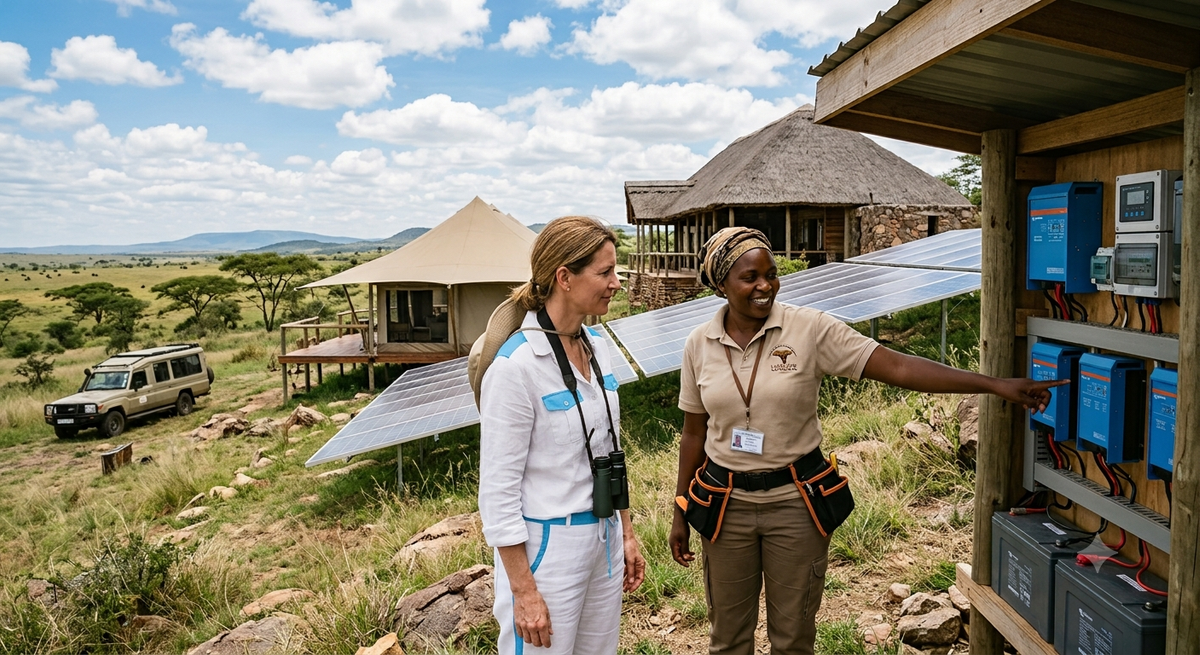
Discover how off-grid solar infrastructure eliminates diesel costs and boosts returns for luxury eco lodges in Africa. Secure 5-star sustainable power now!
A wild, silent night in the African bush is the ultimate modern luxury. Following a record-breaking surge where global ecotourism market values climbed to 290 billion dollars, wealthy travelers pay premium rates to hear the distant roar of a lion, not the harsh, 90-decibel chug of an expensive diesel generator. According to sector studies, Eco-lodges are projected to claim a massive 42% share of all global nature-based accommodation revenues.
As global travel demands deep sustainability, high-end hospitality operators face an urgent operational choice. Relying on fossil fuels ruins the guest experience and drains cash reserves due to volatile transportation logistics.
Today, installing a customized, high-yield solar microgrid is the definitive solution. By replacing dirty generators with clean energy, smart investors guarantee uninterrupted five-star comfort while protecting the pristine ecosystems that draw visitors from across the world.
The Cost of Powering Remote Luxury Infrastructure
Analyzing capital allocations for green infrastructure reveals critical insights for remote wilderness developments. Navigating deep bush terrains requires an intimate understanding of the remote hospitality ecosystem. According to the International Renewable Energy Agency (IRENA), global investments in energy transitions have reached record highs, underscoring the massive economic strength of renewable energy transitions.
Deploying alternative power assets requires a shift in how operators view structural overhead. High initial capital layouts directly replace erratic, open-ended fuel shipping fees. New Travel Trends in the Luxury Market. The business landscape for remote operations has evolved rapidly. According to global Hospitality & Tourism industry data, over 78% of affluent travelers actively choose brands with verified sustainability frameworks. Furthermore, the Booking.com Sustainable Travel Report reveals that 93% of global travelers strongly desire to make eco-conscious travel choices when booking trips.
Modern guests expect premium amenities such as quiet air conditioning, infinity pools, and fine dining. Providing these services via heavy diesel generation inside fragile conservancies is no longer viable. Market trends tracked by Credence Research show that high-net-worth individuals are aggressively driving demand for eco-luxury and responsible tourism packages worldwide.
Lodge owners must adapt to stay competitive. Transitioning to advanced hybrid setups allows brands to capture premium-paying markets while insulating operations from regional grid failures and fluctuating fuel delivery prices.
How Solar Slashes Running Costs
Operating deep in the bush brings massive logistical liabilities. Fuel must travel long distances over rough roads, which doubles mainland pricing. Traditional diesel setups expose lodge margins to extreme global price volatility, ongoing machine wear, and heavy carbon emissions. Recent market data from Mordor Intelligence values the global green hotel market at over half a billion dollars, fueled by a collective rush toward long-term operational cost reductions.
A standard 40-villa luxury destination requires heavy daily energy loads. Research on Hotel Energy Management Systems shows that heating, ventilation, and air conditioning systems typically devour 50% to 60% of a remote property's entire energy budget. By deploying optimized solar arrays paired with advanced lithium-ion storage, an operator can expect massive structural transformations:
- Drastic Fuel Reductions: High-end wilderness properties regularly report a 40% to 90% drop in annual diesel reliance.
- Rapid Payback Timelines: For medium-scale off-grid installations, commercial returns often cover the initial cost of capital within 3 to 5 years.
- Predictable Balance Sheets: Transitioning power generation from volatile operational expenditure (OPEX) to fixed capital investment (CAPEX) brings long-term cost stability.
A Simple Setup Guide for Bush Lodges
Building an independent energy grid requires an intelligent, multi-layered framework. You cannot afford power drops when elite clients are resting.
- Solar Panels on Roofs
Do not ruin your lodge's aesthetics with industrial layouts. Position high-efficiency photovoltaic panels on thatched rooftops or guest canopies to optimize space and visual appeal.
- Large Battery Storage Systems
The sun only shines by day, but luxury demands power 24/7. Integrating smart thermostats with industrial battery packs can slash energy consumption in empty rooms by up to 45%. Use these systems to run heavy nighttime climate layouts seamlessly.
- Extra Wind and Generator Backup
In coastal areas or deep valleys, adding small vertical-axis wind turbines provides valuable night generation. Keep a downsized, automated generator purely as an emergency safety net. International projections by the International Energy Agency (IEA) confirm that solar energy will dominate distributed grid expansions through 2030, making it the safest long-term infrastructure asset.
Real Examples of Solar Success
Look at the success of iconic properties like the &BEYOND Sossusvlei Private Desert Reserve in Namibia. Their 199 kWp solar microgrid eliminated reliance on expensive diesel logistics in the world's oldest desert. Similarly, premium destinations across East Africa use smart energy systems to monitor real-time consumption. These tools keep water purification, luxury spas, and electric safari vehicles running flawlessly.
Frequently Asked Questions
Can solar power run luxury lodge air conditioning all night? Yes. By pairing optimized solar panels with high-capacity lithium battery banks, your grid stores excess daytime energy to run heavy HVAC loads quietly through the night.
What is the average lifespan of an off-grid wilderness solar installation? Modern tier-one solar panels carry performance warranties lasting 25 years. Industrial battery storage systems generally offer dependable operational life for 10 to 12 years.
How do alternative energy setups handle long periods of cloudy weather? Smart microgrids integrate a downsized backup generator. The system automatically triggers the generator to recharge the battery banks only when solar output drops below critical levels.
Take Action with Business360
Ready to transform your remote hospitality operations and secure unmatched returns on green assets? Let our expert analysts guide your digital and structural transition.
Call Us Today: +234 806 496 8725
Provide Updates & Explore Solutions: Visit our corporate platform at www.thisisbusiness360.com