

Discover how low-impact travel in Africa is redefining safari luxury through zero-footprint engineering in mobile eco-camps backed by data.
Modern mobile eco-camps spotlight minimal footprint engineering designs that preserve delicate wildlife habitats across the continent. Modern safari explorers want deep connections with wild landscapes. Today, true African luxury means complete environmental harmony. Heavy concrete structures are now stepping aside. High-end canvas suites move silently across pristine wilderness areas. Market forecasts project the regional safari sector to reach $25.7 billion by 2032.
Through low-impact travel, Africa continues to transform the hospitality and tourism sector. Mobile eco-camps deliver unforgettable, zero-trace adventures. They preserve delicate habitats while offering raw, uncompromised comfort. According to recent market analysis, Africa holds a massive 51.5% revenue share of the global safari tourism market, demonstrating how zero-trace mobility leads regional travel demand.
Moving From Fixed Lodges to Mobile Freedom
Historically, safari camps relied on permanent foundations and heavy timber frames. Industry research shows environmental concerns and habitat conservation challenges impact roughly 30% of traditional safari revenues. Permanent builds alter natural water flows and compress delicate native soils.
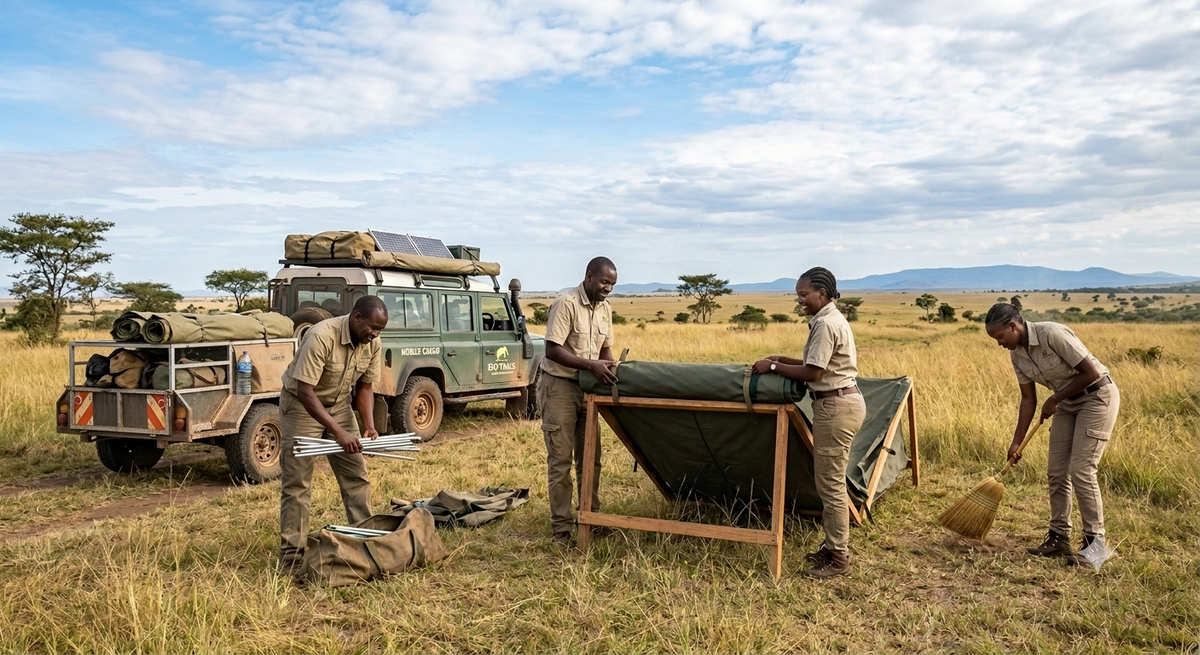
Today's mobile setups completely reimagine this footprint from the ground up. Lightweight canvas tents sit on demountable wooden platforms. These clever structures lift human activity well above sensitive vegetation.
Camp operators set up in hours with minimal tools and equipment. They dismantle everything without leaving a single trace or permanent mark behind. Industry projections estimate that the demand for mobile safari camps will grow at an impressive 8.5% CAGR, reflecting a clear preference for flexible, lightweight structures over fixed concrete.
Eco-Friendly Designs That Protect the Land
Modern mobile eco-camps showcase remarkable engineering feats and sustainable technologies. Off-grid systems deliver complete self-sufficiency in remote wilderness locations without disturbing local ecosystems. Clean power systems rely on quiet solar micro-grids instead of noisy diesel generators.
Data from global eco-reserves shows that off-grid safari operations aim to generate over 80% of their energy from on-site renewables. Advanced filtration plants recycle greywater efficiently back into the surrounding environment. Low-impact sanitation features modern eco-toilets that eliminate ground contamination risks. Elevated walkways prevent soil compaction while protecting underlying animal burrows.
Our 2026 booking promise guarantees top-tier pricing for zero-impact mobile safaris. You enjoy raw wilderness access and premium comforts without environmental compromise. These smart designs safeguard critical animal migration routes. They let seasonal floodwaters flow uninterrupted beneath elevated guest suites, preserving delicate wetland ecosystems.
Tracking Animals Without Leaving a Trace
Mobile camps track nature's rhythmic cycles in real time across vast wilderness reserves. They migrate along seasonal rainfall patterns across the Serengeti and Masai Mara plains effortlessly. Operators dismantle camps twice or thrice yearly depending on animal movements. Nature restores the site within days after the structures are removed completely.
UN Tourism reports indicate that wildlife watching accounts for roughly 7% of global tourism, growing steadily each year. Grasses grow back quickly during seasonal rains, erasing all evidence of human presence. Wild herds return to clean, unblemished grazing grounds without facing artificial obstructions.
Market research reveals that 35% of modern safari tourists actively seek eco-friendly and conservation-integrated travel options. This shift inspires the broader hospitality and tourism industry to adopt lower-impact operational standards worldwide.
Easy Tips for Your Green Safari
Plan your ultimate sustainable wilderness adventure with these practical and actionable steps:
- Verify Certification: Choose camps holding official Green Tourism accreditations and verifiable eco-credentials.
- Pack Minimalist: Bring reusable water bottles and natural, biodegradable toiletries to protect local soil.
- Respect Wildlife: Choose quiet, solar-powered or electric game drive vehicles for minimal noise disruption.
- Support Locals: Pick operators employing native community guides, tracking experts, and local camp staff.
Research on sustainable African travel reveals that 14 host nations generate over $142 million annually from protected area park fees. By making conscious choices, you directly protect endangered ecosystems and support local livelihoods for generations to come.
Frequently Asked Questions
What makes a mobile safari camp eco-friendly? Mobile camps use zero concrete and rely fully on solar energy. They treat greywater on-site and pack out all waste material completely upon departure.
Do mobile eco-camps sacrifice guest comfort? Not at all. Guests enjoy private en-suite bathrooms, hot bucket showers, flush eco-toilets, and gourmet farm-to-table dining right in the wilderness.
How does Hospitality & Tourism benefit local communities? Mobile camps hire local guides, buy regional produce, and share revenues directly with community conservancies and wildlife protection funds.
Start Your Eco-Friendly Safari Today
Are you ready to plan an authentic African journey? Sustainable Hospitality & Tourism solutions bring you closer to raw nature. Experience luxury that actively protects wild places and empowers local communities.
Call Us: +234 806 496 8725
Visit our website:www.thisisbusiness360.com