
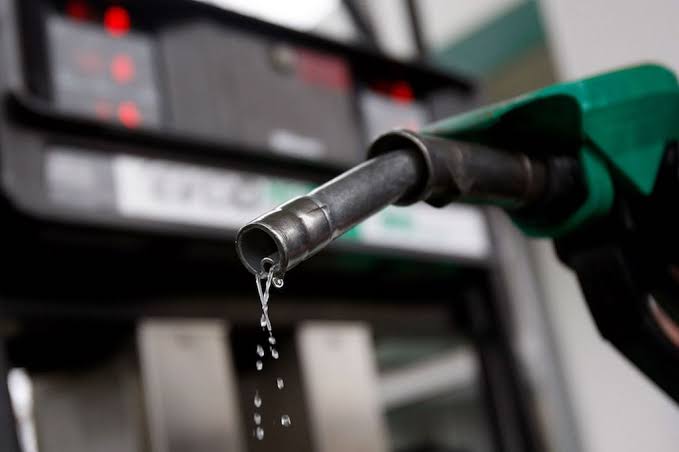
Nigeria's downstream sector has a pricing problem, and the government has decided to say so publicly. Crude is down nearly 40% from its wartime peak. Pump prices have barely moved.
The Federal Government has directed the Nigerian Midstream and Downstream Petroleum Regulatory Authority to ensure petroleum marketers do not exploit Nigerians through excessive pricing under the deregulated downstream petroleum market. Minister of State for Petroleum Resources, Senator Heineken Lokpobiri, gave the directive at the 2026 NMDPRA General Counsel and Legal Advisers Forum in Abuja, themed "Beyond Compliance: Certainty and Investment Confidence in Nigeria's Petroleum Sector."
The arithmetic behind the government's frustration is stark. Following the de-escalation of tensions in the Middle East and a decline in global crude prices, Nigerians expected corresponding reductions in the pump price of petrol. However, this has not happened, as refiners and marketers have continued to sell petrol at elevated pump prices despite the significant decline in crude oil prices from a peak of $120 per barrel to about $72 per barrel last week.
Lokpobiri was blunt about where the line sits. "While market forces under the deregulated regime would ultimately restore price equilibrium, marketers should not exploit the situation to make excessive profits," he said, adding that the regulator had a statutory responsibility to ensure that deregulation does not become an avenue for profiteering.
The consumer protection arm of the government has gone further than rhetoric. The Federal Competition and Consumer Protection Commission raised concerns that recent reductions in global crude oil prices had not translated into corresponding cuts in fuel prices across the country, warning that although it does not regulate petroleum prices, it would not hesitate to sanction businesses found engaging in exploitative pricing or other anti-competitive practices in the deregulated downstream market.
The depot-level data shows the gap clearly. Fuel is still being sold at an average of ₦1,200 while some local refiners fixed between ₦1,025 and ₦1,075 as their gantry prices, despite the recent reduction in prices by NNPCL and the Dangote Refinery. Mid-day market data showed PMS depot prices remained largely stable across Lagos, Port Harcourt, Calabar and Warri, with most locations recording only marginal reductions of between ₦1 and ₦6 per litre.
Marketers have explained, though not one that the government appears willing to accept indefinitely. Marketers maintained that the ongoing drop in crude oil prices will not translate to an immediate reduction in local prices because they needed to exhaust old supplies procured when prices were high, saying it would take a minimum of six months before Nigerians could feel the full impact of reduced crude prices.
Finance Minister Taiwo Oyedele offered a parallel, more measured explanation of the lag. He said marketers often increase fuel prices almost immediately when crude oil prices rise, citing higher replacement costs, but are generally slower to reduce prices when international prices decline because they still have existing stock purchased at higher costs. He confirmed that the FCCPC and NMDPRA were already addressing the issue within the framework of the Petroleum Industry Act.
Lokpobiri also flagged a second consumer protection concern beyond pricing. "When a consumer pays for 10 litres of PMS, they should receive exactly 10 litres," he stated, urging regulators to strengthen monitoring systems to prevent under-dispensing and other unethical practices in the downstream sector.
The minister credited President Bola Tinubu's removal of the petrol subsidy and full deregulation of the downstream sector with eliminating the persistent fuel shortages that once plagued the country, noting that Nigeria avoided artificial scarcity even through the recent US-Israeli/Iranian conflict. The government's challenge now is different from the one it solved in 2023. Having proven that deregulation can guarantee supply, it must now prove that the same deregulated market can deliver fair prices when crude falls as readily as it raises them when crude rises. So far, the data suggests Nigerian motorists are still waiting for that proof.
Stay Informed: Visit our website for Breaking News, Intelligence, and Insight.