
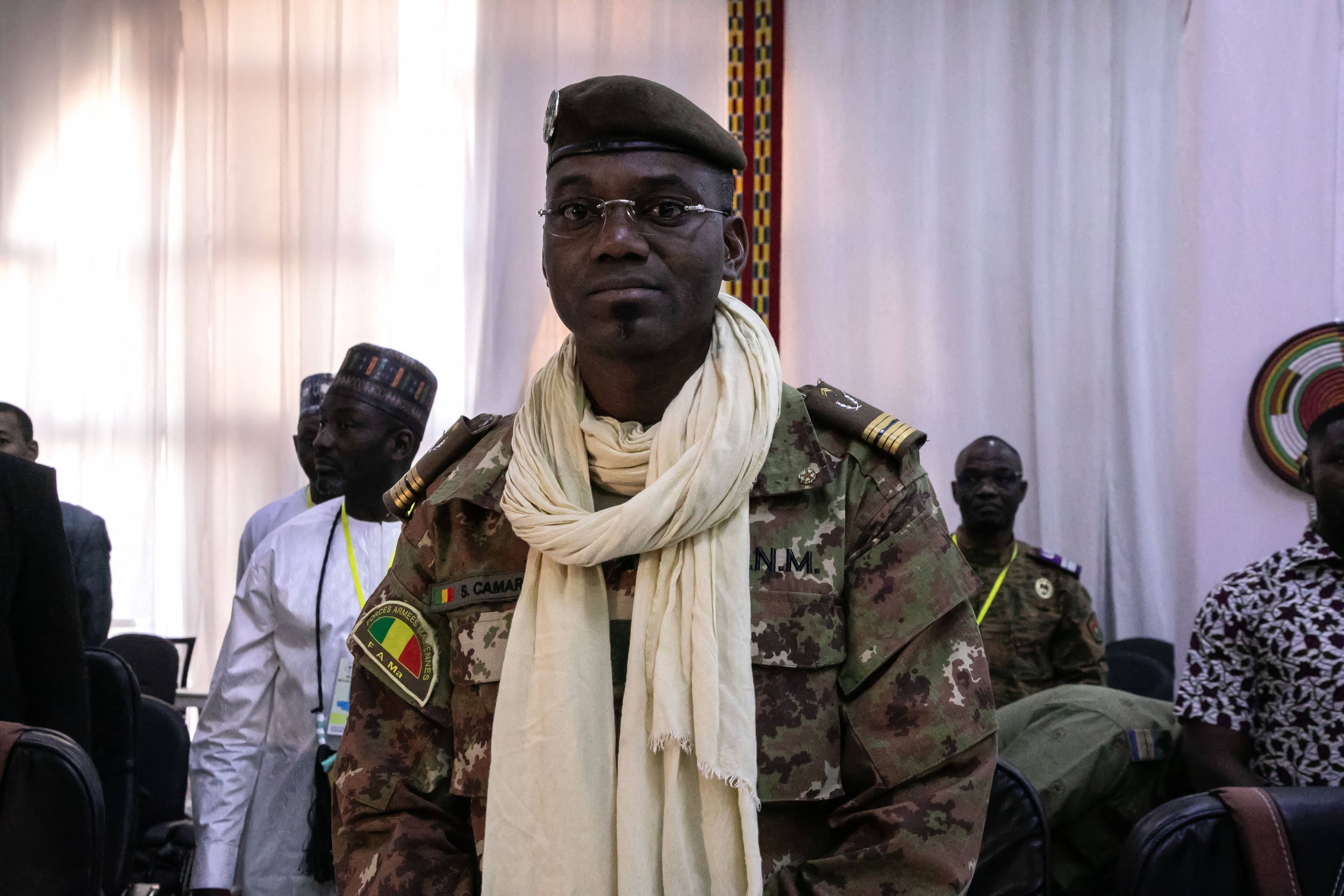
Mali's military government is confronting its gravest security test since seizing power, after jihadist militants and separatist fighters launched simultaneous, multi-city assaults that reached the heart of the capital and killed senior government officials.
Authorities in Mali imposed a 72-hour nightly curfew in Bamako following a wave of coordinated attacks that struck the city and other regions. The curfew, announced by Governor Abdoulaye Coulibaly, runs from 21:00 to 06:00 local time and took effect on April 25, 2026, as security forces intensified operations across the capital.
On April 25, shortly before 5:20 a.m., two explosions and heavy gunfire were reported near Kati, the main military base on the outskirts of Bamako that houses junta leader General Assimi Goïta. Gunfire was simultaneously reported in Gao, Sévaré, Kidal, and Mopti.
Mali's Defence Minister, General Sadio Camara, was killed in a bombing at his home in Kati, dying alongside his second wife and two grandchildren when a suicide bomber drove a car into his residence. A key figure in Mali's junta and widely seen as a potential future leader, his death marked a significant escalation. Other senior officials, including General Goïta, were reported to have gone into hiding. The U.S. Embassy in Mali urged American citizens to shelter in place and avoid all travel.
It was the first time that the Tuareg-led Azawad Liberation Front (FLA) confirmed it had operated alongside the al-Qaeda-linked JNIM militant group. "This operation is being carried out in partnership with the JNIM, which is also committed to defending the people against the military regime in Bamako," FLA spokesperson Mohamed El Maouloud Ramadan said in a statement.
The FLA claimed control of Kidal and parts of Gao. In Kidal, the FLA later announced a deal allowing the withdrawal of Russian Africa Corps forces, granting the rebels full control of the area.
Analysts described the JNIM-Tuareg coordination as especially alarming, drawing parallels to 2012 when a similar alliance jointly overran northern Mali and sparked the region's broader security crisis. Ulf Laessing of the Konrad Adenauer Foundation was scathing about Russia's role: "The attacks are a major blow to Russia as the mercenaries had no intelligence about the attacks and were unable to protect major cities."
ECOWAS condemned the attacks on Sunday, calling on all states, security forces, regional mechanisms, and populations of West Africa to unite in a coordinated effort to combat the threat.
The Sahel region accounted for more than half of all terrorism-related deaths in 2025, according to the Global Terrorism Index, and April 25 has made that toll harder to ignore.
Stay Informed: Visit our website for Breaking News, Intelligence, and Insight