
Brent crude surged above $78 per barrel on Monday after the United States and Iran exchanged strikes over the weekend in a fresh escalation of their standoff over the Strait of Hormuz, unravelling what remained of the interim ceasefire agreement and sending global energy markets back into crisis mode.
Brent futures for September delivery advanced to $78.14 per barrel, while WTI futures gained 2.5% to $73.24, as maritime traffic through the strait collapsed. Just six vessels were tracked crossing the waterway between 18:00 GMT Thursday and 06:00 GMT Friday, compared with 18 to 22 daily crossings earlier this month, according to maritime intelligence platform Windward.
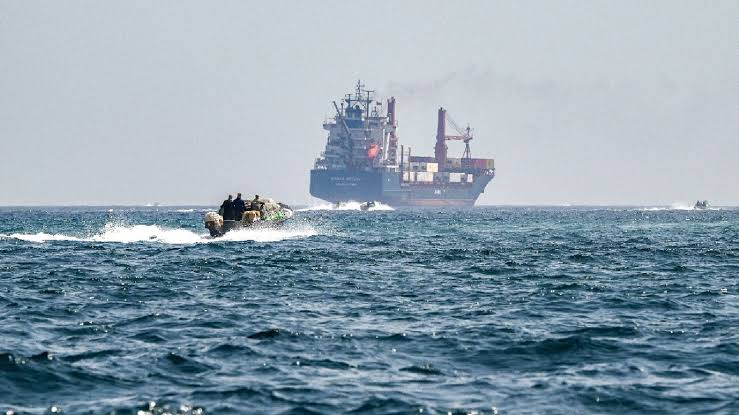
US Central Command said American forces successfully struck dozens of targets at multiple locations over the weekend, including by deploying one-way attack sea drones for the first time, after Iran launched attacks on American military bases in Kuwait, Bahrain, Jordan, Oman and Qatar. The escalation followed Iran's attack on a Cyprus-flagged container ship, the MV GFS Galaxy, as it transited the strait.
Trump, speaking at the NATO summit in Turkey, declared the ceasefire over and threatened to bomb Iran for a second day and reimpose the US naval blockade, raising fears that renewed fighting could disrupt exports through Hormuz just as they had started to recover. Prices eased off session highs after Trump later said he did not believe the two countries would return to full-scale war.
Iran's Persian Gulf Strait Authority reiterated that vessels attempting to cross the waterway without using its preferred route would not be covered by safe passage guarantees, warning that consequences for unauthorised transit would rest with the owner, operator and vessel commander.
Analyst Fabien Yip of IG said prices are unlikely to approach the much higher levels seen earlier in the conflict. "Oil's return towards pre-war levels in June reflected markets pricing in a best-case outcome for the fragile US-Iran arrangement; last week's re-escalation exposes how fragile that assumption was," he said, adding that near-term risk premium should keep prices supported, though a repeat of the earlier spike appeared unlikely as demand remains slow to recover while stranded tanker releases and OPEC+ output expansion continue to add barrels to an already oversupplied market.
The geopolitical whiplash of the past five months has been severe. Brent peaked above $126 per barrel at the height of early hostilities in March before retreating more than 42% as the ceasefire appeared to hold, briefly fuelling talk of Nigerian petrol prices returning to ₦800 per litre. That conversation is now firmly off the table. With the strait again under threat, Dangote Refinery's phased ex-depot price reductions paused, and depot owners already moving diesel prices higher, the downstream cost relief Nigerians experienced over the past month is in danger of reversing before it is fully felt at the pump.
Analyst Mukesh Sahdev of XAnalysts expects Brent to remain in the upper $70s through August and September, with occasional spikes and dips outside that range, a scenario that locks Nigeria's 2026 budget benchmark of $64.85 per barrel firmly in surplus territory on paper, but does little to resolve the deeper uncertainty surrounding how long the strait disruption will last, and what it costs Nigeria each day it does.
Stay Informed: Visit our website for Breaking News, Intelligence, and Insight.