
The Central Bank of Nigeria has declared that the gap between the official naira exchange rate and Bureau de Change rates has narrowed to below 2%, the tightest spread since the country unified its foreign exchange windows in 2023, as external reserves climbed above $52.5 billion as of July 17, the highest level recorded in 17 years.
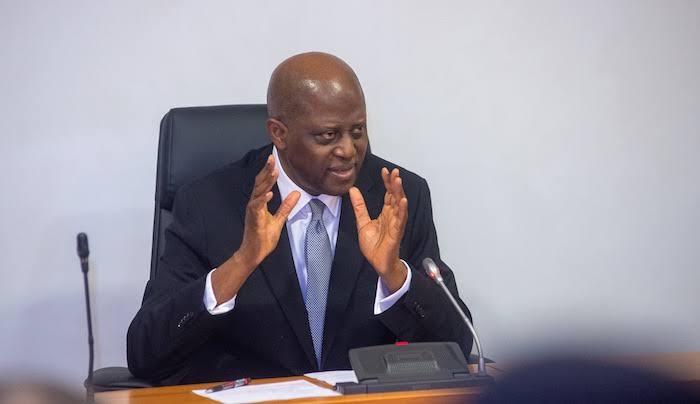
CBN Governor Olayemi Cardoso, represented by Acting Director of Corporate Communications and Investor Relations Hakama Sidi-Ali, disclosed the figures Tuesday at the CBN Fair in Gombe, held under the theme "Driving Alternative Payment Channels as Tools for Financial Inclusion, Growth and Accelerated Economic Development."
"The naira continues to strengthen, with the spread between official and Bureau de Change rates now narrowing to below two per cent. This is supported by sustained inflows and renewed investor confidence and participation across asset classes in Nigeria," Cardoso said.
The parallel market premium collapsing to under 2% is arguably the most telling single metric in the CBN's reform scorecard. At the peak of Nigeria's FX crisis in mid-2023, the gap between the official and parallel market rates exceeded 60%, reflecting chronic dollar scarcity, a dysfunctional multi-rate system and deeply entrenched arbitrage behaviour. The CBN attributed the improvement to the unification of the foreign exchange market, banking sector recapitalisation, the launch of the Non-Resident Bank Verification Number, the B-Match foreign exchange trading platform, the Nigeria Payments System Vision 2028 and the introduction of the Nigerian Overnight Financing Rate as a benchmark for short-term rates.
Headline inflation declined marginally from 15.93% in May 2026 to 15.91% in June, with core and food inflation also easing during the period. Cardoso attributed the improvement to disciplined monetary tightening, exchange rate reforms and improved market transparency. Food inflation accelerating to 17.52% in the same period, however, complicates the narrative: the official rate is falling while the price pressure most Nigerians feel daily is moving in the opposite direction.
The $52.5 billion reserves figure has already been qualified by subsequent data. As reported last week, reserves slipped to $51.96 billion by July 27 following Brent crude's sharp reversal on Iran ceasefire signals, a drawdown of more than $500 million from the July 17 peak in under ten days. The CBN's announcement on Tuesday referenced the peak rather than the current position, a framing that is technically accurate but glosses over how quickly oil-price-driven reserve positions can reverse.
The CBN has spent 34 months building the institutional architecture of a functioning FX market: a unified rate, a price discovery platform, non-resident participation mechanisms, and now a benchmark overnight rate. The sub-2% parallel premium confirms that the architecture is working, removing the structural incentive for parallel market arbitrage that has historically been one of the most persistent sources of dollar demand pressure on Nigerian reserves. What the architecture cannot fix is the commodity dependence that makes every reserve milestone vulnerable to the next geopolitical turn in the Strait of Hormuz. The CBN's reforms have changed the plumbing. The oil price still controls the water.
Stay Informed: Visit our website for Breaking News, Intelligence, and Insight.