
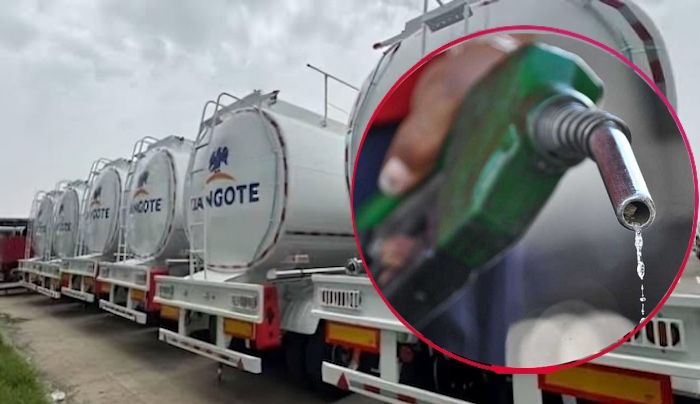
Dangote Petroleum Refinery has reduced the ex-depot price of Premium Motor Spirit for the fourth time in a month, cutting the gantry price by ₦50 per litre to ₦1,075, bringing cumulative PMS reductions to ₦200 per litre since May 30, 2026, as cheaper crude cargoes begin entering its production cycle.
The refinery also disclosed that within the same period it cut the ex-depot price of Automotive Gas Oil by ₦300 per litre and Jet A1 aviation fuel by ₦520 per litre, reductions that ripple directly into logistics, freight and airline operating costs.
In a statement issued Thursday, Dangote Refinery offered an unusually candid account of the mechanics behind its pricing. The company said the average landed cost of crude it processed stood at approximately $124.80 per barrel in May and $95.25 per barrel in June, compared with the current international benchmark of about $71.01 per barrel. The gap explains why prices did not fall faster: the refinery is still burning through inventory purchased at elevated costs during the Strait of Hormuz crisis earlier this year, when geopolitical disruptions drove Brent crude above $80 per barrel.
The company also clarified that its crude procurement costs are not based solely on the headline ICE Brent benchmark. Crude is acquired on a Dated Brent basis, plus market premiums, freight and logistics costs, resulting in actual landed costs that differ materially from what benchmark quotations suggest.
Despite those elevated feedstock costs, the refinery said it deliberately absorbed a significant portion of the price increase during the crisis period rather than passing it to consumers in full, a decision it framed as a contribution to market stability and a buffer against imported inflation. As lower-priced cargoes now progressively enter the production cycle, it said it has begun systematically transferring those benefits through phased reductions.
The refinery added that Nigeria's fuel prices remain below those in neighbouring countries even after accounting for applicable taxes, and said the country now benefits from the stabilising role of domestic refining capacity at sufficient volumes to meet national demand, reducing import dependence and conserving foreign exchange.
The forward signal was direct: if global crude prices remain favourable and lower-cost crude continues to replace the expensive stock currently being processed, further reductions are likely.
For Nigerian consumers who endured petrol prices rising sharply earlier in the year as Hormuz tensions sent global energy markets into a spike, the ₦200 cumulative cut in just over a month represents a meaningful reversal. The real question is whether retail pump prices across the country track the ex-depot reductions with the same speed they historically tracked price increases.
Stay Informed: Visit our website for Breaking News, Intelligence, and Insight.