
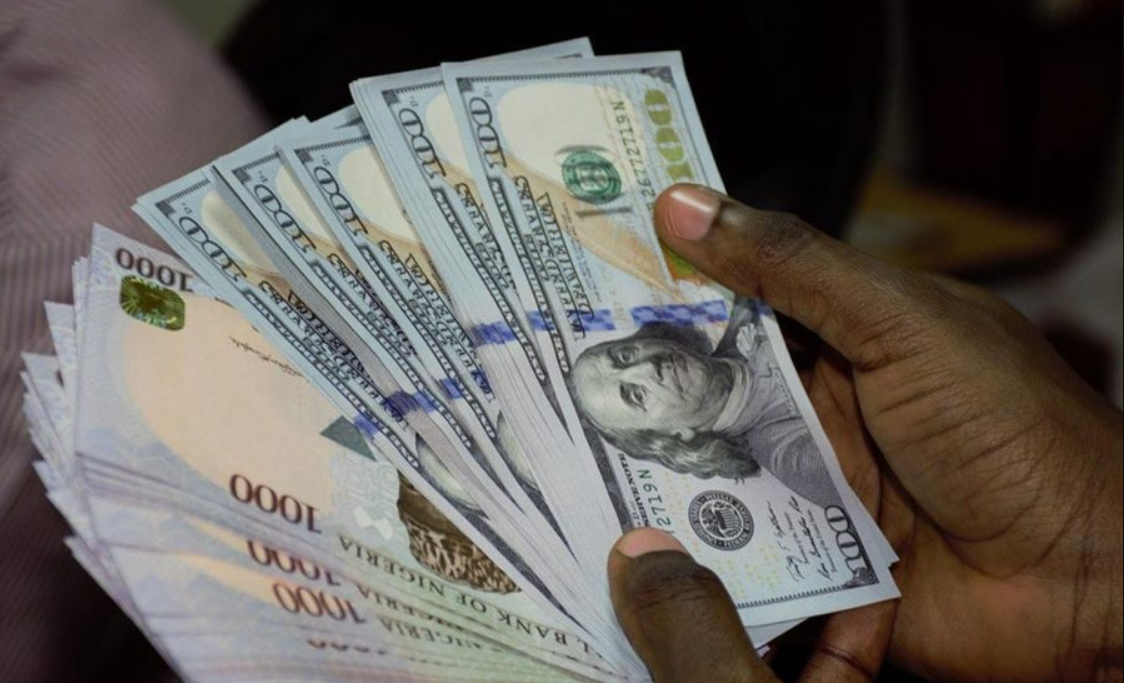
Nigeria’s naira opened weaker against the US dollar on March 4, 2026, with the official Nigerian Foreign Exchange Market (NFEM) rate hovering around ₦1,377 per $1 in early-morning trading, reflecting controlled volatility in a market still trying to balance strong dollar demand with ongoing central bank policy interventions.
Real-time FX feeds recorded the naira opening at ₦1,379.05/$1, dipping to ₦1,376.02/$1 before settling near ₦1,377.04/$1 by 7:30 a.m. WAT.
The Central Bank of Nigeria (CBN) continues to anchor its benchmark closing rate around ₦1,384.29 to the dollar, a modest depreciation from February’s average of ₦1,364.74/$1.
This shift reflects a broader phase of price discovery under the apex bank’s “willing-buyer, willing-seller” framework designed to improve liquidity and transparency in the official FX window.
Parallel market activity on March 4 showed dollar rates in the ₦1,385–₦1,395/$1 range across major commercial hubs, yielding a relatively narrow official-parallel spread of roughly 1.2% to 1.5%. Traders in Lagos and Abuja noted that this tight spread suggests reduced speculative pressure compared with previous volatility episodes.
The March 4 morning session came against a backdrop of sustained foreign exchange demand, particularly from corporate remittances and manufacturing importers seeking allocation through official channels. Despite this, the CBN’s liquidity injections and steady foreign inflows have prevented disorderly FX depreciation so far in early Q1.
Data from the CBN and market aggregators indicate that Nigeria’s external buffers remain firm, with gross foreign reserves surpassing $50 billion as of early March. Analysts link this strength to continued crude oil export receipts, averaging around 1.46 million barrels per day, which have helped offset rapid import demand and sustained corporate FX off-take.
Earlier this week, official and parallel FX prices showed a steady pattern, with black market rates trending upward into March 3 and 4 due to persistent dollar demand. Parallel rates rose compared with early March levels, highlighting tightening supply at informal FX points.
Foreign exchange traders and economists view the current mid-week rates as reflecting cautious market confidence in the CBN’s policy mix, though liquidity conditions are still perceived as tight relative to broader economic needs.
Analysts monitoring the FX market gaps also note that speculation around dollar shortages has contributed to some widening of spreads between official and informal segments.
For businesses involved in cross-border trade, import-dependent manufacturing, and tech firms accessing offshore services, the March 4 rates signal the importance of prudent FX risk management. SMEs engaged in international transactions may face cost pressures if demand for hard currency intensifies without a commensurate increase in supply through official channels.
Investors and capital markets participants will be closely watching the CBN’s monetary signals. The apex bank has maintained a high Monetary Policy Rate, which continues to influence demand for foreign exchange and overall currency stability in the Nigerian market.
Stay Informed: Visit our website for Breaking News and Insights.