
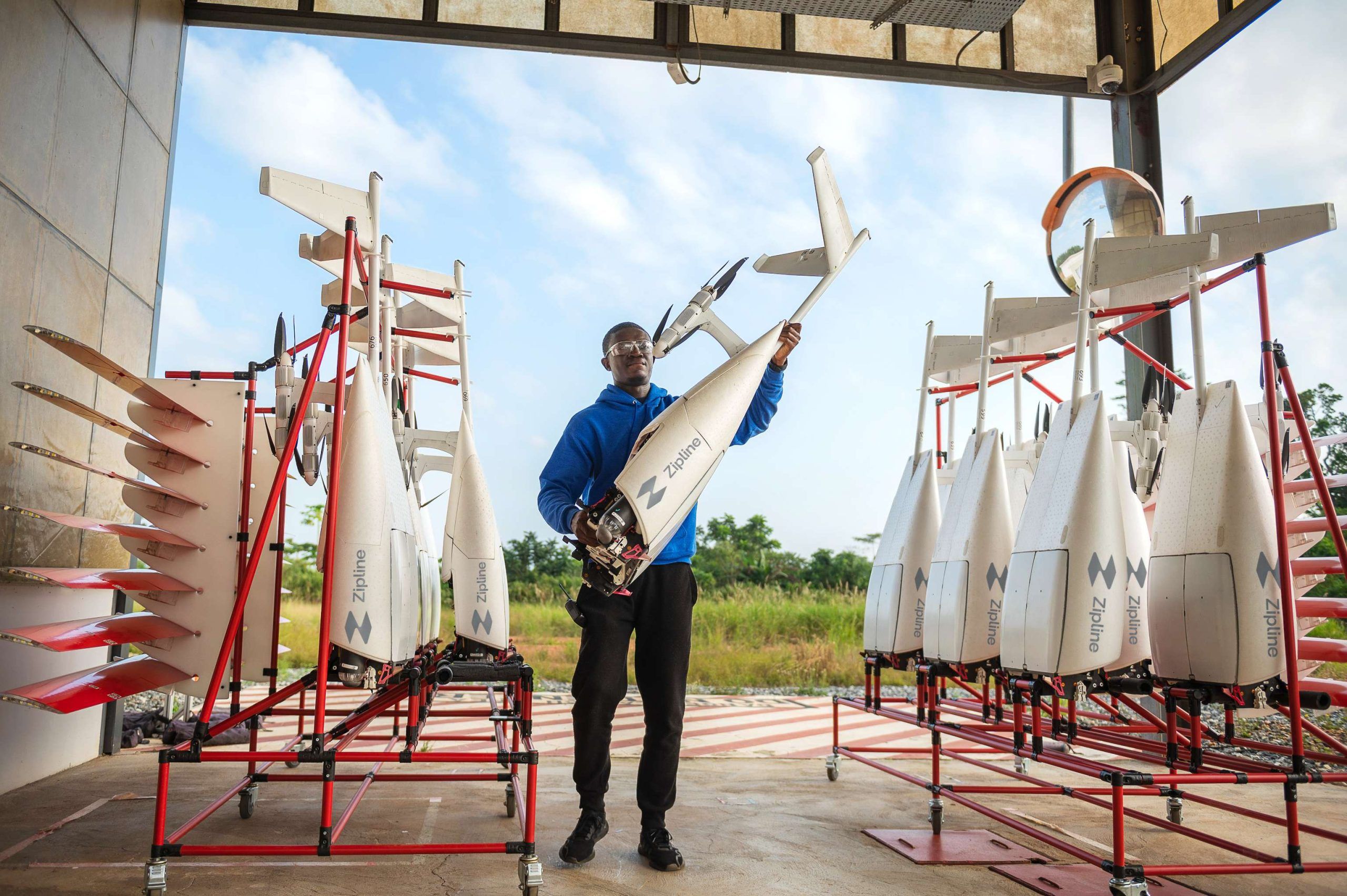
What began in 2022 as a handful of drone deliveries across a few underserved Nigerian states has become something far more consequential and Zipline is now betting its largest African expansion on the country that validated the model.
Zipline's newly appointed Nigeria Country Director has confirmed plans to build 12 additional distribution hubs across the country, establishing Nigeria firmly as the company's biggest African market. When Zipline first entered Nigeria in 2022, its operations looked like another ambitious health-tech pilot: drones delivering vaccines and medical supplies across a handful of underserved states. The 12 new hubs represent its most aggressive in-country expansion on the continent.
At the centre of Zipline's Nigerian operations is a problem that has plagued the country's healthcare system for decades: unreliable medical supply chains. Across many rural communities, health facilities frequently run out of vaccines, blood supplies, anti-venom, malaria medication, and maternal care products. A 2026 study on family planning services found that 56.8% of rural health facilities experienced at least one contraceptive stockout within three months, compared to 43.2% of urban health centres.
Zipline's model directly attacks that stockout cycle. Instead of forcing hospitals to maintain costly storage facilities and large medical inventories, Zipline manages supplies centrally and delivers medicines and health commodities on demand, using a network of automated distribution hubs, cold storage facilities, and AI-powered inventory tracking systems. The infrastructure also serves surrounding communities and healthcare centres, effectively turning Zipline hubs into mini energy ecosystems in rural areas.
Nigeria's Health Minister has been explicit about the impact already visible on the ground. Minister Muhammad Ali Pate said: "Existing Zipline operations in three Nigerian states have shown how drone delivery can transform access to healthcare eliminating stockouts, creating new service points even where there is no health facility."
The regulatory environment is evolving to accommodate scale. As of May 2026, all drone operators must obtain an End-User Certificate from the Office of the National Security Adviser before approaching the Civil Aviation Authority for a permit a requirement Zipline's Nigeria Country Director described as a matter of national security rather than obstruction. "The government wants to protect Nigeria's airspace, and rightly so," he said, noting that the company works closely with aviation and government regulators to secure approvals.
The international capital behind the expansion is substantial. The US State Department has committed up to $150 million to Zipline for global expansion, primarily for building new African hubs contingent on Zipline securing long-term commitments from African governments. Under the full scope of the agreement, Zipline could reach as many as 130 million people and triple the number of facilities it serves from 5,000 to 15,000.
Zipline's drones already fly four to five times as many daily flights as Ethiopian Airlines, the continent's largest commercial airline. With 12 new Nigerian hubs on the drawing board, that gap is only going to widen.
Stay Informed: Visit our website for Breaking News, Intelligence, and Insight