
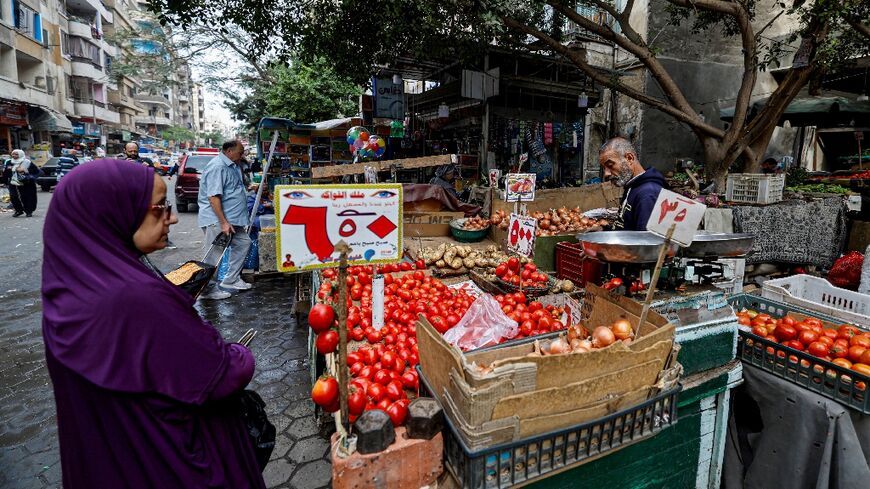
Egyptian families are confronting sharp price increases across essential goods as inflation accelerated to 13.4% in February 2026, driven by fuel price hikes that the government attributes to surging global energy markets following the escalation of the US-Israeli conflict with Iran.
Price hikes of up to 30% were announced overnight on Monday, triggering immediate market disruption as vendors and consumers struggled to adjust.
Cucumbers, a dietary staple, jumped from 15–20 Egyptian pounds per kilogram to 40 Egyptian pounds per kilogram, a 166% increase in some markets. Tomatoes and other basic commodities saw similar surges.
“Prices have risen since yesterday; the price of a kilo of cucumbers has increased to 40 pounds, as well as tomatoes and other basic commodities,” said Nada Hamed, an Egyptian citizen. The increases follow a government decision to raise fuel prices, which has cascaded through the economy, raising transportation costs.
El-Sayed Mohamed, a truck driver, explained how fuel price increases translate directly to consumer prices. “Prices are high because vendors use trucks to transport vegetables from wholesalers, which increases the costs. Today, the cost of transporting vegetables has risen to 3,000–4,000 Egyptian pounds [$57–78 USD] from the previous 2,500 pounds,” he said.
Vendors say demand has collapsed as consumers balk at the new prices. Umm Mohamed, a vegetable seller, described the squeeze. “Citizens are not accepting the price increases.
Demand is not what it used to be. When we receive something at a low price, you sell, but with the price hikes, the consumer bears the burden and therefore doesn’t buy. It is expensive.”
Egypt’s Central Agency for Public Mobilisation and Statistics reported Tuesday that urban inflation rose to 13.4 per cent in February 2026, up from 11.9 per cent in January. Consumer prices surged 2.8% in February, accelerating from 1.2% in January and marking the fastest monthly increase since February 2024.
The nationwide consumer price index reached 275.2 points in February, a 2.7 per cent monthly increase driven largely by food prices. Meat and poultry prices increased 9%, vegetables rose 3.8%, fish and seafood climbed 0.4 per cent, and dairy, cheese, and eggs advanced 0.5%. Housing costs rose 31.7% year-on-year, while transport inflation stood at 27.5%.
The February inflation spike came before the full impact of the Iran conflict had been felt in Egypt’s import-reliant economy, raising concerns that price pressures will intensify in the coming months as energy costs remain elevated and supply chains face further disruption.
Egypt’s Cabinet acknowledged the price pressures on Monday, pledging to intensify efforts to curb opportunistic price exploitation in essential goods. “Price exploitation is unacceptable; thus, efforts will be intensified to curb any inconveniences faced by citizens due to opportunistic price hikes,” the government said in a statement.
The government also announced plans to improve wages and salaries for public sector employees starting in the fiscal year 2026/2027, including increasing the minimum wage to address current economic conditions. However, those measures remain months away from implementation.
The Central Bank of Egypt cut key interest rates by 100 basis points on February 12, lowering the overnight deposit rate to 19% and the overnight lending rate to 20%, in an effort to support economic growth. The bank projects that inflation will move towards its target of 7% (±2 per cent) by the fourth quarter of 2026, though recent developments may complicate that forecast.
Egypt has been navigating high inflation for over two years, following a sharp currency devaluation in 2022 and persistent pressures from food and energy import costs. While inflation had been moderating and declining from a peak of over 30 per cent in mid-2023 to around 12% earlier this year, the recent fuel price increases and Iran conflict have reversed that trajectory.
For ordinary Egyptians, the result is a daily struggle to afford necessities. With transport costs rising, food prices surging, and demand collapsing, vendors and consumers are caught in a vice that shows little sign of easing.
Stay Informed: Visit our website for Breaking News and Insights.