
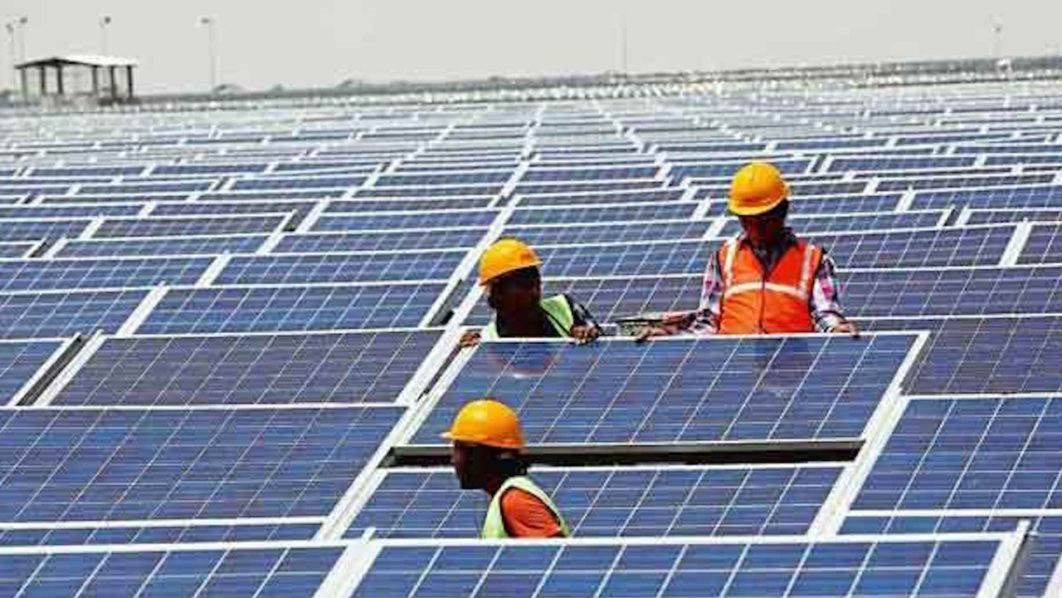
For a country that has long imported virtually all of its solar components, the announcement is striking: Nigeria is now selling locally manufactured solar panels abroad.
Nigeria has joined the league of countries with self-sufficiency in the production of renewable energy components, with the commencement of solar panel exports to Ghana, the Managing Director of the Rural Electrification Agency (REA), Abba Aliyu, announced at a webinar organised by the African Association of Energy Journalists and Publishers (AJERAP).
Aliyu confirmed that locally produced solar panels are now being exported from Lagos to Accra, Ghana, marking what he described as a turning point in the country's emergence as a regional manufacturing base. His statement was unambiguous: "For the first time, Nigeria is producing solar panels locally, and they are already being exported. This shows the direction we are heading and the leadership role Nigeria can play in West Africa."
The manufacturing scale-up behind this milestone is significant. Nigeria has moved from approximately 120 megawatts of local solar panel manufacturing capacity two years ago to roughly 300 megawatts today, with 3.7 gigawatts in the pipeline, driven by a deliberate strategy to build investor confidence and attract private capital into the sector.
The investment underpinning that capacity expansion is equally sizeable. The federal government earmarked approximately $425 million for the establishment of eight renewable energy manufacturing facilities across the country, alongside additional commitments secured at the Nigeria Renewable Energy Innovation Forum. Nigeria spends over ₦200 billion annually importing photovoltaic panels a trend the REA says it is now determined to reverse.
The ambitions extend well beyond Ghana. Nigeria's DARES Distributed Access through Renewable Energy Scale-Up programme, described by Aliyu as the largest publicly funded renewable energy access initiative globally, aims to provide electricity to 17.5 million Nigerians by connecting over 2.5 million households and deploying 1,350 mini-grids, including 250 interconnected systems. The $750 million programme is expected to catalyse an additional $1.1 billion in private sector investment.
The regulatory environment is also working in Nigeria's favour. The Nigerian Electricity Regulatory Commission's 2026 Mini-Grid Regulations, which increase allowable interconnected mini-grid capacity to 10MW, have significantly boosted investor confidence and are ranked among the most effective regulatory frameworks in Africa.
Countries including Mozambique, Benin Republic, Burkina Faso, Niger, Chad, Mauritania, and Mauritius are already engaging with Nigeria to understand and replicate its electricity access framework a sign that Africa's most populous nation is beginning to convert energy reform rhetoric into exportable results.
Stay Informed: Visit our website for Breaking News, Intelligence, and Insight.