
Nigeria's AI conversation has long been dominated by software and data. A new programme at the University of Ibadan is making the case that the country's female engineers need to own the hardware layer too.
Techlytics Institute of Technology and Innovation, in partnership with IHS Nigeria, Nigeria's largest independent owner, operator, and developer of shared communications infrastructure, has launched TechHER25, an applied AI programme focused on training 50 female engineers to design and deploy edge-based artificial intelligence systems. The eight-week programme, hosted at the Faculty of Computing, University of Ibadan, will focus on hands-on development using high-performance edge AI hardware, with participants building computer vision systems benchmarked on latency and accuracy.
The distinction between this programme and a conventional coding bootcamp is deliberate and significant. Edge AI refers to the deployment of artificial intelligence models directly on physical devices, such as cameras, sensors, and embedded systems, rather than in remote cloud servers. It is the technology behind real-time surveillance, smart infrastructure monitoring, autonomous logistics systems, and precision agriculture sectors where Nigeria's public and private institutions are increasingly seeking deployable solutions.
The programme is backed by IHS Nigeria, which is providing funding, infrastructure, and training, including a permanent AI lab at the University. The programme concludes with a demo day in July 2026. The installation of a permanent lab on campus is one of the initiative's most consequential elements, embedding AI hardware infrastructure into a Nigerian university in a way that outlasts a single cohort.
Oluwatayo Winkunle, Founder and CEO of Techlytics, was precise about the intent behind the curriculum design: "Every serious conversation about African AI comes back to where the capability lives. This programme puts that capability on campus, in a working lab, in the hands of the engineers building it. These are not academic projects. They are the starting point for systems that can scale into government and industry use cases."
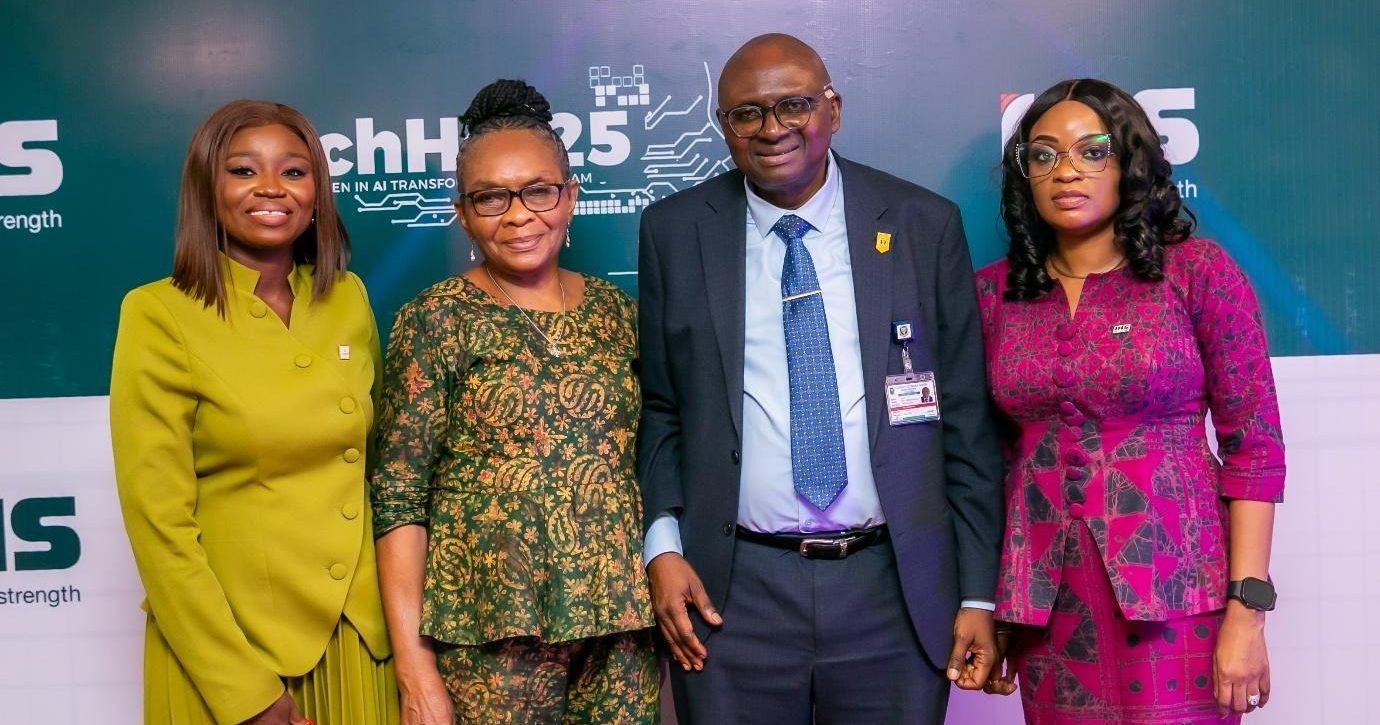
The programme's opening ceremony was attended by figures who underlined the institutional weight behind it, including Professor Adenike O. Osofisan, the Pioneer Female Professor of Computer Science in Africa, and Professor Kayode Oyebode Adebowale, Vice-Chancellor of the University of Ibadan, lending the initiative both academic credibility and symbolic resonance.
TechHER25 arrives at a moment when Nigeria's AI talent pipeline is attracting serious global attention. Nigeria now accounts for 4% of global Web3 developers and ranks first in Africa by Solana developer share, but the gender imbalance within that pipeline remains stark. By training 50 female engineers specifically in edge AI deployment, Techlytics and IHS Nigeria are not just filling a skills gap. They are making a deliberate bet on who gets to build Nigeria's intelligent infrastructure and ensuring that women are not watching from the margins when it scales.
Stay Informed: Visit our website for Breaking News, Intelligence, and Insight.