
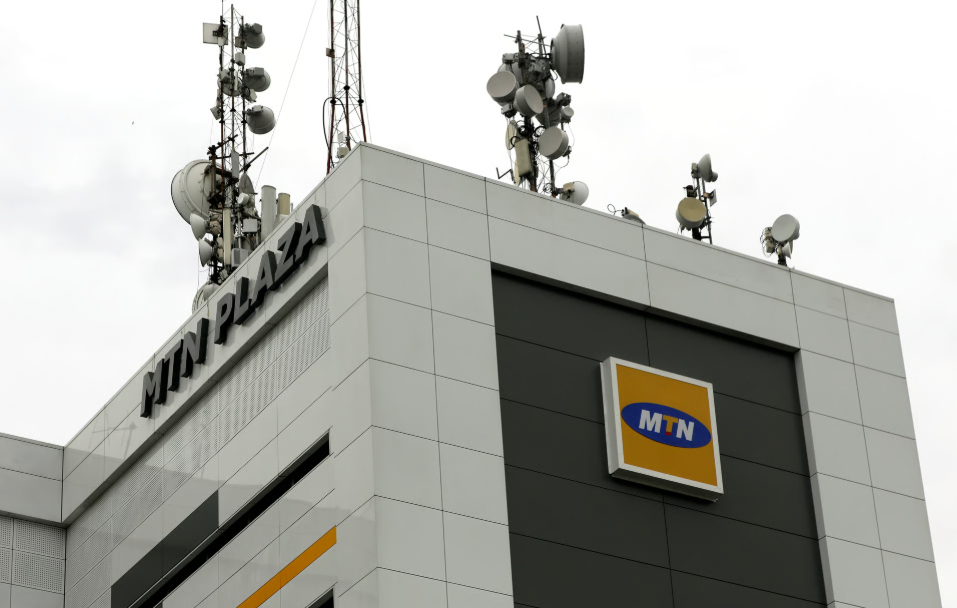
MTN Nigeria Communications Plc has delivered the strongest first-half result in its history, reporting a pre-tax profit of ₦1.09 trillion for the six months ended June 30, 2026, a 75.4% increase from the same period of 2025, as surging data consumption and sharply lower borrowing costs transformed what was a loss-making business just two years ago into one of the most profitable companies on the Nigerian Exchange.
Revenue rose 25.9% to ₦2.99 trillion, driven primarily by data services, which climbed 38.3% to ₦1.70 trillion and accounted for approximately 56.8% of total revenue, contributing roughly 76.7% of the overall increase in earnings during the period. Voice revenue grew 15.0% to ₦897.1 billion, reflecting the industry's continued transition toward data-led consumption.
Profit after tax rose 70.6% to ₦707.5 billion, while EBITDA grew 39.2% to ₦1.67 trillion, lifting the EBITDA margin 5.3 percentage points to 55.9%. Earnings per share increased 70.6% to ₦33.76, and shareholders' equity rose 69.6% to ₦930.6 billion, consolidating a balance sheet that had carried negative shareholders' funds as recently as 2024.
The board declared an interim dividend of ₦26 per share, payable on September 7, 2026, to shareholders on the register as of August 20, 2026.
The H1 2026 numbers need to be understood against where MTN Nigeria was standing barely 18 months ago. The sharp depreciation of the naira in 2023 and 2024 devastated the company's financials, with foreign exchange losses turning a ₦349 billion after-tax profit in 2022 into a ₦137 billion loss in 2023 and a ₦400 billion loss in 2024 that dragged retained earnings to negative ₦607 billion and shareholders' funds to negative ₦458 billion. The recovery that began in 2025, supported by the NCC's approval of tariff increases of up to 50% in January 2025 and a stabilising exchange rate, has now accelerated into something that looks less like a recovery and more like a structural earnings step-change.
CEO Karl Toriola attributed the performance to sustained commercial momentum, improved profitability and robust cash generation, describing demand for the company's services as resilient despite macroeconomic headwinds. "This reflects the resilience of demand for our services, disciplined execution across the business and continued focus on efficiency in a challenging operating environment," he said.
The Q2 performance, however, tells a more nuanced story than the headline suggests. Q1 had recorded a pre-tax profit of ₦546.4 billion, up 169.6% year-on-year, meaning Q2 implied a pre-tax profit of approximately ₦543 billion, a sequential deceleration that reflects the higher base effect and confirms the year-on-year growth rate will continue to normalise as 2025's tariff-driven recovery quarters roll into the comparison period.
The result also arrives amid the structural headwinds the GSM industry's 25th anniversary highlighted this week. MTN spent ₦390.3 billion on capital expenditure in Q1 2026 alone, a 92.8% increase year-on-year, as it races to expand network capacity against a backdrop of fibre vandalism, diesel costs and grid unreliability that remain the most intractable operating cost challenges in the sector. A ₦1.09 trillion pre-tax profit and a 55.9% EBITDA margin confirm that Nigerians are paying for, and using, mobile data in volumes the company's 2022 financial model would not have projected. The question for the second half is whether the infrastructure keeps pace with the demand that is now generating those margins.
Stay Informed: Visit our website for Breaking News, Intelligence, and Insight.