
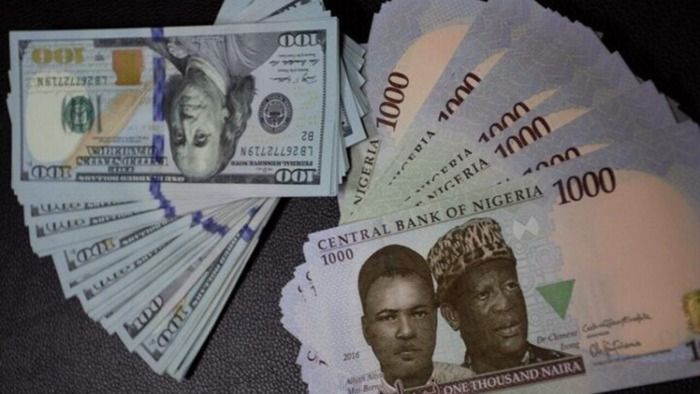
The Nigerian naira traded within a narrow corridor against the U.S. dollar on Thursday, March 5, 2026, as the country’s foreign exchange market showed controlled volatility following recent liquidity injections and ongoing reforms by the Central Bank of Nigeria (CBN).
Early trading data from the Nigerian Foreign Exchange Market (NFEM) showed the dollar hovering around ₦1,382–₦1,384 per USD, signaling relative stability compared with earlier swings in the week.
Market records indicate the naira opened at approximately ₦1,382.87 per dollar, briefly touching ₦1,383.69 before stabilizing near ₦1,383.41 during the early session. The previous session closed at ₦1,382.65, with a daily mean rate of ₦1,388.13, according to market data from authorized dealers participating in the official window.
In Nigeria’s parallel foreign exchange market, commonly used by retail traders and small businesses, the dollar traded slightly higher. Bureau de change operators across Lagos and Abuja reported ₦1,390 to ₦1,405 per dollar, leaving the spread between official and informal markets at roughly 1.5-2%.
Currency traders attribute the stable band to improved liquidity in the foreign market and ongoing regulatory measures by the apex bank designed to narrow arbitrage opportunities.
Recent policy moves allow licensed bureau de change operators to source limited dollar allocations from authorized dealer banks, improving retail market access and smoothing price discovery.
Nigeria’s external buffers have also strengthened. The country’s net foreign exchange reserves rose to $34.8 billion in 2025, while gross reserves climbed above $50 billion by early 2026, according to statements from the central bank. The stronger reserve position has enhanced the CBN’s ability to support orderly trading conditions in the currency market.
Stay Informed: Visit our website for Breaking News and Insights.