
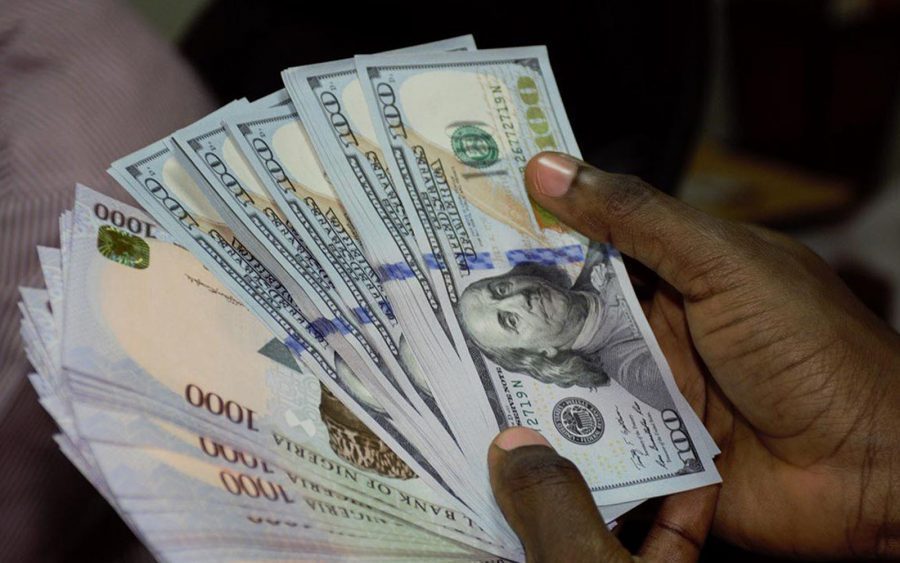
Nigeria’s naira opened the week trading around ₦1,391 per U.S. dollar in the official foreign exchange market on Monday, March 9, 2026, reflecting moderate volatility but sustained stability as the Central Bank of Nigeria (CBN) continues liquidity support to authorized dealers and manufacturers.
Early trading data from the Nigerian Foreign Exchange Market (NFEM) show the local currency operating within a tight range after closing the previous week near ₦1,398 per dollar.
At the start of Monday’s session, the naira opened at approximately ₦1,384.74/$, before weakening slightly to ₦1,391.83 by mid-morning, and stabilizing around ₦1,391.58 per dollar by 5:30 a.m. WAT, according to market data released by FX dealers and monitored across Nigeria’s official trading window.
In the parallel foreign exchange market, widely used by small traders and retail buyers, the dollar traded within the ₦1,400-₦1,410 range in major commercial hubs, including Lagos, Abuja, and Kano.
Bureau de change operators quoted buy rates near ₦1,410 and selling rates around ₦1,420, indicating a spread of roughly 1–2 percent between official and informal markets, significantly narrower than the gaps recorded in previous years.
Currency dealers say improved liquidity is helping stabilize the market. Authorized FX dealers participating in the NFEM noted that the CBN has continued supplying foreign exchange to meet the needs of manufacturers and institutional investors.
Nigeria’s macroeconomic backdrop is also shaping the exchange rate trajectory. The country’s gross external reserves recently surpassed $50 billion, strengthening the central bank’s capacity to intervene in the FX market and maintain orderly price discovery across trading windows.
As the week unfolds, traders will closely monitor FX liquidity levels, oil-driven dollar inflows, and further signals from monetary authorities that could influence the naira’s trajectory in Africa’s largest economy.
Stay Informed: Visit our website for Breaking News and Insights.