
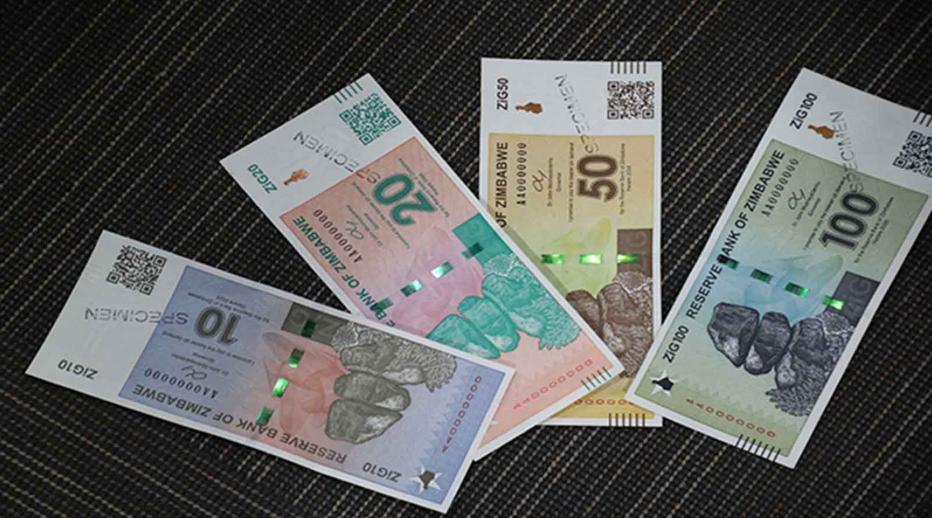
Zimbabwe has taken another step in its long and turbulent monetary journey. The Reserve Bank of Zimbabwe (RBZ) rolled out a new series of Zimbabwe Gold (ZiG) banknotes nationwide on Tuesday, April 7, 2026, dubbed the "BiG5" series as part of efforts to introduce more durable notes with prints designed to withstand prolonged circulation.
RBZ Governor Dr John Mushayavanhu confirmed that the new notes were introduced in a phased approach, starting with ZWG10 and ZWG20 denominations, alongside the new issuance of ZWG50 notes. Higher denominations, the ZWG100 and ZWG200, are set to follow in due course, guided by the demands of the transacting public. The series also introduces new, smaller coin denominations of ZWG1, ZWG2, and ZWG5.
The design signals a deliberate shift in identity. The BiG5 series features the country's iconic wildlife to symbolise national identity and resilience, a departure from the more austere look of the original ZiG notes launched in April 2024. The new notes also carry enhanced security features, responding to counterfeiting concerns flagged by traders and financial institutions.
Critically, the transition is being managed without the panic of a forced exchange. The RBZ is adopting a "simultaneous circulation" model. Old ZiG notes remain legal tender, but once deposited into the banking system by retailers or individuals, they will be "automatically phased out" and replaced by the newer notes. "There will be no exchange posts; the new notes will be obtained normally in the course of commercial and banking transactions," Governor Mushayavanhu confirmed.
The governor was also emphatic that the new issuance would not be inflationary. He stressed that the issuance would be strictly demand-driven, with banks exchanging electronic balances held at the central bank for physical cash, meaning there would be no net increase in reserve money. Weekly cash withdrawal limits have been set at ZiG10,000 for individuals and ZiG100,000 for corporates.
The economic backdrop offers some cautious encouragement. Official data shows inflation falling sharply to 4.1% in January 2026 and 3.8% in February, the lowest levels recorded in nearly three decades. When the ZiG was first launched two years ago, the central bank deliberately withheld larger denominations over fears they could reignite inflation. That policy restraint now appears to be paying off.
The new notes are part of a wider effort to restore public trust in local money, in a country where citizens have long preferred the US dollar and South African rand as more reliable stores of value. Whether the BiG5 can finally change that psychology remains the most consequential question in Zimbabwe's monetary experiment.
Stay Informed: Visit our website for Breaking News, Intelligence, and Insights