
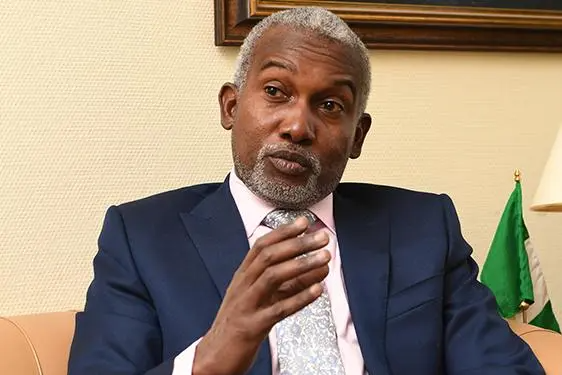
Nigeria has secured a permanent seat on the Board of the African Central Bank (ACB), following a landmark decision at the 39th Session of the Executive Council of the African Union (AU) in Addis Ababa, Ethiopia. The announcement on Friday by Nigeria’s Minister of Foreign Affairs, Ambassador Yusuf Tuggar, signals a meaningful shift in how Africa’s financial integration agenda will be governed.
"This landmark development underscores Nigeria's strategic role in shaping Africa's financial architecture," Tuggar said, framing the outcome as a reflection of the country's "technical capacity, economic significance, and commitment to advancing Africa's monetary integration agenda."
The decision goes beyond symbolism. Alongside the permanent ACB board seat, Nigeria also secured representation on the Board of the Technical Convergence Committee of the African Monetary Institute (AMI), the institution currently laying the groundwork for the ACB's eventual launch. That committee is responsible for aligning macroeconomic policies across member states, a precondition for any unified monetary architecture on the continent.
Nigeria also won the hosting rights for the AMI itself, making Abuja the operational nerve centre for ACB preparations, a role that complements the country's existing status as the ACB's proposed permanent headquarters.
Tuggar confirmed the outcome wasn't straightforward. "It is something that was initially resisted by some countries," he said. "So now we have a permanent seat on the African Central Bank board. This is huge."
Why the ACB Matters
The African Central Bank remains in its pre-operational phase, with the AU's Agenda 2063 framework targeting full establishment between 2028 and 2034. The institution traces its origins to the 1991 Abuja Treaty, which charted a long-term course toward African economic and monetary union, including a single continental currency.
Nigeria, as Sub-Saharan Africa's largest economy and most populous nation, has the most at stake in how that architecture takes shape. A permanent board seat means an institutionally guaranteed voice on convergence criteria, monetary policy design, and governance structures well before the first transaction clears through any future African central banking system.
The Bottom Line
Nigeria has moved from an aspirational host nation to a permanent board member. In the slow, politically complex game of continental institution-building, Friday's resolution is a consequential upgrade, one that could shape Africa's monetary future for decades to come.
Stay Informed: Visit our website for Breaking News and Insights.