
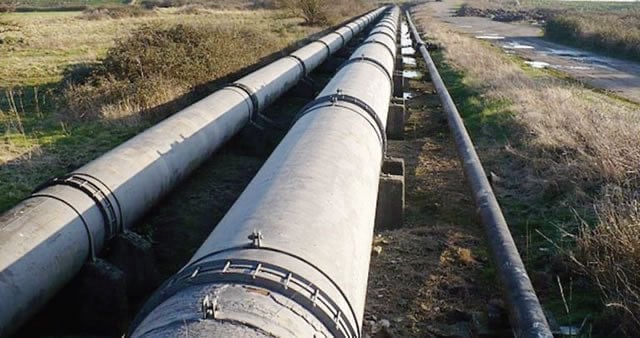
The African Atlantic Gas Pipeline agreement, expected this year, will establish a joint venture between NNPC and ONHYM to execute a 30 billion cubic metre capacity project connecting 13 West African nations.
Nigeria and Morocco will sign an intergovernmental agreement this year for the $25 billion Nigeria-Morocco gas pipeline project, marking a significant step forward for one of Africa’s most ambitious energy infrastructure initiatives, according to Amina Benkhadra, Director-General of Morocco’s Office National des Hydrocarbures et des Mines.
Benkhadra told Reuters on Monday that the African Atlantic Gas Pipeline, a 6,900-kilometre hybrid offshore-onshore route with a maximum capacity of 30 billion cubic metres annually, will include 15 billion cubic metres to supply Morocco and support exports to Europe. The project, agreed upon a decade ago, has the backing of the Economic Community of West African States and has completed its feasibility study and front-end engineering design stages.
Following the signing, a pipeline authority consisting of ministerial representatives from 13 participating countries will be established in Nigeria to provide political and regulatory coordination. The participating nations include Morocco, Mauritania, Senegal, Gambia, Guinea-Bissau, Guinea, Sierra Leone, Liberia, Côte d’Ivoire, Ghana, Togo, Benin, and Nigeria. A dedicated project company will also be created in Morocco as a joint venture between ONHYM and Nigerian National Petroleum Company Limited to lead the execution, financing, and construction phases of the pipeline.
Benkhadra said the pipeline would not rely on a single global final investment decision. Instead, each segment is designed as a standalone system to allow for early value generation. The initial phases would connect Morocco to gas fields in Mauritania and Senegal, while further south, Ghana would be linked to Côte d’Ivoire. The final segment would connect Ghana to Nigeria’s gas fields. First gas from the initial phases is expected in 2031.
Beyond energy supply, Benkhadra said the pipeline would drive economic integration across West Africa by expanding electricity generation and supporting industrial and mining development, while positioning Morocco as an energy bridge between Africa and Europe. The project aims to strengthen Morocco’s role as a strategic energy corridor linking African gas reserves to European markets, particularly as Europe seeks to diversify its gas supply sources amid ongoing geopolitical tensions.
For Nigeria, the pipeline represents an opportunity to assert itself as a dominant gas exporter while strengthening its leadership role within West Africa. The project also introduces competitive dynamics with other proposed export routes, including trans-Saharan alternatives. Despite strong geopolitical backing and investor interest, full financing for the project remains under negotiation, with funding expected to include sovereign commitments, multilateral support, and private-sector investment.
The renewed push comes as Nigeria advances domestic gas infrastructure projects, including the $2.8 billion Ajaokuta-Kaduna-Kano pipeline expected to begin supplying gas to Abuja by July. In March 2024, then NNPC Group CEO Mele Kyari disclosed that the Final Investment Decision on the Nigeria-Morocco pipeline would be made in December 2024, though the project has faced delays linked to financing complexities and cross-border coordination challenges.
Stay Informed: Visit our website for Breaking News, Intelligence, and Insights