
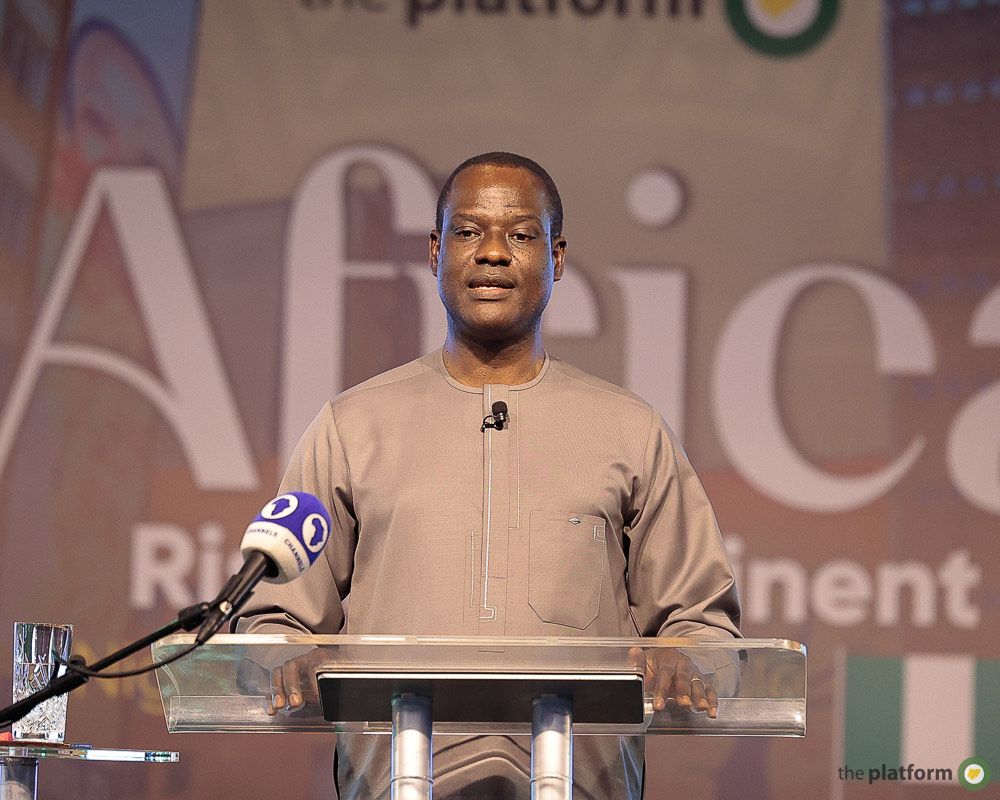
Nigeria's Finance Minister has called for the creation of a specialised Commercial Dispute Resolution Tribunal to break a legal logjam that forces businesses to wait an average of 15 years for commercial cases to work through the courts, a delay he described as one of the biggest obstacles to investment in the country.
Taiwo Oyedele, the Minister of Finance and Coordinating Minister of the Economy, proposed on Tuesday while delivering his inaugural lecture as a Fellow of the Capital Market Academics of Nigeria at the association's Second Biennial Conference in Abuja, themed "The Nigerian Capital Market as a Catalyst for Equitable and Inclusive Growth."
Oyedele argued that commercial cases currently take an average of 15 years to move through the High Court, Court of Appeal and Supreme Court, a timeline he said was detrimental to business and investment. He proposed a tribunal distinct from and complementary to Nigeria's existing investment tribunal infrastructure.
The minister proposed a dedicated tribunal staffed by judges and arbitrators with specialised expertise in commercial, financial and capital market matters, operating with digital case management systems and mandatory timelines for resolving disputes involving businesses, suppliers and joint venture partners.
The rationale was direct. "Every capital market instrument, a bond, a structured note, a syndicated loan, is, at its core, a contract. The depth of a capital market cannot exceed the confidence that contracts will be enforced swiftly and impartially," he said.
Oyedele also proposed the establishment of a national risk market that would enable the government to share risks with the capital market instead of absorbing them directly on its balance sheet. He said the market would cover political, climate, agricultural and infrastructure risks, as well as policy continuity insurance, export guarantees and credit enhancement instruments.
Beyond institutional reform, the minister challenged prevailing public attitudes. He outlined what he described as the "seven laws of capital attraction," emphasising that investors were primarily attracted by trust, policy consistency, strong institutions and the rule of law rather than generous tax incentives, warning that countries with unstable policies often lost investment to jurisdictions offering lower but more reliable returns. "Capital hates uncertainty more than taxation," he said.
He also urged government officials, professionals, and the media to improve communication around economic reforms, arguing that Nigeria often paid a "perception premium" because positive policy changes were poorly communicated to investors.
The proposal arrives as Nigeria intensifies efforts to attract foreign capital and deepen its capital markets following the enactment of the Investments and Securities Act, 2025. Whether a tribunal proposal made at a conference becomes legislation is a different question entirely, and one the minister did not answer on Tuesday.
Stay Informed: Visit our website for Breaking News, Intelligence, and Insight.