
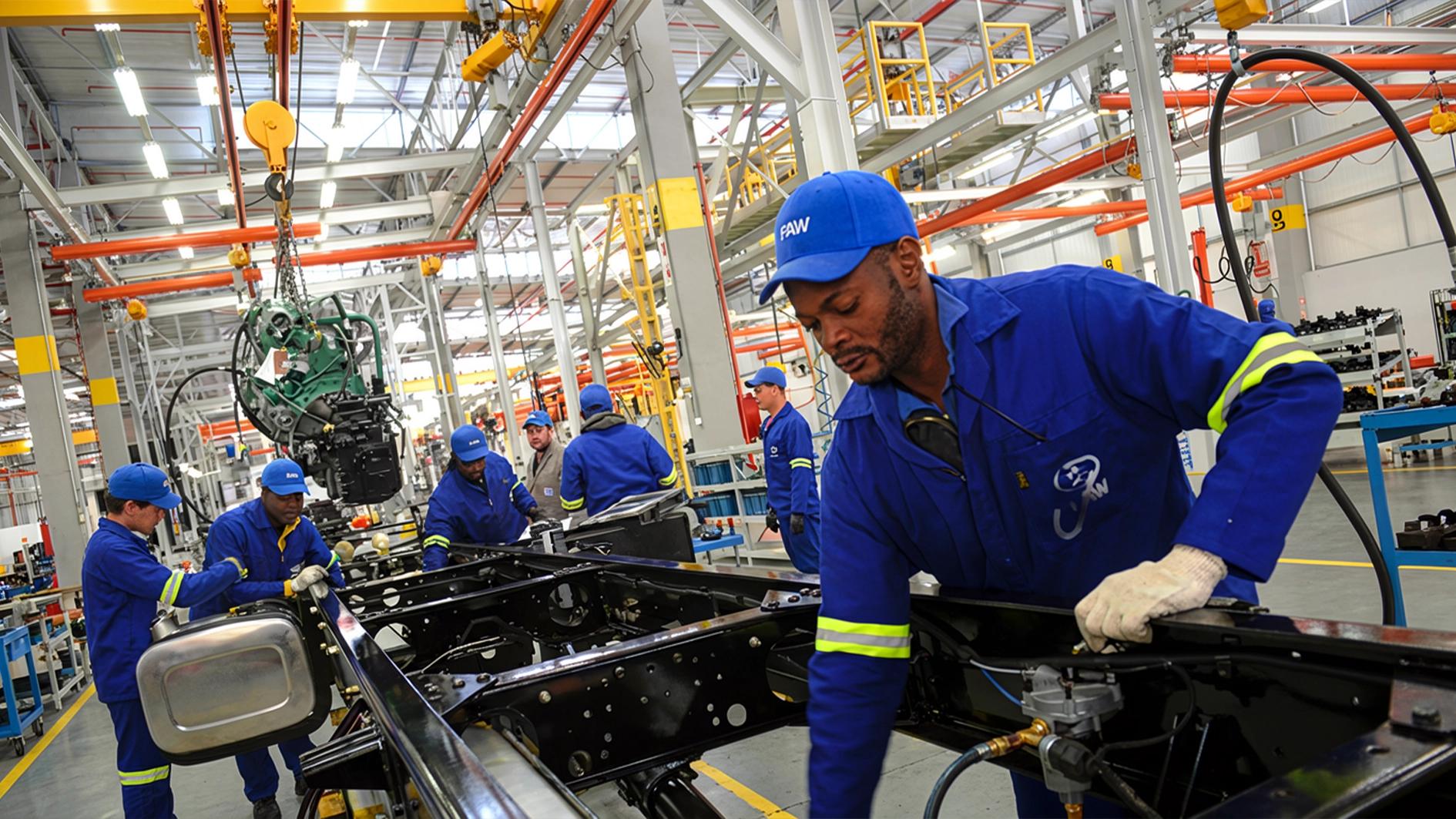
Nigeria's manufacturing sector is operating at less than 50% of installed capacity, paying prime lending rates that averaged 24.4% in March 2026, watching credit to the industry fall by ₦4.28 trillion in under two years, and absorbing a global oil price shock it had no hand in creating, as the Manufacturers Association of Nigeria delivers an assessment of the first half of 2026 that reads more like a distress signal than a progress report.
The MAN Director-General, Segun Ajayi-Kadir, said the challenge is no longer the absence of policy frameworks but the inability of those policies to translate into lower production costs, improved competitiveness and measurable industrial growth, describing the past three years as a period of difficult but consequential economic transition in which the burden of reform has fallen disproportionately on manufacturers.
The financial data makes the burden concrete. Company Income Tax payments by the manufacturing sector collapsed 68.25% in Q1 2026, falling from ₦234.59 billion in Q1 2025 to ₦74.48 billion, a decline analysts say signals not improved tax efficiency but weakening industrial activity across the productive base. One industry alliance put it starkly: "We are not treading water; we are sinking more slowly," adding that Nigeria needs to create at least four million jobs annually to keep pace with population growth but that BOI-supported financing has reached only 1.68 million jobs.
Credit to the manufacturing sector fell from ₦10.88 trillion in February 2024 to ₦6.6 trillion by December 2025, while maximum lending rates in several commercial banks reached 33.8%. Inadequate access to foreign exchange at the official market remained an unresolved constraint, with less than half of industrial demand currently being met, and fluctuating customs duty assessments linked to exchange rate volatility made business planning and pricing increasingly difficult.
Energy remains the most persistent and least tractable problem. Unreliable grid power forces firms to rely heavily on diesel generators, while electricity tariffs have risen substantially and fuel and transport costs have surged, combining into an operating cost environment that erodes competitiveness regardless of what monetary or fiscal policy does at the macro level.
The sector entered 2026 on the back of improving macroeconomic conditions, only for optimism to be disrupted by geopolitical tensions that drove up crude oil prices and freight costs, with the Strait of Hormuz crisis sending input and logistics costs higher at precisely the moment manufacturers had hoped the worst of the post-reform adjustment was behind them.
MAN sees potential for a stronger second-half performance but says the turnaround depends on effective and sustained implementation of interventions that include the naira-for-crude initiative, tax incentives and the Nigeria Industrial Policy, none of which have yet delivered the broad-based relief operators say they need to resume meaningful capacity utilisation.
The dissonance between Nigeria's macroeconomic scorecard and its industrial reality has rarely been more visible. The NGX All-Share Index is up more than 55% year-to-date. The banking sector is posting record profits. VAT collections and customs revenue are both running ahead of prior-year comparisons. And yet the factories that are supposed to convert macroeconomic stability into jobs, export earnings and durable growth are running at half capacity and shrinking their tax footprint by two-thirds in a single quarter. Overall, H1 2026 was characterised by stronger macroeconomic stability but only modest improvements in real-sector performance and household welfare, a summary that captures the gap between what the numbers say and what most Nigerians are experiencing. Until that gap closes, the recovery will remain something that shows up in reports before it shows up in factories.
Stay Informed: Visit our website for Breaking News, Intelligence, and Insight.