
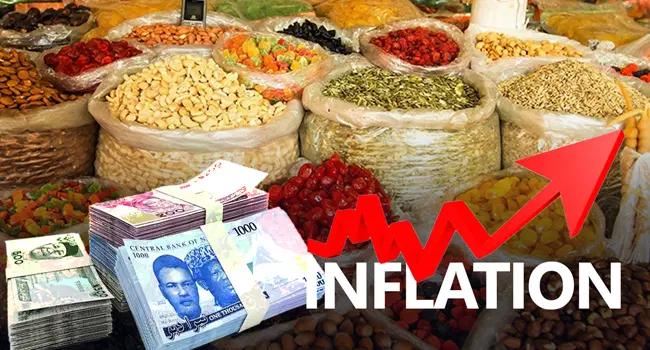
Nigeria's headline inflation rate eased marginally to 15.91% in June 2026 from 15.93% in May, according to the National Bureau of Statistics, offering a narrow statistical comfort that masks a more urgent problem: food inflation accelerated sharply in the same period, climbing to 17.52% year-on-year while the month-on-month food inflation rate surged to 3.75%, signalling that the price pressures Nigerians feel most acutely are moving in the wrong direction.
The Centre for the Promotion of Private Enterprise, in a policy brief released Thursday, warned that the dominant concern in the June report is not the headline stabilisation but the renewed acceleration in food prices, which it said have resumed an upward trajectory after a brief moderation earlier in the year. The NBS confirmed that food and non-alcoholic beverages remained the single largest contributor to headline inflation during the month, ahead of transport, restaurants and accommodation services, housing, education, and healthcare.
The June numbers mark a troubling reversal. Food inflation had briefly collapsed to 8.89% in January 2026, the first single-digit reading since 2015, before reversing sharply through the first half of the year, rising to 12.12% in February, 14.31% in March, 16.06% in April and now 17.52% in June. That trajectory erases much of the disinflation progress that had been the government's most credible economic headline going into 2026.
The CPPE argued that Nigeria's inflation is increasingly being driven by structural constraints rather than excessive consumer demand, identifying insecurity in farming communities, high transportation and logistics costs, rising energy prices, expensive fertilisers, supply chain disruptions and imported inflation linked to global geopolitical tensions as the major drivers of food prices, and said these are problems that monetary policy alone cannot resolve.
The Central Bank has probably done most of what it can. Nigeria has experienced one of the most aggressive monetary tightening cycles in its modern history, with the Monetary Policy Rate rising from 11.5% in 2022 to 27.5% before being reduced slightly to 26.5%. For households, food inflation matters far more than headline inflation, since food accounts for the largest share of household expenditure, particularly among lower-income Nigerians, and when food inflation accelerates, consumers rarely feel that inflation is slowing.
The geographic distribution of the pressure compounds the problem. In April 2026, Enugu, Kwara and Adamawa recorded the highest year-on-year food inflation figures in the country, while in February, Kogi State led at 26.91%, followed by Adamawa at 23.12% and Benue at 21.89%. These are largely agricultural states, meaning that food is getting more expensive even where it is grown.
The CBN had projected headline inflation would ease to 12.94% for the full year 2026, anchored primarily on easing food inflation as supply conditions improved. That projection now looks increasingly optimistic. With the Strait of Hormuz disruption driving up input and logistics costs, insecurity continuing to suppress farm output across the food belt, and month-on-month food prices accelerating rather than plateauing, the government faces a situation where the macroeconomic scorecard and the lived reality of Nigerian households are diverging in ways that a marginal easing in the headline rate cannot bridge. What Nigeria's food inflation problem requires is a functioning agricultural value chain, rural security, affordable energy, and reliable logistics. Those are not things the CBN can deliver from Abuja with a rate decision.
Stay Informed: Visit our website for Breaking News, Intelligence, and Insight.