
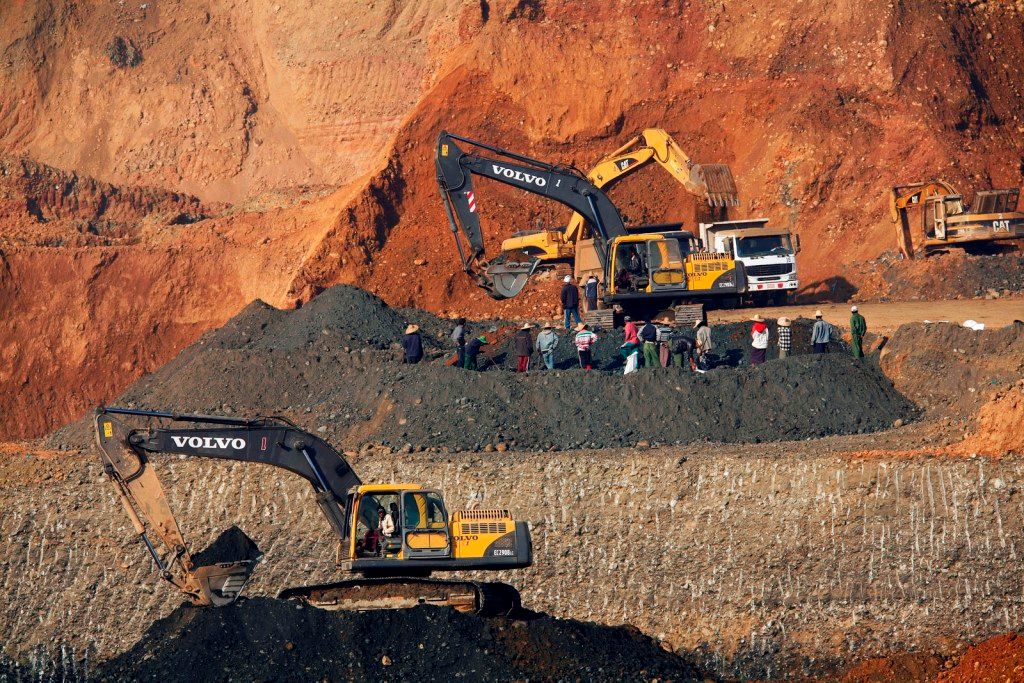
Nigeria's mining and quarrying sector has quietly emerged as one of the most consequential contributors to the country's corporate tax chest. According to data compiled from the National Bureau of Statistics (NBS), the sector contributed a cumulative ₦723.33 billion in Company Income Tax (CIT) across 2025, a performance that cements its standing as a consistent top-three revenue earner for the federal government.
Nigeria's total CIT collections climbed to ₦9.21 trillion in 2025, a 41% increase from ₦6.53 trillion recorded in 2024, and the mining sector's contribution was no peripheral footnote. Quarter after quarter, it ranked among the leading drivers of that growth.
The sector's strength was most visible in the middle of the year. In the first half of 2025 alone, mining and quarrying ranked third in CIT contributions with ₦212.27 billion, reflecting 24% year-on-year growth. The momentum carried into Q3, where the sector reinforced its fiscal relevance. Mining and quarrying accounted for 20.24% of total CIT contributions in Q3 2025, coming second only to manufacturing, as CIT collections surged 67.19% year-on-year to ₦2.96 trillion.
The final quarter, however, told a more sobering story. Mining and quarrying recorded a contraction of 49.63% in Q4 2025, even as it still accounted for 15.04% of total sectoral contributions, ranking third behind financial and insurance activities and manufacturing. The pullback reflected broader macroeconomic headwinds, including rising operational costs and demand pressures that squeezed corporate margins heading into year-end.
Despite the Q4 retreat, the full-year figure of ₦723.33 billion is a testament to the extractive sector's growing fiscal weight and to how far Nigeria's mining industry has travelled from its reputation as an underleveraged asset. For decades, crude oil dominated the national revenue conversation, leaving solid minerals as a largely untapped afterthought. That narrative is shifting.
The Federal Government has also introduced significant fiscal reforms in the mining sector through the enactment of the Nigeria Tax Act, 2025, and the Nigeria Tax Administration Act, 2025, representing a definitive departure from the previous fiscal regime. These reforms are designed to tighten compliance, modernise royalty collection, and ensure that the sector's growing output translates more reliably into government revenue.
With global demand for critical minerals intensifying and Nigeria sitting on vast untapped deposits, the ₦723.33 billion CIT contribution in 2025 may well look modest in retrospect as a baseline, rather than a ceiling, for what the sector can deliver.
Stay Informed: Visit our website for Breaking News, Intelligence, and Insights