
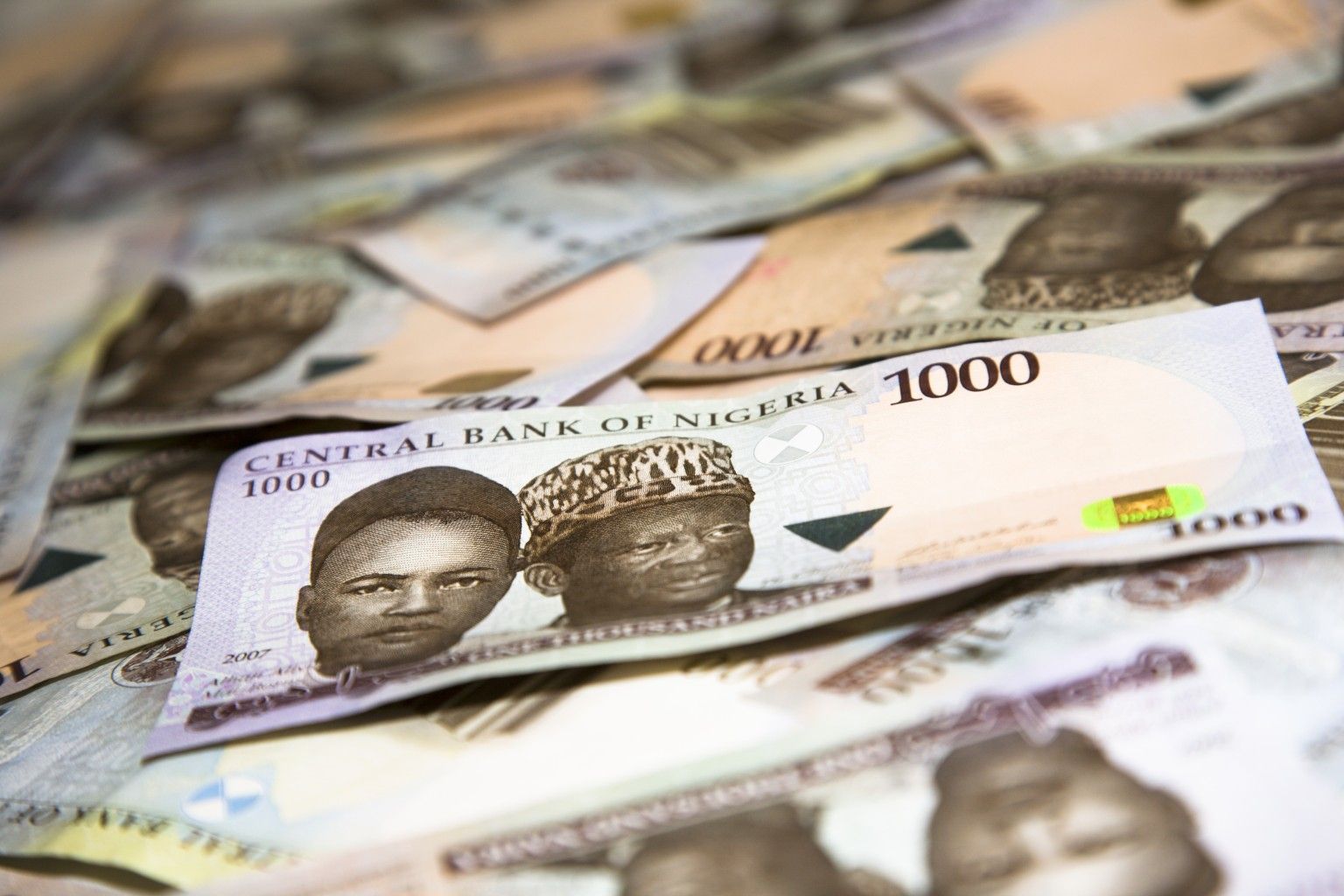
Nigeria's broad money supply rose to ₦133.25 trillion in June 2026, a ₦4.04 trillion jump from ₦129.21 trillion in May and a 13.59% increase from ₦117.25 trillion recorded in June 2025, data from the Central Bank of Nigeria released Wednesday showed, as the persistence of liquidity expansion despite one of the tightest monetary policy stances in the country's modern history raises questions about the limits of interest rate policy as an inflation management tool.
The increase was driven by growth in net domestic assets and quasi-money, alongside stronger external asset accumulation within the banking system. Net domestic credit climbed to ₦123.3 trillion in June from ₦121.42 trillion in May, a 1.5% increase, while quasi-money surged 8% to ₦88.5 trillion from ₦84.6 trillion, providing the dominant push behind the monthly expansion. Private sector credit reached ₦83 trillion during the same period, reflecting continued bank lending activity despite the elevated cost of borrowing.
The June figure caps a year of near-uninterrupted money supply growth. Broad money had dipped briefly to ₦123.36 trillion in January 2026 from ₦124.41 trillion in December 2025, the only monthly contraction in recent memory, before resuming its expansion in February and accelerating through the second quarter. The May increase alone, driven largely by a 12.23% surge in net foreign assets to ₦26.95 trillion, reflected stronger foreign currency inflows into the economy linked to higher oil prices during the Hormuz crisis period.
The growth in money supply comes as the CBN continues to balance liquidity management with efforts to moderate inflation and preserve macroeconomic stability. At its 305th Monetary Policy Committee meeting held on May 19 and 20, the apex bank unanimously voted to maintain the benchmark Monetary Policy Rate at 26.5%, following a 50 basis point reduction from 27% at the February meeting, the first rate cut since the current tightening cycle began.
The persistence of money supply growth alongside a 26.5% policy rate exposes a structural tension in Nigeria's monetary framework. The CBN has deployed one of the most aggressive tightening cycles in its history, raising rates by more than 1,500 basis points since 2022, and while inflation has eased from its peak, broad money continues to expand at double-digit rates year-on-year. The explanation lies partly in the composition of the growth: when net foreign assets and quasi-money, rather than bank credit, are the primary drivers of M3 expansion, the transmission mechanism that links higher interest rates to lower money supply growth is weakened. Businesses constrained by expensive credit simply hold liquidity in savings and time deposits rather than borrowing, which still counts as broad money.
The June data arrives as the CBN faces a second-half policy dilemma. With headline inflation at 15.91% in June but food inflation accelerating to 17.52%, money supply growing at 13.59% year-on-year, and the Hormuz disruption reintroducing upward pressure on import costs, the case for cutting rates further is significantly weakened. The case for hiking them, however, is equally complicated by an economy where monetary transmission is already impaired and where the real cost of credit has become a structural constraint on private sector investment. The CBN's next MPC meeting will need to answer a question the June numbers have made considerably harder: what does tightening actually buy when the money keeps growing anyway?
Stay Informed: Visit our website for Breaking News, Intelligence, and Insight.