
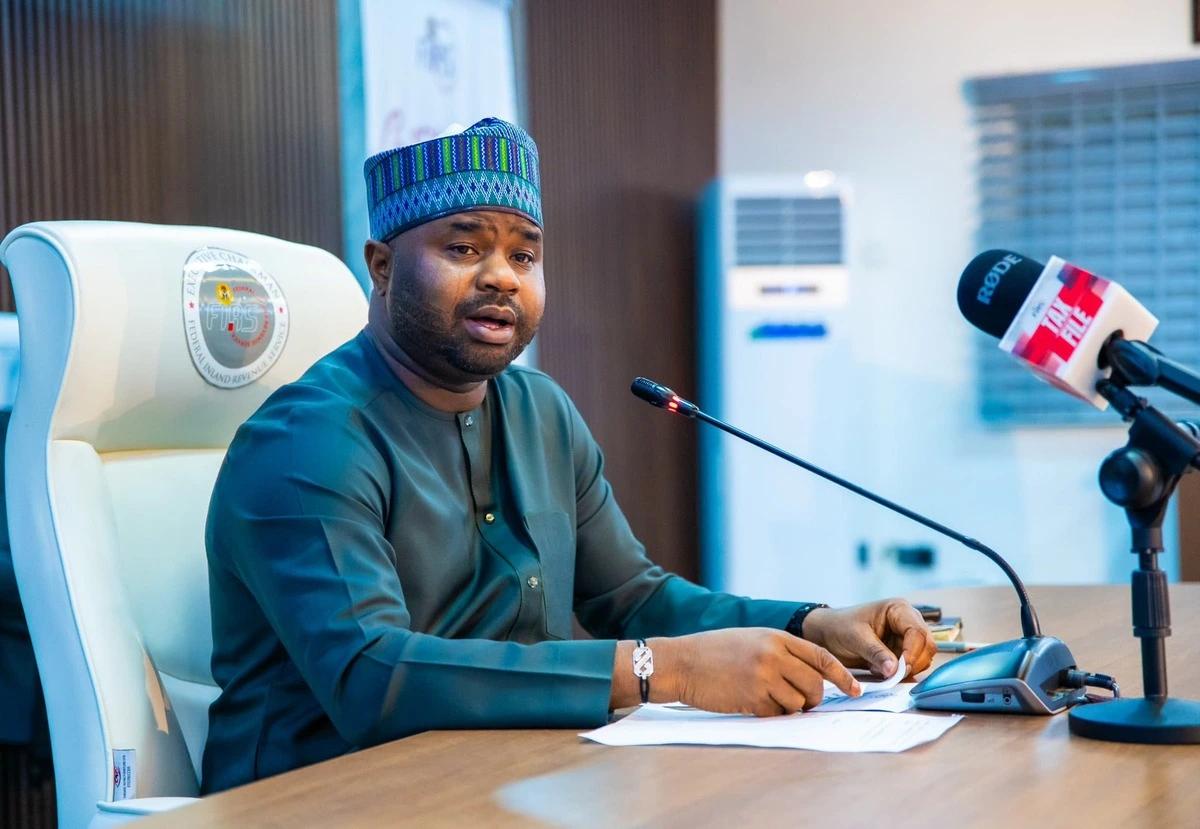
The Executive Chairman of the Nigeria Revenue Service, Zacch Adedeji, has said more Nigerians would have fallen into poverty had President Bola Tinubu not implemented his economic reform agenda, claiming that without the subsidy removal, foreign exchange unification and tax overhaul, poverty could have doubled from current levels. The claim, made on Channels Television's Politics Today on Sunday, arrived the same week the IMF confirmed that poverty has continued to increase under the reforms, affecting 63% of the population at the end of 2025.
Adedeji said the impact of the reforms should be measured against the condition of the economy when the administration assumed office and the progress made since then, arguing that the government inherited four structural distortions: a fiscally unsustainable fuel subsidy, an opaque foreign exchange system, a non-performing oil sector and a tax base far below its potential. "If we've not done what we're supposed to do, possibly double that population will have gone to poverty," he said.
The NRS chairman also claimed the naira could have depreciated to ₦3,500 to the dollar without the reforms, and that Nigeria was on course to become a net exporter of Premium Motor Spirit, a development he said had not occurred in about four decades. On government revenue, Adedeji said monthly FAAC allocations had risen from about ₦700 billion in 2023 to approximately ₦4.5 trillion, representing an increase of about 530%.
The NRS's own Economic Snapshot Report 2023 vs 2026, released earlier, presented supporting evidence. Oil production rose from about 1.2 to 1.3 million barrels per day in 2023 to 1.73 million barrels per day by July 2026, representing 104% of Nigeria's OPEC quota, while NGX market capitalisation expanded from ₦30.36 trillion in 2023 to ₦161 trillion in 2026. The report noted that the minimum wage had doubled between 2023 and 2026, and that government policies had contributed to reducing the number of out-of-school children from 20 million to 18.3 million, according to UNICEF estimates.
The counterfactual claim, however, sits in direct tension with what independent institutions have found. The IMF, after its annual review of the Nigerian economy, said strong reforms over the past three years had yielded improved macroeconomic outcomes and built resilience, but acknowledged that "conditions for many Nigerians remain difficult," with more than 27 million people facing food insecurity during 2025. The World Bank's Nigeria Development Update, released in April 2026, said poverty had worsened significantly despite some improvement in macroeconomic indicators, with more than 60% of Nigerians now living below the poverty line compared to about 40% a few years earlier.
Former Vice President Atiku Abubakar, responding to that same World Bank report, described the administration's approach as "economic shock therapy imposed on a vulnerable population" and called the poverty trajectory "regression on a monumental scale." He said the worsening poverty levels were not accidental but a direct consequence of poorly conceived and harshly implemented policies.
The NRS chairman's argument is structurally coherent: it is possible for reforms to be simultaneously painful in the short term and necessary to prevent a worse long-term outcome. That is not, in itself, a dishonest framing. What makes it insufficient as an explanation is that it asks Nigerians to believe in a counterfactual they cannot verify, at a moment when the factual reality- 63% poverty, accelerating food inflation, manufacturers at below 50% capacity, and more than 27 million people food insecure- is entirely verifiable. The macroeconomic scorecard that Adedeji is defending and the poverty data that the World Bank and IMF have published are both true at the same time. The government's challenge is not to choose between them, but to close the gap, and on that question, the NRS Economic Snapshot Report offers metrics without a timeline.
Visit our website for Breaking News, Intelligence, and Insight.