Nigeria's Federal Executive Council has delivered one of its most consequential infrastructure decisions in years, greenlighting nearly $3 billion in urban rail projects across the country's three most commercially significant cities in a single sitting.
The Federal Executive Council approved contracts worth $2.99 billion for three major rail projects in Lagos, Kano, and Kaduna states on Thursday, April 30. Finance Minister and Coordinating Minister of the Economy Taiwo Oyedele disclosed while briefing State House correspondents after the weekly FEC meeting presided over by President Bola Tinubu in Abuja.
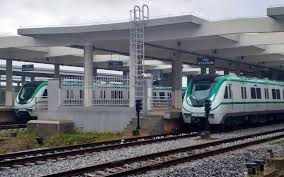
The approved projects include Phase 1A of the Lagos Green Line rail, the Kano Metro City rail project, and the Kaduna light rail system. The three locations were selected due to their strategic importance as economic hubs where targeted investments could deliver significant returns. "You would agree that these three cities are very important and strategic. All cities are important, but these are places where 10% effort can yield up to 90% results," Oyedele said.
The Lagos component carries the highest public anticipation. The Green Line is designed to run from Marina in the heart of Lagos Island to Lekki and beyond, serving one of the highest concentrations of commercial and residential activity in sub-Saharan Africa, a corridor that has long been choked by some of the worst traffic congestion on the continent.
The projects will be financed through the Ministry of Finance Incorporated on behalf of the federal government, with arrangements for counterpart funding. "These projects will be sponsored by MOFI on behalf of the Federal Government of Nigeria, with some counterpart funding. Altogether, they will cost about $2.99 billion," Oyedele confirmed.
The approvals have already been captured in the extended 2025 budget and are expected to strengthen the capital component of the overall investment framework.
Thursday's FEC meeting did not stop at the rail. The council also approved road and bridge contracts worth over ₦7 trillion, comprising ten major projects spanning all six geopolitical zones, including a ₦1.86 trillion extension of the Lagos-Calabar Coastal Highway through Akwa Ibom State, a ₦548.98 billion contract to demolish and fully rebuild the Carter Bridge in Lagos, and a new ₦1.79 trillion section of the Sokoto-Badagry Expressway. FEC also constituted a presidential power sector task force to be chaired by President Tinubu himself, and approved the establishment of a Nigerian aircraft leasing company structured as a Special Purpose Vehicle to be driven by private sector investment.
Analysts say urban rail development could improve labour mobility, lower commuting costs, and stimulate property and commercial activity along transport corridors if projects are executed efficiently. That last clause carries the most weight. Nigeria's infrastructure history is littered with approved contracts that stalled, ballooned in cost, or were abandoned mid-construction. For a cabinet that has now committed nearly $3 billion to rail in a single afternoon, the delivery burden is enormous, and the public is watching.
Stay Informed: Visit our website for Breaking News, Intelligence, and Insight