
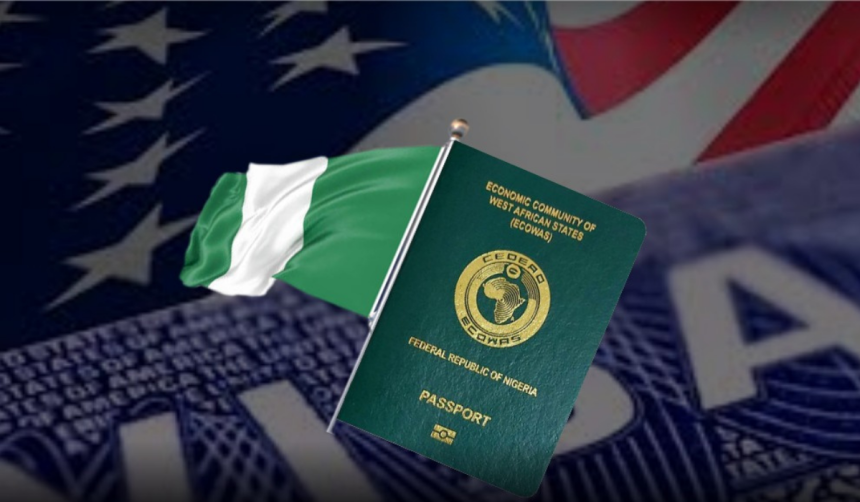
The United States Mission in Nigeria has clarified that Nigerian students and exchange visitors holding valid F1 and J1 visas remain unaffected by the partial visa suspension that took effect January 1, 2026, under Presidential Proclamation 10998, offering critical reassurance to thousands of Nigerian students currently studying in the United States or planning to travel soon.
In a statement posted Monday on X (formerly Twitter), the mission emphasised that current visa holders can continue their studies and exchange programmes without interruption. “Nigerian students and exchange participants with currently valid F1 and J1 visas are not affected by Presidential Proclamation 10998.
Students and exchange participants with visas can continue to contribute to learning, research, and innovation at U.S. colleges and institutions,” the mission said.
Presidential Proclamation 10998, titled “Restricting and Limiting the Entry of Foreign Nationals to Protect the Security of the United States,” took effect at 12:01 am Eastern Standard Time on January 1, 2026.
Under the proclamation, the United States partially suspended the issuance of certain visas to nationals of 19 countries, including Nigeria, Angola, Benin, Burundi, Cuba, Senegal, Tanzania, Venezuela, and Zimbabwe.
The suspension covers nonimmigrant B-1/B-2 visitor visas (for business and tourism), F, M, and J student and exchange visitor visas, and all immigrant visas, with limited exceptions. The restrictions apply only to foreign nationals who were outside the United States on the effective date and who did not hold a valid U.S. visa as of January 1, 2026.
Crucially, US officials confirmed that the proclamation does not revoke any visas issued before the effective date. “Foreign nationals, even those outside the United States, who hold valid visas as of the effective date are not subject to Presidential Proclamation 10998.
No visas issued before January 1, 2026, at 12:01 am EST, have been or will be revoked pursuant to the Proclamation,” the U.S. Mission stated.
The clarification means that Nigerian students and exchange visitors who obtained their F1 or J1 visas before January 1, 2026, can continue their educational pursuits in the United States without legal impediment. Their visas remain valid for the full duration specified at issuance, and they retain the ability to re-enter the United States during that period.
However, Nigerian nationals applying for new F1, J1, or other covered visa categories after January 1, 2026, face significant barriers. Applicants may still submit visa applications and schedule interviews, but they are now subject to the restrictions outlined in the proclamation and may be deemed ineligible for visa issuance or admission to the United States.
The F-1 visa is issued to international students enrolled full-time in academic programmes at U.S. schools or universities, while the J-1 visa is granted to exchange visitors, including students, researchers, and interns participating in approved educational or cultural exchange programmes.
The latest clarification follows a series of immigration-related measures introduced by Washington targeting Nigerians over the past year. In July 2025, the U.S. Department of State revised its approach to issuing nonimmigrant visas for Nigerians, limiting most new visas to single-entry status with three-month validity periods. Previously, Nigerians were often granted multi-entry visas with durations extending several years.
In January 2026, the U.S. Department of State also introduced a refundable visa bond requirement of up to $15,000 for applicants from 38 countries, including Nigeria. Under the directive, applicants otherwise eligible for B1/B2 visas may be required to post a bond of $5,000, $10,000, or $15,000, with the amount determined during the visa interview.
US authorities have cited security concerns, including the activities of extremist groups such as Boko Haram and the Islamic State in parts of Nigeria, which they say create “substantial screening and vetting difficulties.”
In October 2025, Washington reinstated Nigeria on its list of countries accused of violating religious freedom, followed by the country’s inclusion on a revised travel restriction list.
Nigeria has historically been one of the top sources of international students in the United States, though enrolment has fluctuated in recent years.
According to data from the U.S. consulate in Lagos, 5,626 immigrant visas were issued to Nigerians in 2023, up from 4,219 in 2022, an increase of 1,407 visas within a year. However, recent policy shifts and restrictions have raised concerns about the long-term trajectory of Nigerian student enrolment.
Earlier in February, the U.S. Mission in Nigeria warned that visa overstays by Nigerian travellers could negatively affect opportunities for other citizens seeking to travel to the United States.
The mission’s latest statement is expected to ease concerns among Nigerian students and exchange participants about whether their existing visas would remain valid under the new restrictions.
For now, the message from Washington is clear: if you already have a valid F1 or J1 visa, you can continue your studies. But for those still waiting to apply, the door has narrowed significantly.
Stay Informed: Visit our website for Breaking News and Insights.