
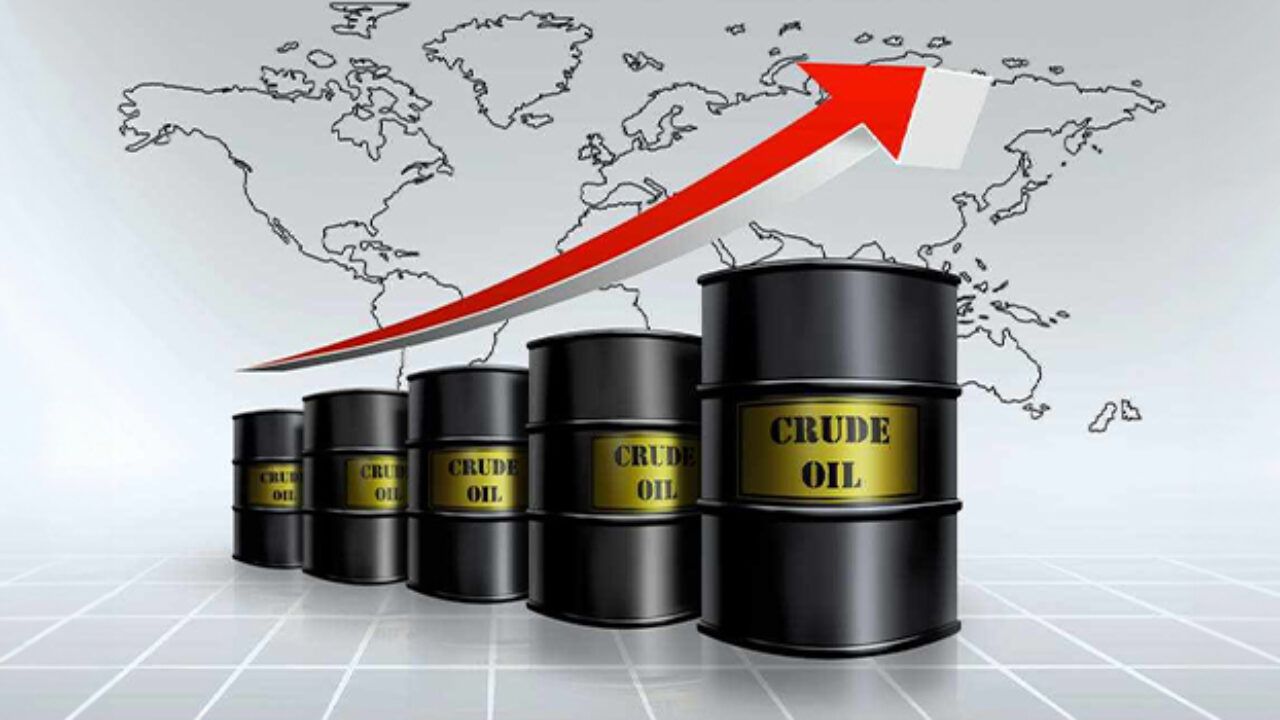
Global oil markets surged this week as Brent crude climbed to about $87 per barrel on Friday, March 6, 2026, putting prices on track for their largest weekly gain since 2020 amid escalating geopolitical tensions and tightening supply signals across major energy corridors.
Data from the Intercontinental Exchange (ICE) showed Brent futures trading near $87 per barrel during early Friday trading in London, marking a sharp rally over the past several sessions.
The surge follows heightened instability in the Middle East and renewed concerns over potential disruptions to key shipping routes that move a large share of global crude supply.
Energy analysts say the spike reflects immediate supply risk in global markets. According to the International Energy Agency, roughly 20% of the world’s seaborne oil shipments move through the Strait of Hormuz, a narrow channel connecting Gulf oil exporters to global buyers. Any disruption in the corridor can rapidly push prices upward.
“The oil market is extremely sensitive to supply risk in the Gulf,” said Fatih Birol, Executive Director of the International Energy Agency, during an energy market briefing in Paris on Thursday, March 5, 2026. “Even short-term uncertainty in key transport routes can translate into significant price volatility across global benchmarks.”
The rally has pushed crude toward its strongest weekly performance since the market shock of early 2020, when the COVID-19 pandemic triggered dramatic swings in global energy demand and supply chains.
U.S. benchmark West Texas Intermediate (WTI) also surged during the week, trading above $83 per barrel as traders repositioned portfolios amid tighter supply expectations and stronger demand signals from parts of Asia.
Market data released by the U.S. Energy Information Administration earlier this week showed a decline in U.S. crude inventories, reinforcing concerns that global supply buffers are thinning. The agency reported that American commercial crude stockpiles fell by more than 3 million barrels in the latest weekly report released on Wednesday, March 4, 2026, in Washington.
“Inventory levels remain below the five-year seasonal average,” the U.S. Energy Information Administration said in its report, highlighting ongoing pressure in global supply balances.
The oil rally carries immediate implications for African economies. Higher crude prices could temporarily boost export revenues for major producers, including Nigeria, Angola, and Algeria. Nigeria relies heavily on petroleum exports, which account for a large share of the government’s foreign exchange earnings.
However, the surge also increases fuel import costs for many African economies that depend on refined petroleum products. Rising prices can quickly translate into higher transportation, logistics, and power costs for small businesses and manufacturing sectors.
Energy traders are also watching demand signals from China and India, two of the world’s largest oil consumers. Strong industrial activity in those markets continues to support global demand despite broader concerns about slowing growth in Western economies.
The Organization of the Petroleum Exporting Countries (OPEC) said in its latest market outlook that global oil demand remains resilient. “Demand fundamentals continue to show strength, particularly across Asia and emerging economies,” OPEC Secretary General Haitham Al Ghais said in a statement released Wednesday, March 4, 2026, from Vienna.
With Brent crude approaching $87 per barrel and global supply risks rising, energy markets are entering one of their most volatile periods in years as traders assess geopolitical developments, supply data, and shifting demand trends across major economies.
Stay Informed: Visit our website for Breaking News and Insights.