
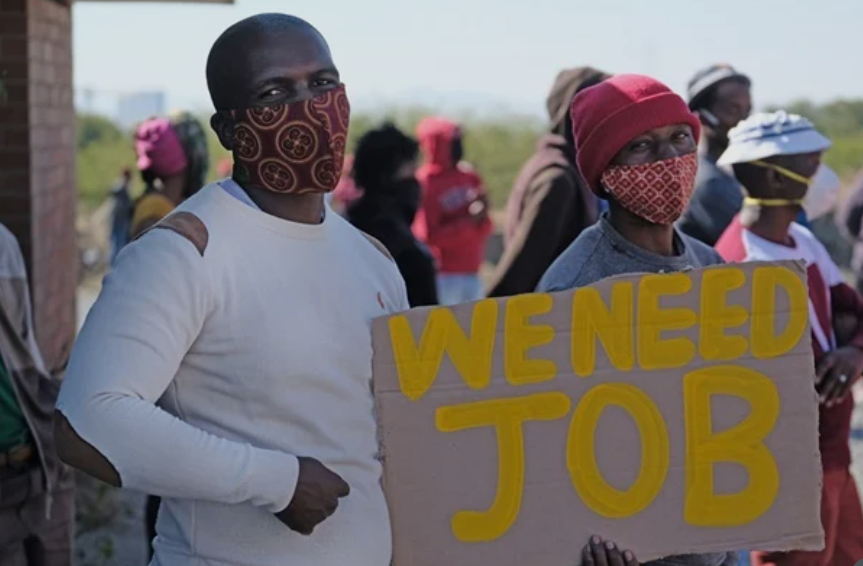
South Africa's unemployment crisis has worsened again, and the first quarter of 2026 has delivered some of the bleakest labour market data the country has seen in years.
South Africa's unemployment rate rose to 32.7% in the first quarter of 2026 from 31.4% in the fourth quarter of 2025, according to data released Tuesday by Statistics South Africa. The number of unemployed people increased to 8.137 million in January-March, compared with 7.836 million in October-December.
The economy shed 345,000 jobs during the quarter, bringing the total number of employed people down to 16.8 million. Unemployment increased by 1.3% points, the sharpest quarterly rise in recent memory, with 301,000 more South Africans now without work.
Job losses were spread across seven of ten industries, with community and social services taking the hardest hit, shedding more than 200,000 positions, followed by construction with 100,000 losses and transport with 30,000. The only bright spots were manufacturing, mining, and agriculture, where employment ticked upward.
The youth dimension of the crisis is especially stark. Youth unemployment climbed to 45.8%, with the number of unemployed people between the ages of 15 and 34 increasing by 181,000 to 4.7 million, while employed youth fell by 258,000 to 5.6 million.
The provincial picture is equally uneven. KwaZulu-Natal was the only province to record an increase in employment, adding 6,000 jobs and seeing its official unemployment rate fall 1.1 percentage points to 31.2%. Elsewhere, the picture was bleak. The Eastern Cape's unemployment rate soared to 44.6% after losing 43,000 jobs, and Gauteng shed an additional 67,000 positions following a loss of 54,000 in Q4 2025. The North West province recorded the highest volume of recent losses at 80,000, with its combined rate of unemployment and potential labour force reaching an alarming 54.8%.
New labour underutilisation indicators introduced by Stats SA paint an even darker portrait. The combined rate of unemployment and time-related underemployment rose to 35.9%, the combined rate of unemployment and the potential labour force climbed to 43.7%, and the broad composite measure of labour underutilization stood at 46.3%.
The official jobless rate has now been above 30% for more than five years and remains among the highest in the world. The coalition government formed in 2024 has struggled to meaningfully boost job creation, despite investor optimism about reforms and a modest pickup in economic growth.
Frank Blackmore, Lead Economist at KPMG, noted that the community and social services sector, which depends on both public funding and private grants, "has been under financial pressure for a long time," pointing to a structural funding squeeze that is now translating directly into mass job losses among those who serve the country's most vulnerable communities. For a government already under pressure to deliver on its reform promises, the Q1 2026 data is an uncomfortable reminder of how far South Africa remains from a jobs recovery.
Stay Informed: Visit our website for Breaking News, Intelligence, and Insight.