
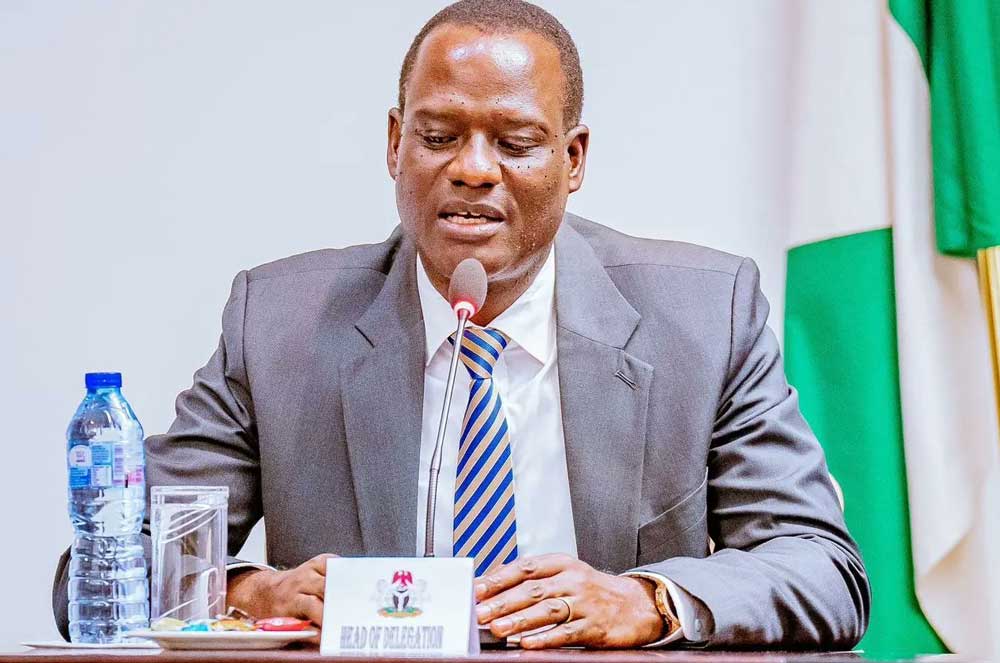
Finance Minister Taiwo Oyedele has pledged to publish a detailed account of how savings from the removal of fuel and foreign exchange subsidies have been spent, after being confronted at an international forum with the blunt assessment that most Nigerians remain unconvinced the reforms have improved their lives.
The commitment was made Thursday at the 7th Africa Emerging Markets Forum in Abuja, where Oyedele was responding to World Bank Group Chief Economist and Senior Vice-President for Development Economics Indermit Gill, who said that while the government had increased revenues, reduced subsidies and narrowed the fiscal deficit, "it's not clear to people whether savings and the additional resources have been spent," and urged the minister to explain how the reforms had concretely improved the lives of Nigerians.
Oyedele acknowledged the question was justified. "There was a question about the subsidy savings. Where has it gone to? I've heard this question so many times. And guess what? It's a valid question," he said, adding that the combined removal of fuel and FX subsidies had been equivalent to approximately 5% of GDP. "So where has the money gone to? And in a few days, you will see the detailed analysis, because we believe that we owe a duty to explain what we do to the Nigerian people. That's what transparency looks like," he said.
Oyedele said a significant portion of the funds has been absorbed by higher debt servicing costs, the new ₦70,000 national minimum wage, and expanded social intervention programmes including the Nigerian Education Loan Fund, which has supported more than 1.5 million students. He also defended continued borrowing despite stronger revenue performance, arguing that improved collections do not eliminate financing needs when expenditure still exceeds income.
The response drew immediate pushback from labour. The Nigeria Civil Service Union and the Joint National Public Service Negotiating Council challenged Oyedele to go further than verbal assurances, with General Secretary Olowoyo Gbenga describing the government as simultaneously implementing the 2024, 2025 and 2026 budgets in a situation that has muddled fiscal policy. He questioned why subsidy savings were being cited to explain salary increases when personnel costs were already budgeted in each of those three appropriation cycles.
The exchange at the forum distils a tension that has defined public discourse around the Tinubu administration's reform agenda since 2023. The macroeconomic case for subsidy removal has been consistently validated by international lenders: FAAC distributions have nearly tripled from ₦629 billion in March 2023 to ₦2.036 trillion in March 2026, the fiscal deficit has narrowed, and the CBN has brought headline inflation from above 30% to below 15%. Gill himself acknowledged the CBN had done a superb job on inflation but stressed that further progress would require stronger fiscal support to make the gains felt by ordinary Nigerians.
What the forum exposed is that the government has not yet bridged the gap between the macro story and the lived experience of the people who absorbed the price shock. A promise to publish a breakdown within days is a meaningful step, but its credibility will depend entirely on what that document says, how independently it can be verified and whether the numbers explain the full picture, including how savings that amounted to 5% of GDP were absorbed without a visible reduction in borrowing. The labour unions' scepticism is not ideological. It is arithmetic.
Stay Informed: Visit our website for Breaking News, Intelligence, and Insight.