
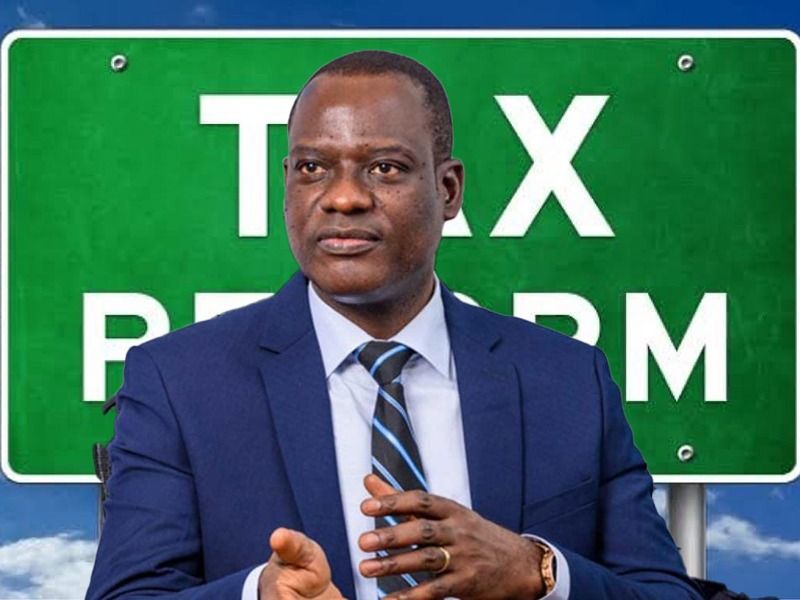
Finance Minister’s committee rejects media claims of error admission, clarifies legislative review concluded in January with gazetted copies certified by the National Assembly.
The Presidential Fiscal Policy and Tax Reforms Committee has dismissed as misleading and inaccurate media reports claiming that Minister of State for Finance Taiwo Oyedele admitted errors in Nigeria’s newly enacted tax laws, describing the publications as a distortion of his remarks at a Nigerian Bar Association conference that risks confusing the public and undermining reform objectives.
In a statement released Sunday via Oyedele’s X account, the committee said reports falsely alleged that the minister acknowledged flaws and urged Nigerians to await the outcome of a legislative probe, emphasizing that such a process had already concluded with gazetted copies certified by the National Assembly published since early January 2026. The committee warned that framing the minister’s remarks as an admission of error distorts public understanding and misleads the very people the reforms were designed to benefit.
Oyedele, who chairs the committee, had spoken at a fireside chat during the Nigerian Bar Association Section on Legal Practice conference in Lagos, where he highlighted early positive impacts, including thousands of informal businesses now seeking Corporate Affairs Commission registration daily, with the number of registered taxpayers rising from barely 10 million before the reform to over 100 million nationwide. The committee attributed this surge to progressive provisions, including exemptions for small companies, higher thresholds for low-income earners, and tax relief on essential services such as food, healthcare, education, transportation, and housing.
During his address, Oyedele explained that the changes were introduced to address structural inefficiencies in Nigeria’s tax system, particularly disparities between how individuals and corporate entities are taxed. He noted that under the old system, an individual could pay an effective tax rate of about 19%, but registering the same business as a company pushed the burden above 40%, which was the opposite of global best practice. The committee stressed that while continuous improvements are part of any reform process through finance bills, such updates should not be interpreted as evidence of foundational errors.
The committee acknowledged that Oyedele had stated no law is perfect and emphasized the need for ongoing stakeholder engagement to identify and address any gaps through future Finance Bills as part of a continuous improvement process. However, it clarified that some discrepancies arising from manual legislative drafting procedures and multiple review stages should not be conflated with substantive flaws in the laws themselves. The reforms, signed into law by President Bola Tinubu in June 2025 and implemented in January 2026, also established a Tax Ombud to protect taxpayer rights and introduced a presumptive tax regime for MSMEs in March 2026.
The committee urged the public to disregard sensational headlines and twisted narratives, advising Nigerians to rely exclusively on official sources and credible media organizations for accurate information regarding tax reform and other government policies.
Stay Informed: Visit our website for Breaking News, Intelligence, and Insights