
South Africa spends R30 billion a year on research and development. It has precious little to show for most of it, and the government has now admitted as much publicly.
South Africa has unveiled a new strategy to commercialise more of its R30 billion ($1.8 billion) annual research and development spending, as the government pushes to turn research into businesses, jobs, and new industries. The Technology Innovation Agency (TIA), a government-backed innovation fund under the Department of Science, Technology, and Innovation, launched TIA 2.0, a new commercialisation-focused strategy designed to help more locally developed technologies survive the so-called "Valley of Death," the gap where promising research fails to reach the market.
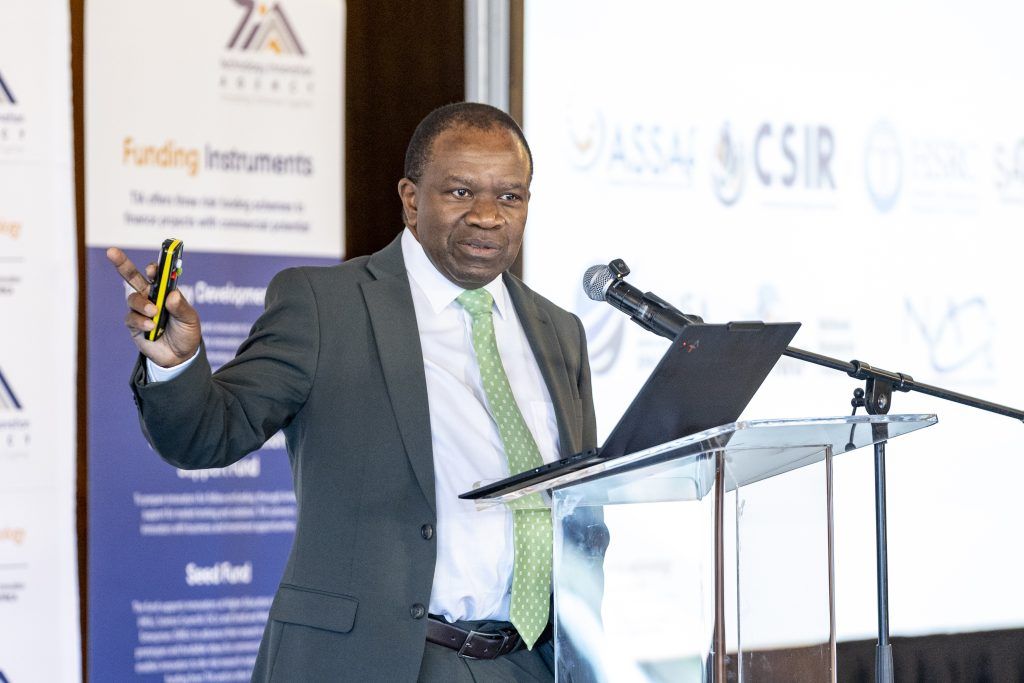
TIA CEO Titus Mathe did not soften the diagnosis: "South Africa is spending about R30 billion on research and development every year. Unfortunately, much of this investment goes into what is called the Valley of Death. How can we capitalise on this investment and take research that is promising and commercialise it? That was really the main idea behind the formation of TIA."
The structural shift embedded in TIA 2.0 is as significant as the funding figures. TIA 2.0 represents a structural overhaul of South Africa's innovation system, shifting the agency from a project funder to a commercialisation catalyst. Under this new model, TIA is deploying capital into strategic sectors such as AI, electric vehicles, climate tech, and critical minerals and shifting from funding individual projects to supporting large-scale innovation programmes capable of creating industries and driving economic growth.
The budget trajectory behind the strategy is expanding. The Technology Innovation Agency's allocation rises from R599 million this financial year to R644 million in 2026-27, and to R1.06 billion by 2028-29, nearly doubling over three years as it expands support for small businesses and early-stage commercialisation of locally developed technologies.
The broader science expenditure environment is growing in parallel. South Africa's overall science expenditure budget climbs from R9.4 billion in 2025-26 to R10.4 billion in 2026-27 and is forecast to reach R11.1 billion by 2028-29.
The international dimension of South Africa's research ecosystem adds another layer of urgency to the commercialisation push. Nearly a fifth of expenditure on research and development in South Africa comes from foreign sources, a dependency that makes the case for building stronger domestic pathways from research to revenue even more compelling.
TIA 2.0 arrives at a moment when South Africa's broader economic outlook is cautiously improving: its first credit rating upgrade in 16 years, removal from the FATF grey list, and a budget that is beginning to stabilise debt levels. The missing piece has always been converting intellectual capital into commercial output. That is now the explicit mandate, and the R30 billion question is whether TIA's restructured model can finally deliver an answer.
Stay Informed: Visit our website for Breaking News, Intelligence, and Insight