
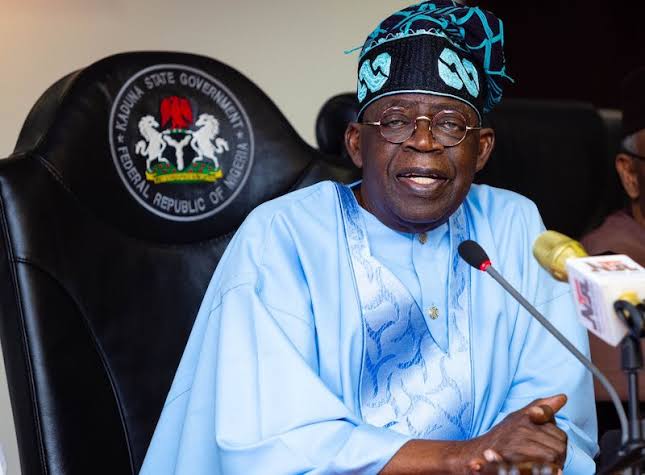
President Bola Tinubu’s Executive Order 9 of 2026 mandates direct oil revenue remittances, signaling a major shift in Nigeria’s fiscal discipline.
In a move that signals a seismic shift in Nigeria’s petroleum finance architecture, President Bola Tinubu has issued a sweeping directive designed to bypass the bureaucratic retentions of the Nigerian National Petroleum Company (NNPC) Limited. As of February 2026, the administration has ordered that all oil and gas revenues be paid directly into the Federation Account. This pivot marks a defining moment for the Tinubu presidency.
Having weathered the political firestorms of subsidy removal and currency devaluation, the administration now finds itself at a crossroads. It is flush with new revenue potential but remains tethered to a history of fiscal discipline challenges and mounting debt. The narrative is no longer about the lack of funds but about the management of newfound liquidity.
The new directive, officially gazetted as Executive Order 9 of 2026, effectively strips NNPC Limited of its role as the primary manager of the nation's oil wealth. For years, the Petroleum Industry Act allowed the firm to retain significant percentages of profit oil for exploration and management fees. He said these deductions far exceed global norms and have historically diverted more than two-thirds of potential remittances.
Under the new order, the 30% Frontier Exploration Fund and the 30% management fee previously retained by the state firm have been abolished. Instead, these funds will flow directly into the Federation Account to be shared among the three tiers of government. Analysts estimate this reform could boost the shared revenue pool by approximately N14.57 trillion based on 2025 performance data.
The current situation is unique because while the federal government is capturing more revenue on paper, the nation is still grappling with a legacy of debt. The Central Bank of Nigeria projects a current account surplus of $18.81 billion for 2026, yet this liquidity is already being spoken for by creditors. President Bola Tinubu emphasized in his recent budget speech that this represents a reset, noting that the path of reform is seldom smooth.
He said the era of overlapping budgets and inherited obligations must come to an end to achieve sustainable development. The fiscal test for the administration lies in whether this extra cash will build national buffers or be absorbed by a debt servicing bill projected to exceed N15 trillion this year. For the first time in a generation, revenue leakages at the firm level are being removed, leaving the Presidency as the primary custodian of financial destiny.
Despite the administrative reforms, the underlying engine of the economy remains volatile. The 2026 budget is built on an ambitious production target of 1.84 million barrels per day. However, real-world performance continues to lag, with January 2026 figures hovering around 1.46 million barrels.
This production gap represents a lost opportunity cost of billions of dollars. While the Executive Order addresses how money is handled once it is earned, it does not solve the physical security challenges in the Niger Delta. He said that security spending would now be tied to clear outcomes, insisting that public funds must translate into safer communities.
For global energy giants and domestic players, the Executive Order offers a double-edged sword. Direct remittance to the Federation Account promises greater transparency and potentially faster settlement of government obligations. However, the removal of the Frontier Exploration Fund might signal a shift away from high-risk exploration projects toward immediate fiscal stability.
The Nigeria Sovereign Investment Authority is also feeling the ripple effects. The organization is currently targeting a doubling of its fund size from $3 billion to $6 billion over the next three years. A more disciplined fiscal environment would provide the steady inflows necessary to move from a stabilization role to a true development engine.
As the administration nears the penultimate year of its first term, the pressure to deliver tangible benefits is mounting. The removal of the fuel subsidy in late 2024 led to a surge in corporate profits for downstream companies, but it also triggered record inflation. President Bola Tinubu has framed the reform as part of a broader fiscal responsibility agenda.
He said that as the government strengthens national security and expands healthcare, every legitimate naira due to the Federation must be protected. This fiscal discipline test is not just an accounting exercise; it is a political strategy. If the N14.57 trillion in additional remittances is not visible in the form of infrastructure and stabilized prices, the administrative brilliance of the order will be forgotten.
Is Nigeria's N60.97tn Oil Revenue Realistic?
This video provides an expert discussion on whether Nigeria's ambitious 2026 revenue projections are attainable given the current market constraints and production targets.
Visit thisisbusiness360.com for more