
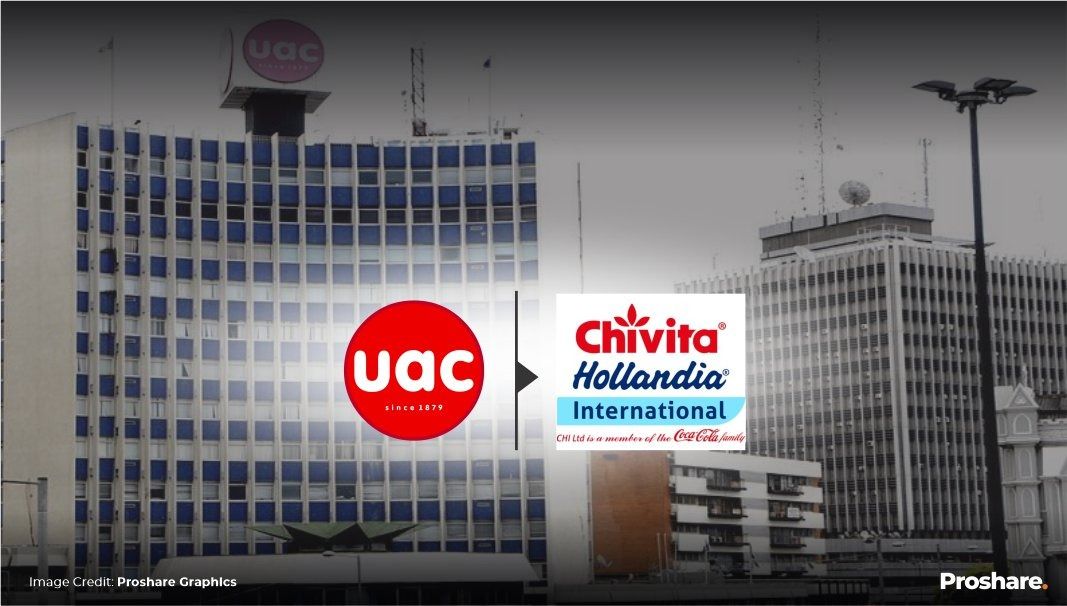
UAC of Nigeria Plc has completed the final internal restructuring linked to its purchase of C.H.I. Limited, folding its special purpose acquisition vehicle, UAC Food and Beverage Company Limited (UFB), into the beverage maker.
The development was disclosed in a notice filed with the Nigerian Exchange on February 5, 2026, and signed by Ayomipo Wey, the company secretary and group general counsel.
UAC characterised the step as a housekeeping exercise following the completion of the transaction, emphasising that it is a structural simplification with no impact on operations, profitability, or shareholder value.
The conglomerate explained that UFB was established purely to facilitate the acquisition and never functioned as a trading or operating company. With the share purchase completed and ownership settled, the entity had effectively outlived its purpose.
“With UFB being a non-operating SPV, the consolidation has no implications on ongoing operations,” the company said in the filing.
By collapsing the vehicle into C.H.I. Limited, UAC removes an intermediate layer in its corporate chain, streamlines reporting lines, and eliminates the regulatory, governance, and administrative costs associated with maintaining a dormant subsidiary. The change also clarifies direct ownership of the business within the group’s portfolio.
Industry analysts typically view such post-acquisition clean-ups as a signal that attention is shifting from deal execution to integration, synergy capture, and market expansion.
UAC announced in October 2025 that it had agreed to acquire 100 percent of C.H.I. Limited from The Coca-Cola Company, in a transaction that marked one of the most notable moves in Nigeria’s consumer goods space last year. The deal, still subject to final regulatory processes at the time of announcement, significantly strengthened UAC’s position in packaged foods and beverages.
C.H.I. Limited is a dominant player in the fast-moving consumer goods segment, with brands that have become household names. Hollandia holds leadership in dairy categories such as evaporated milk and drinking yoghurt, while Chivita is a frontrunner in fruit juices and still drinks. The company also has interests in snacks and value-added beverages, supported by extensive manufacturing and distribution networks.
For UAC, absorbing CHI fits into a broader strategy of deepening exposure to everyday consumer categories with resilient demand and strong brand equity. The group has, in recent years, sharpened its focus on businesses where it believes scale, route-to-market strength, and operational efficiency can unlock long-term value.
For Coca-Cola, the divestment aligns with its global refranchising strategy and preference for a lighter asset base, while maintaining a strategic interest in Nigeria. The Coca-Cola system has publicly reiterated plans to invest up to $1 billion in the country over five years, contingent on an enabling and predictable business climate, underlining the market’s importance to its African growth ambitions.
UAC’s latest announcement suggests the mechanics of the acquisition are now firmly in the rear-view mirror. What lies ahead will be the harder task common to large consumer deals: integrating teams, aligning systems, and extracting the commercial benefits expected from bringing some of Nigeria’s strongest beverage and dairy brands under one corporate roof.
Stay Informed: Visit our website for Breaking News and Insights.