The project that began as a bold declaration at a Nairobi summit last month has taken its next concrete step, and East Africa's longest-serving president has just made himself a committed partner.
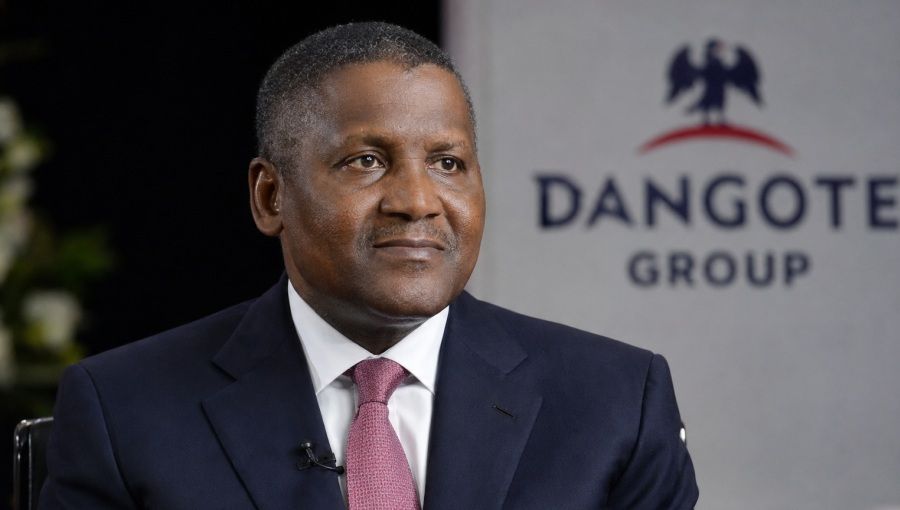
President Yoweri Museveni has confirmed meeting Nigerian billionaire industrialist Aliko Dangote at State Lodge Nakasero in Kampala to discuss plans for a major oil refinery in East Africa, expressing Uganda's full support for the project. "We shall support Dangote, and we are ready to buy shares in the regional refinery because our goal is regional integration and industrial development," Museveni said.
The proposed project is estimated at between $15 billion and $17 billion, with a planned refining capacity of 650,000 barrels of crude oil per day, identical to Dangote's Lagos operation and designed to serve Uganda, Kenya, Tanzania, Ethiopia, South Sudan, the Democratic Republic of Congo, and other regional markets.
The discussions followed recent engagements between Dangote and East African leaders during the Africa We Build Summit 2026 held in Nairobi, where proposals for the major regional refinery were first publicly aired. Speaking after the Kampala meeting, Dangote confirmed that his team was assessing possible locations, including Tanga, Mombasa, and Lamu, while consultations with regional governments continue. "This is a continuation of discussions we held with regional leaders in Nairobi. We want to establish a refinery that can support East Africa's growing energy needs," he said.
In a Financial Times interview, Dangote expressed a preference for Mombasa, citing its deeper port and greater cargo handling capacity as critical requirements for receiving very large crude carriers at the processing scale envisioned. "I'm leaning more towards Mombasa because Mombasa has a much larger, deeper port," he said.
Museveni was emphatic that the proposed regional facility would not displace Uganda's existing plans. "We have no problem supporting a broader regional refinery that can guarantee energy security for the region while Uganda also develops its own refinery," he said, adding that Uganda's planned 60,000 barrel-per-day refinery in Hoima would continue alongside regional discussions. "If East Africa works together, these projects become more viable and beneficial to all our people."
Dangote assured Museveni that the refinery would create employment for East Africans, pointing to his Lagos operation as proof. "Jobs will not be a problem. In our refinery in Nigeria, we employ people from many nationalities, and East Africans will also benefit from this project," he said, also inviting Ugandan energy officials to visit the Lagos facility for further technical engagement.
The geopolitical context sharpening all of these conversations is the closure of the Strait of Hormuz following the US-Israel conflict with Iran. Kenya's President Ruto had framed it bluntly at the Nairobi summit: "We do not want to be held hostage any more by the Strait of Hormuz. We have our resources here, and we are saying we are going to use our African resources to industrialise our region." Uganda's commitment to shareholding is the clearest signal yet that the region's leaders are moving beyond rhetoric, though a final investment decision, a confirmed site, and a financing structure still lie ahead.
Stay Informed: Visit our website for Breaking News, Intelligence, and Insight