
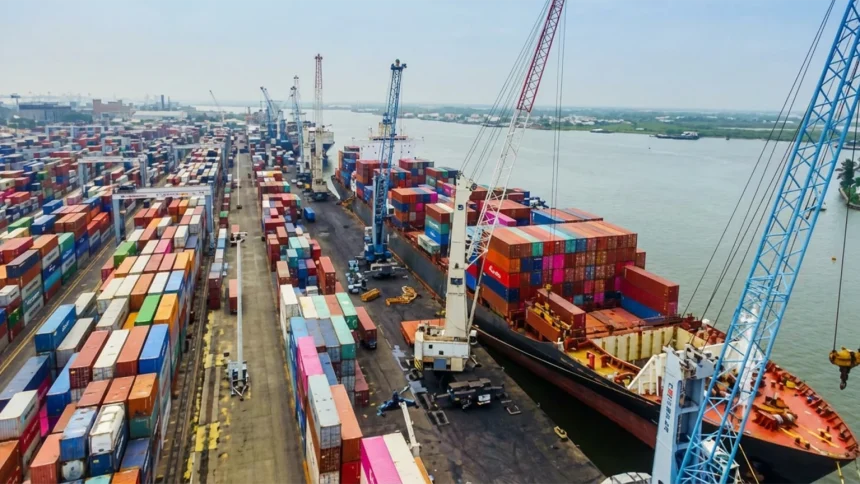
The United States has imposed a 12.5% tariff on goods imported from Nigeria, placing Africa's largest economy in the higher-rate category of a sweeping trade action that penalises 60 countries for failing to prohibit the entry of products made with forced labour, with the measures taking effect following a months-long investigation that drew over 1,600 written submissions and testimony from more than 100 witnesses.
The action was announced Thursday by the Office of the United States Trade Representative, following Section 301 investigations launched in May 2026 into 60 of America's largest trading partners. The USTR said countries that have already implemented, or committed to implementing, forced labour import prohibitions would attract a lower 10% tariff, while those without such measures face the 12.5% rate.
Nigeria falls into the higher bracket, alongside Brazil, China, Egypt, Morocco, South Africa, Saudi Arabia, the United Arab Emirates, Vietnam and Venezuela, among others. India, Indonesia, Malaysia, Mexico and the United Kingdom qualified for the reduced 10% rate after adopting or committing to enact bans on forced-labour-linked imports. The 2.5 percentage point gap between the two rates is in effect a penalty for non-alignment with US trade policy on labour standards, and Nigeria has been placed squarely on the wrong side of it.
A Federal Register notice obtained from the USTR confirmed that Nigerian exports would be subject to the 12.5% tariff, except for products covered by specified exemptions in Annex I and Annex II, Part A of the notice. The USTR said it considered public comments, witness testimony, the advice of the Section 301 Committee and advisory committees, and the specific direction of the President before fixing the rate and scope of the tariffs.
The Section 301 investigations were launched on March 12, 2026, covering all 60 of America's largest trading partners and assessing whether each had taken sufficient steps to ban goods made with forced labour from crossing their own borders. Nigeria is one of eight African countries placed in the higher tariff category, alongside Algeria, Angola, Egypt, Libya, Mauritania, Morocco and South Africa.
The practical trade impact on Nigeria requires context. The United States is not among Nigeria's top export destinations, with crude oil and petroleum products accounting for the overwhelming share of Nigerian exports, and those are largely routed to Asian and European buyers. However, the tariff carries a broader reputational and diplomatic cost that may matter as much as the direct trade effect. Being placed in the same tariff category as China and Venezuela on a forced labour metric is not a neutral data point for a government actively courting foreign investors, seeking World Bank and IMF facilities, and presenting itself as a reformed, investor-friendly economy. It also raises a question Nigeria will need to answer quickly: whether to follow the path taken by India, Mexico and the United Kingdom, which secured the lower rate by committing to enact forced labour import bans, or to contest the designation and absorb the reputational and commercial consequences of the higher bracket. The USTR has made the cost of inaction explicit. What Abuja does with that signal is now the story.
Stay Informed: Visit our website for Breaking News, Intelligence, and Insight.